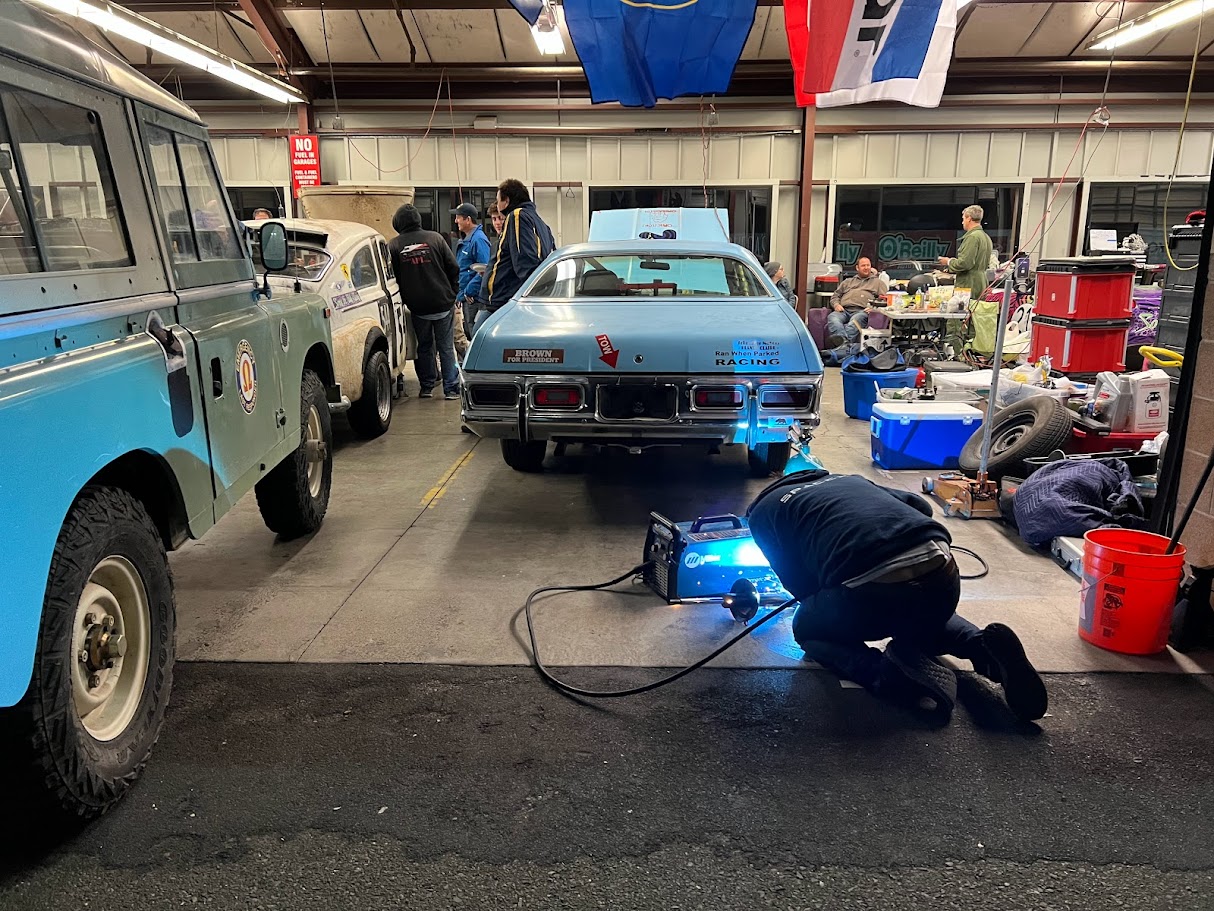
The Passat is the biggest rolling archive of race-car problem solving on this site. What started as a cheap Lemons idea and a childhood goal of finally going endurance racing turned into a John Deere-themed diesel tractor with a cage, a long list of mechanical failures, and an equally long list of fixes that only existed because the previous solution broke first. It has been through hub failures, CV failures, turbo fires, injector problems, brake incidents, cooling upgrades, communications upgrades, and enough roadside or paddock repairs to make O’Reilly feel like an unofficial sponsor.
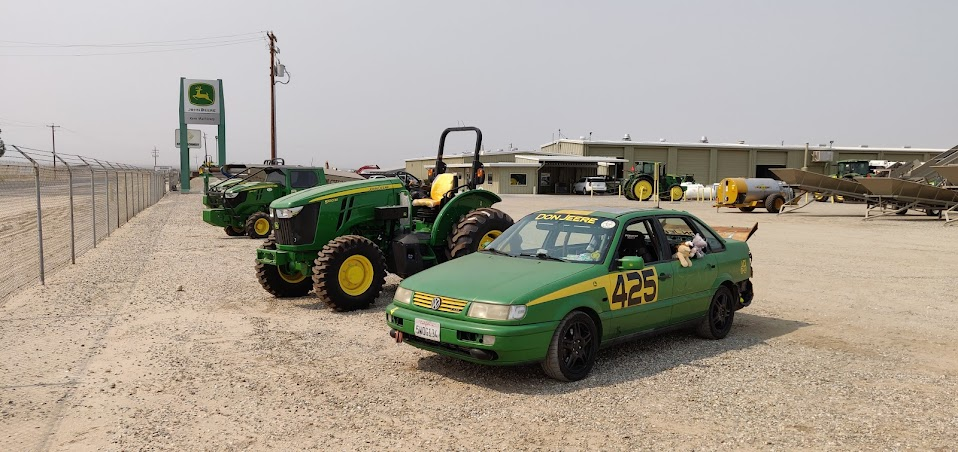
More than anything else here, this car became a record of learning how hard racing actually is and how much fun it still is anyway. This section covers the car from its first race and cage build through suspension, fueling, telemetry, lighting, cooling, repeated failures, and the parts that refused to stay solved until they were overbuilt far enough to stop arguing.
Origin story / first race
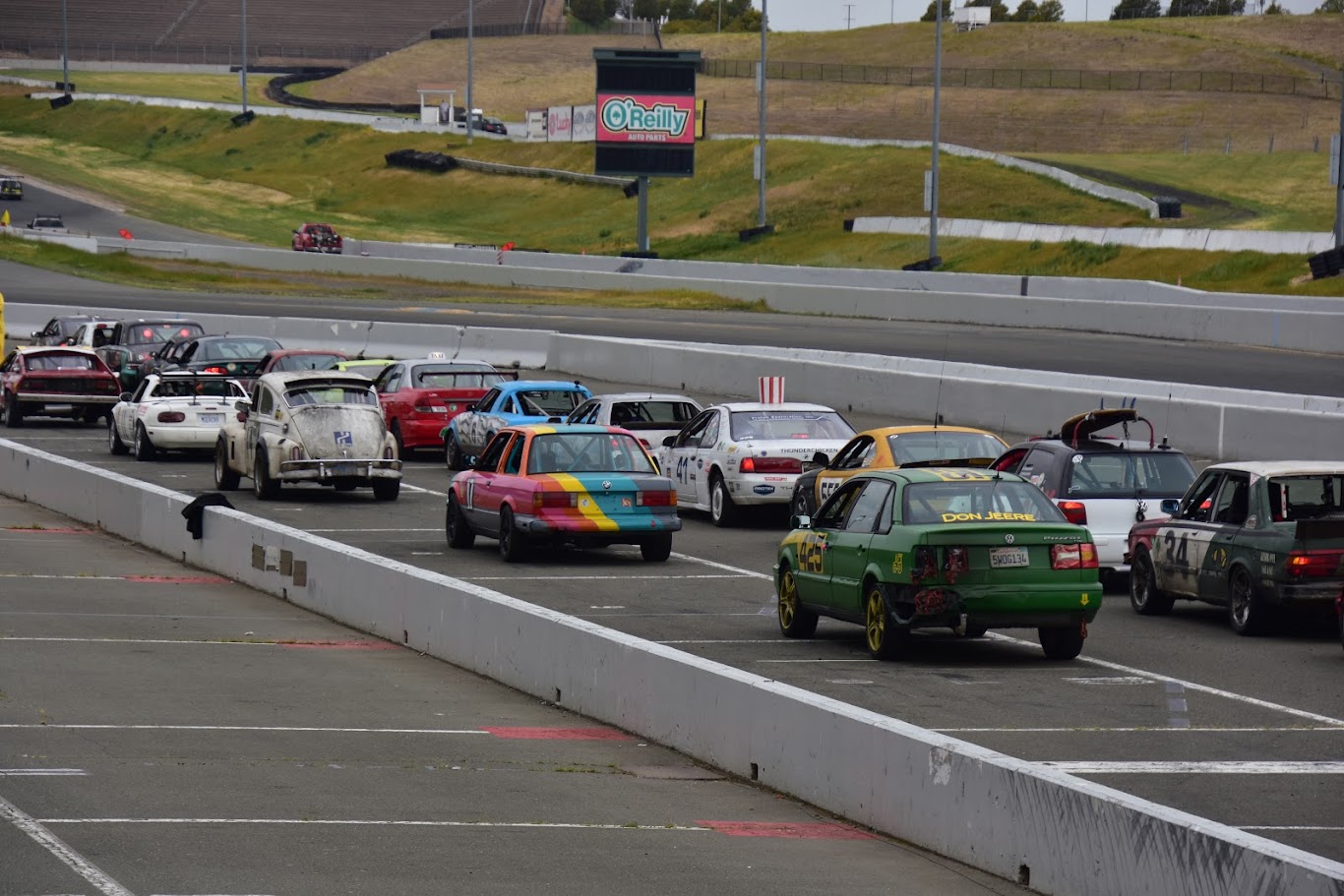
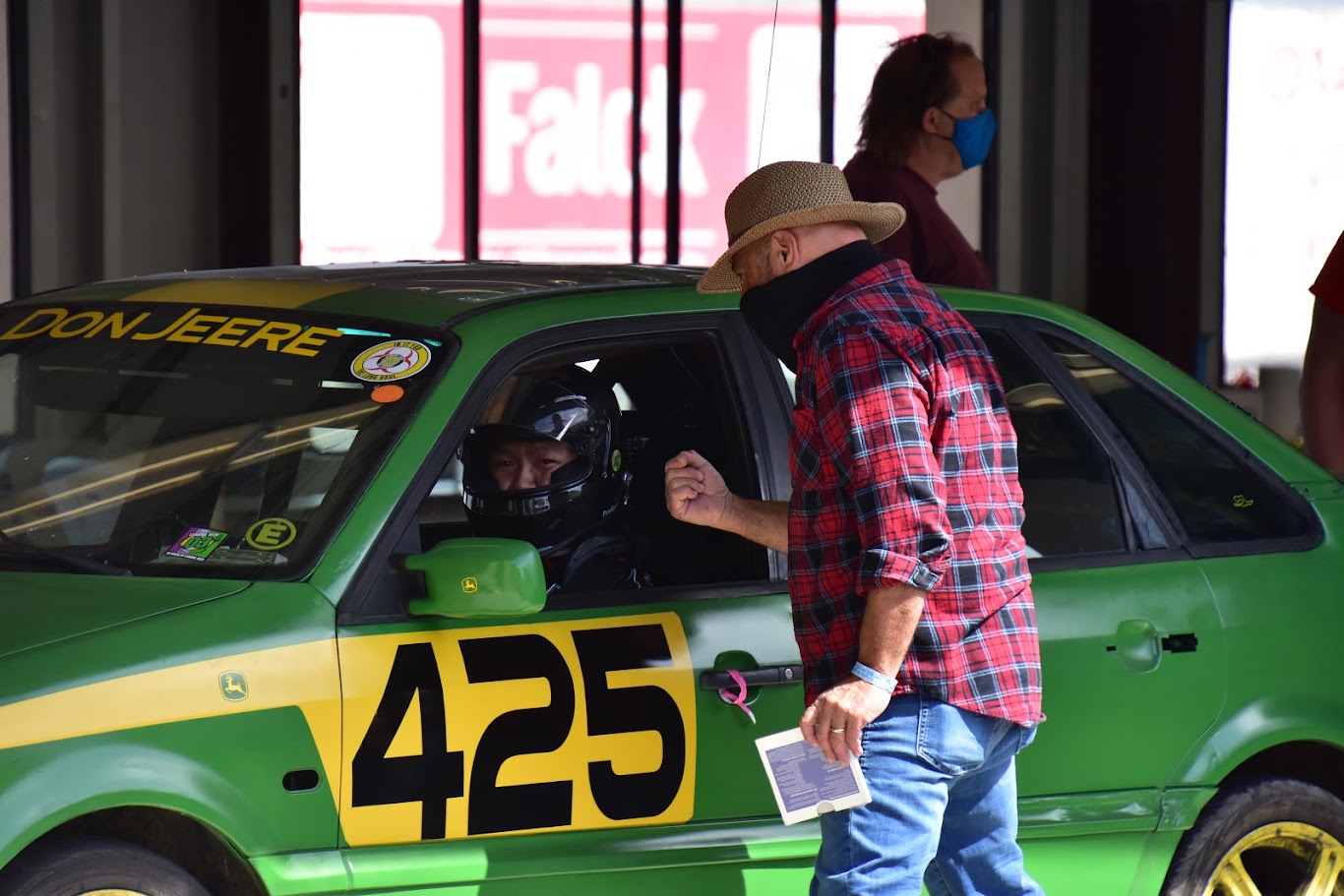
The origin story for Dohn Jeere started a few years before the car itself. At some point in 2017 I met Mak, and we briefly talked about the idea of doing Lemons. Three years later he found Pavel and Brian, who were also interested, and with that the team finally existed. With a group of top-tier engineers assembled, we were obviously poised to create a completely dominant race car in the image of Adrian Newey. What we actually built was a smoky diesel Passat held together by optimism, questionable budget priorities, and a John Deere theme.
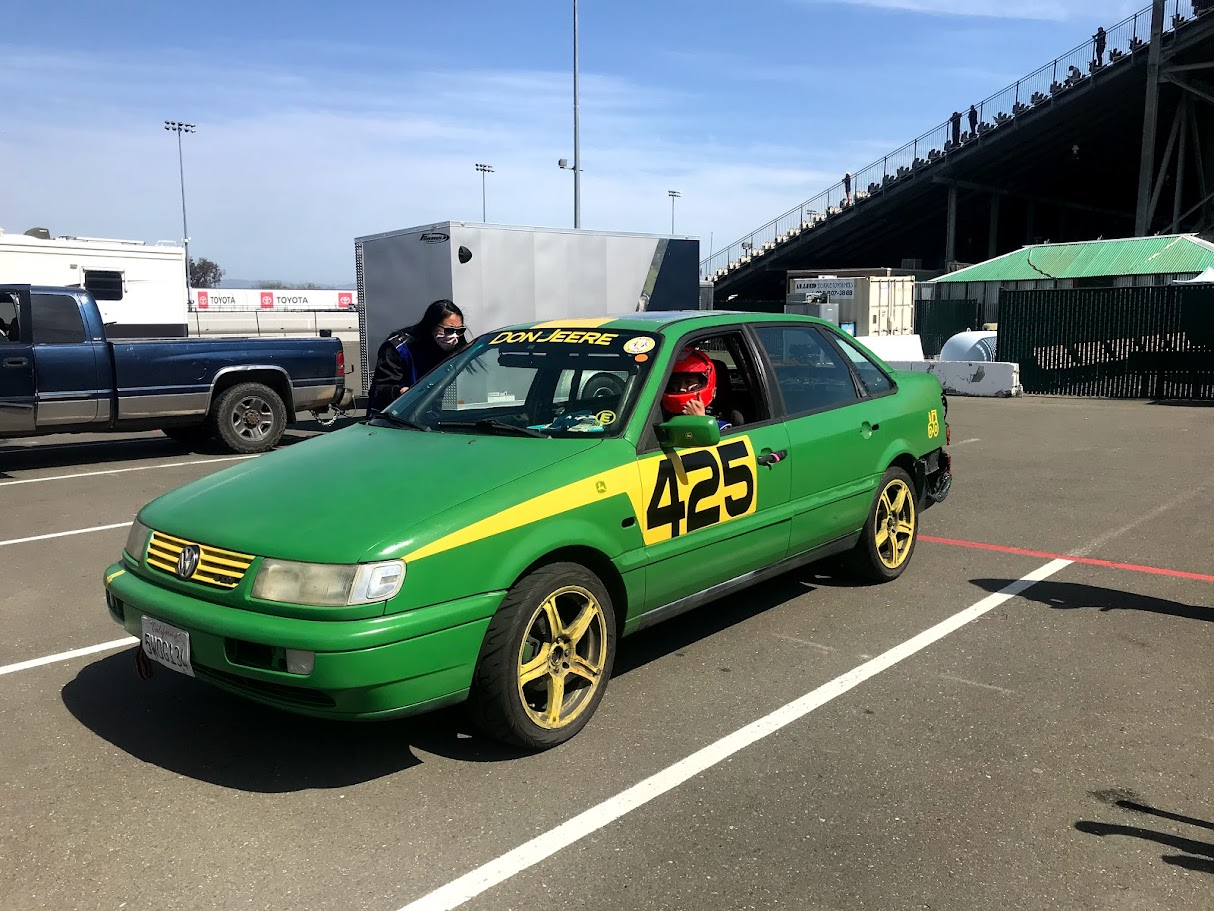
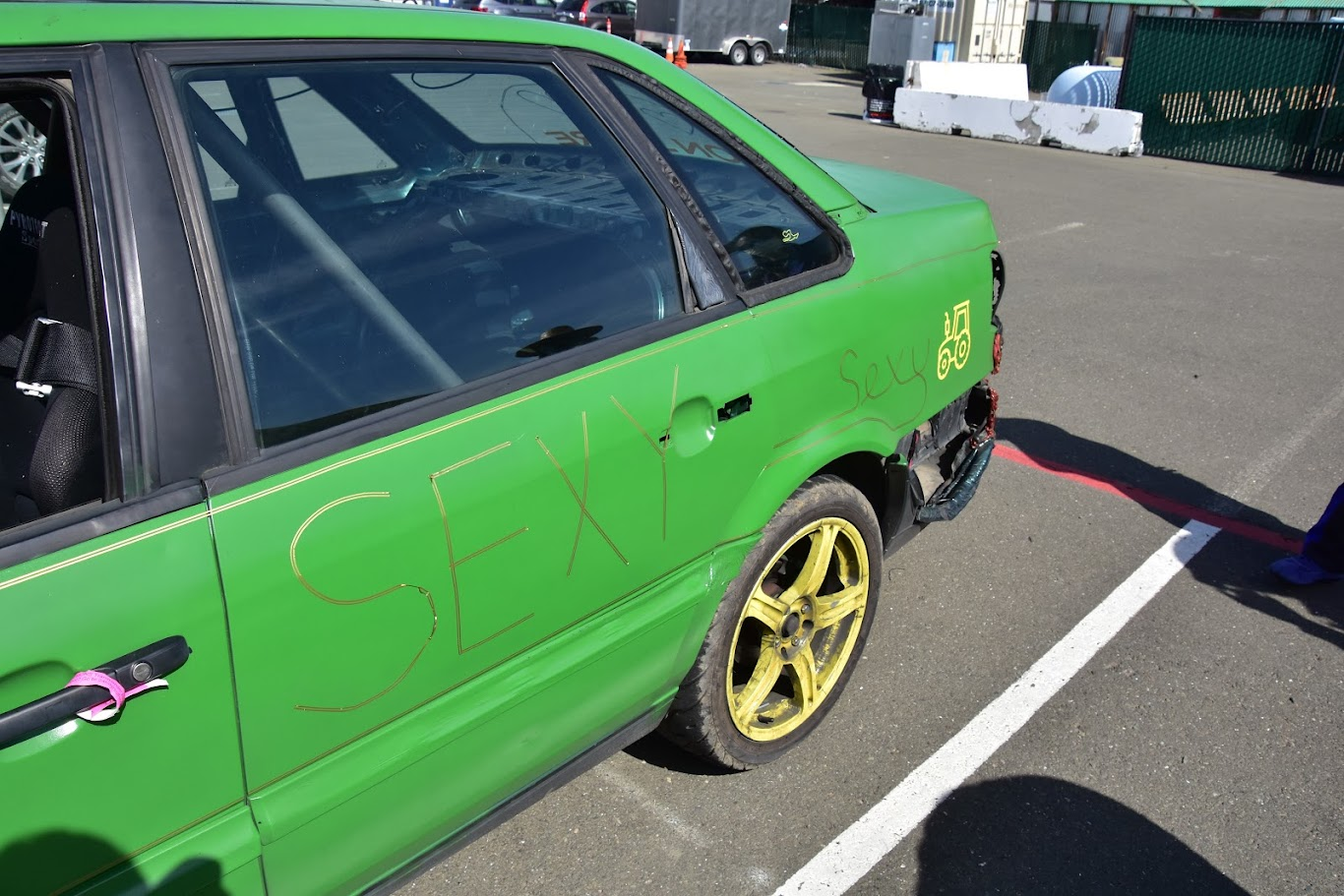
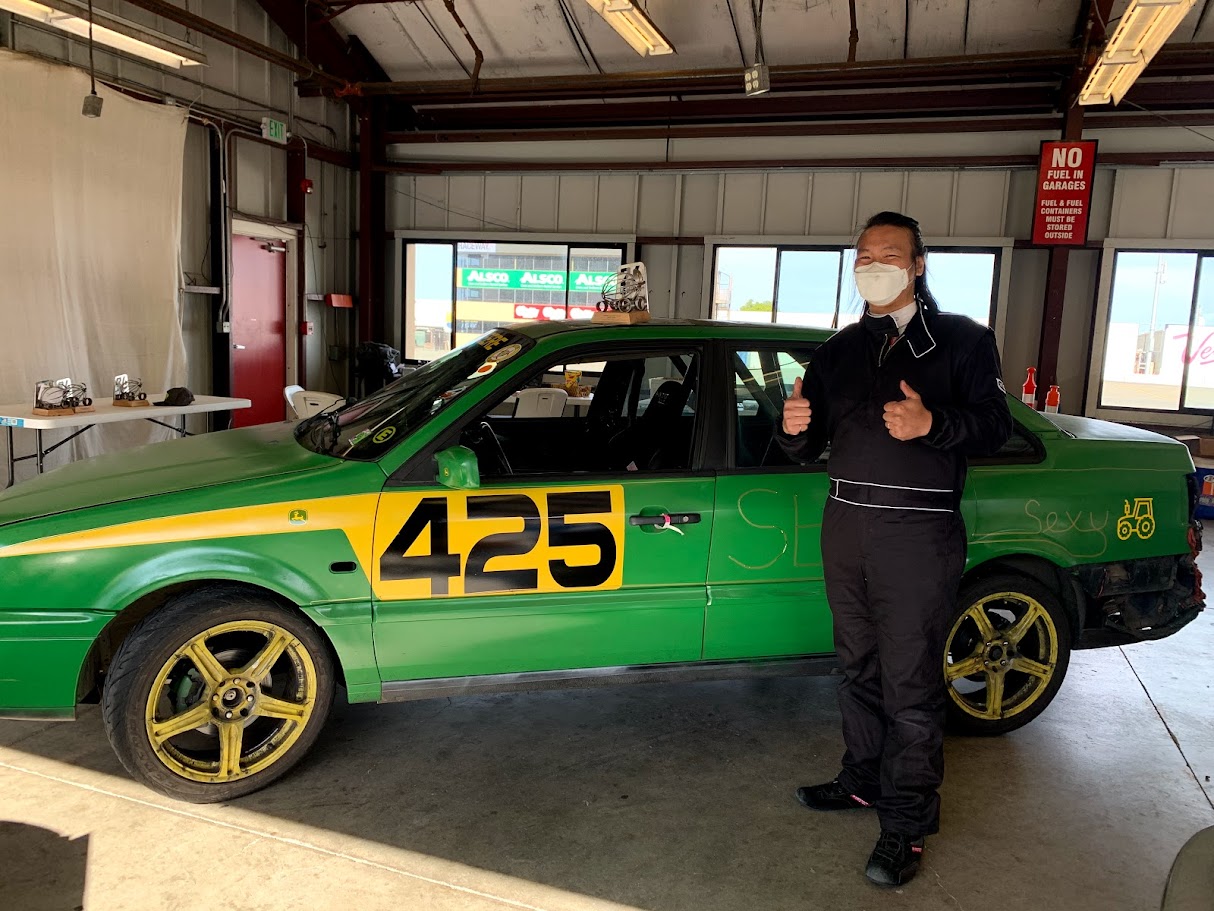
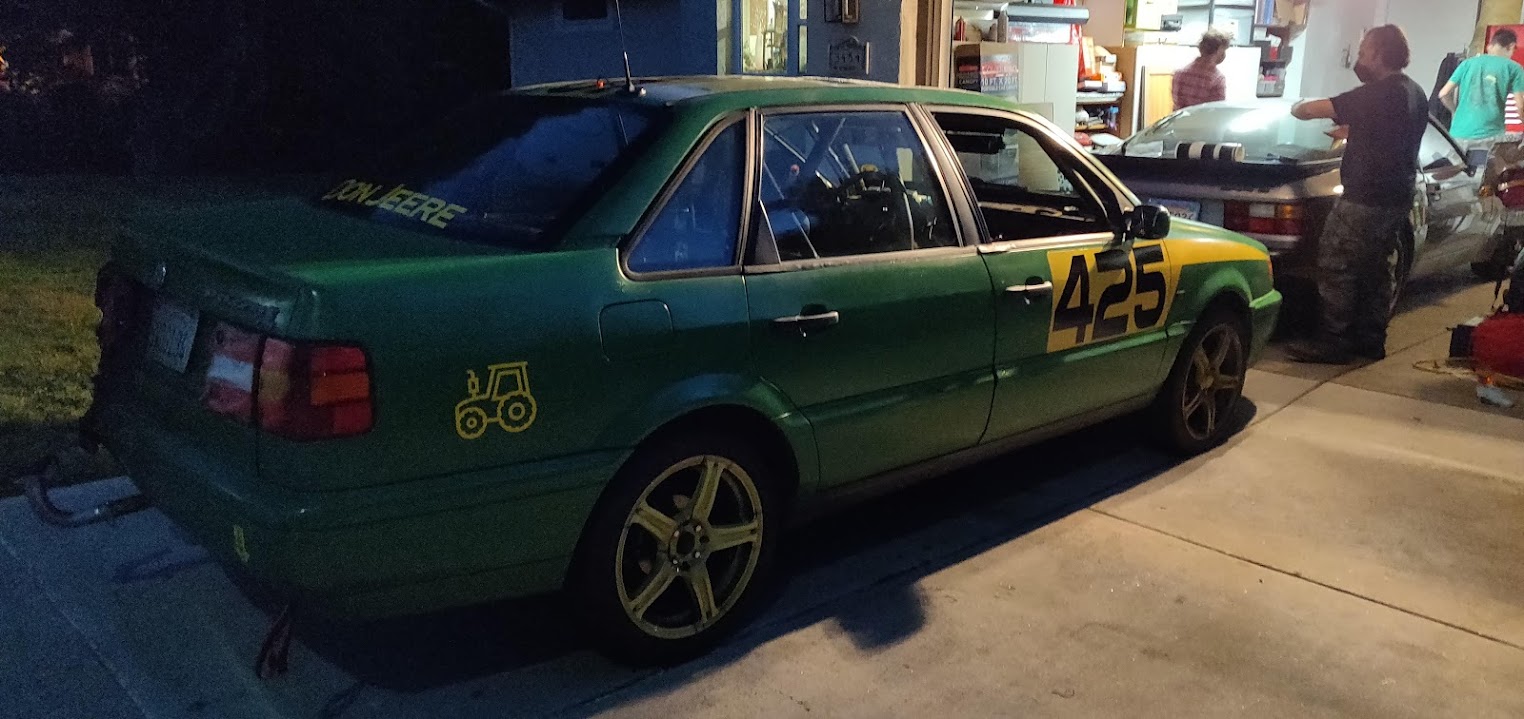
The first race at Sonoma was a pretty effective reality check. Two laps into practice we blew up an inner CV joint, then immediately ran to O’Reilly for a replacement and spent the rest of practice day fixing the car. Around the block, the Passat had felt kind of fast in a tractor-like way because it was so torquey, but once we got it on track it became obvious that stock 90 hp is still stock 90 hp. It was absolutely dog slow. Even with the lack of speed, we still managed to pick up a few penalties, including the legendary “sexy pinstriping” penalty, which required us to decorate the car accordingly. The sexy pinstriping is still on the car to this day, which is probably the most lasting visual evidence of our first weekend.
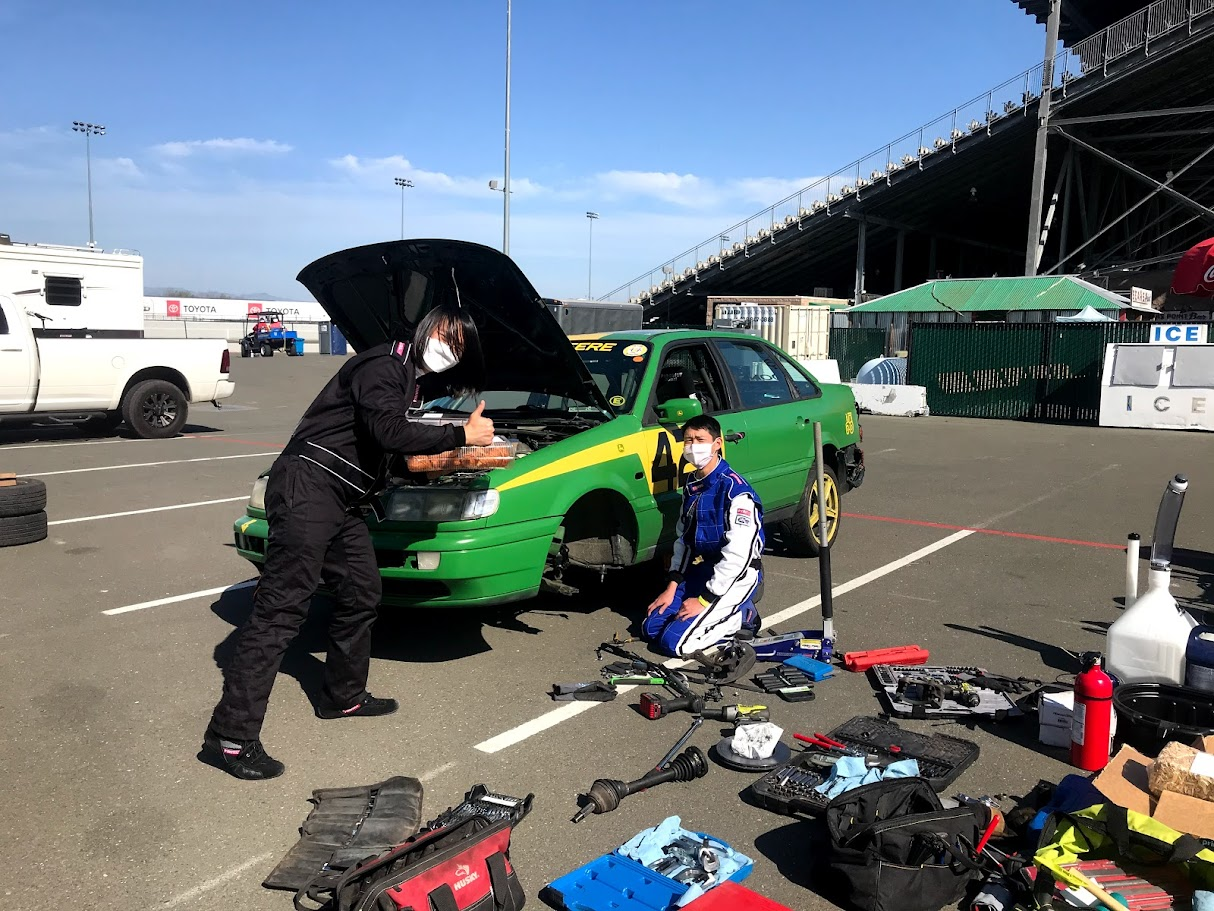
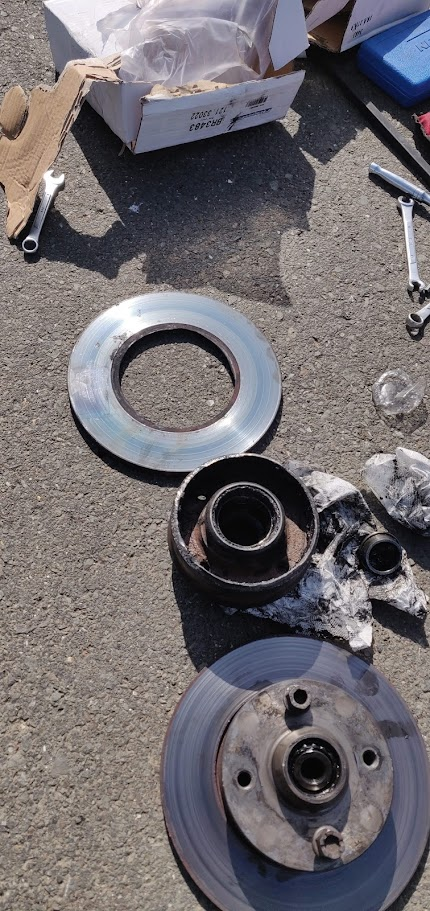
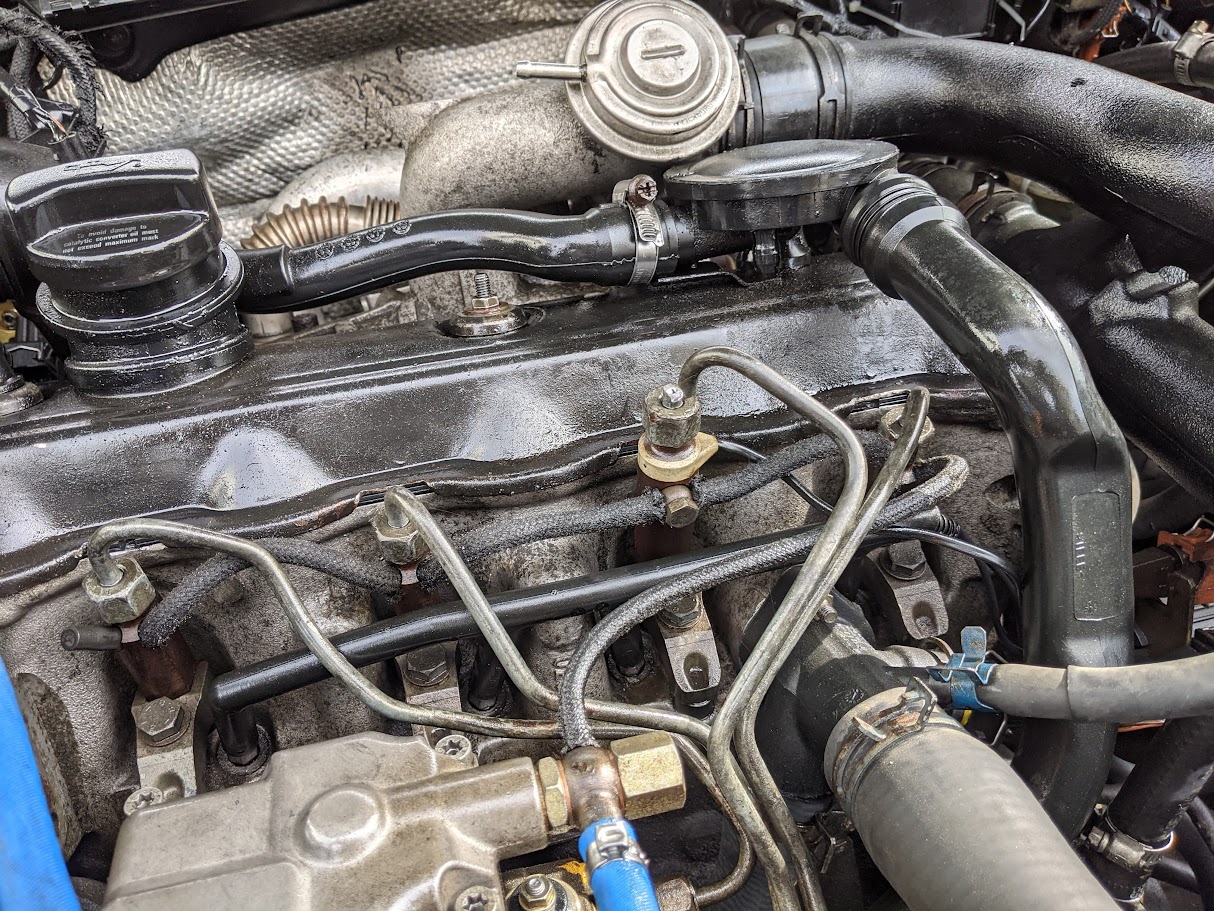
Mechanical issues kept arriving on schedule. We had a rear wheel bearing fail badly enough that a wheel left the car, which led to another trip to O’Reilly and the memorable experience of hammering in wheel bearings on the ground with rocks like cavemen. By the end of the race, one of the injector lines had also cracked and was spraying diesel all over the engine bay. That was not a failure we could ignore, because we had driven the car to the track and did not own a trailer. Long after everyone else had packed up and left, we were still there replacing the injector line with a piece of brake line from what I believe was our third O’Reilly run of the weekend.
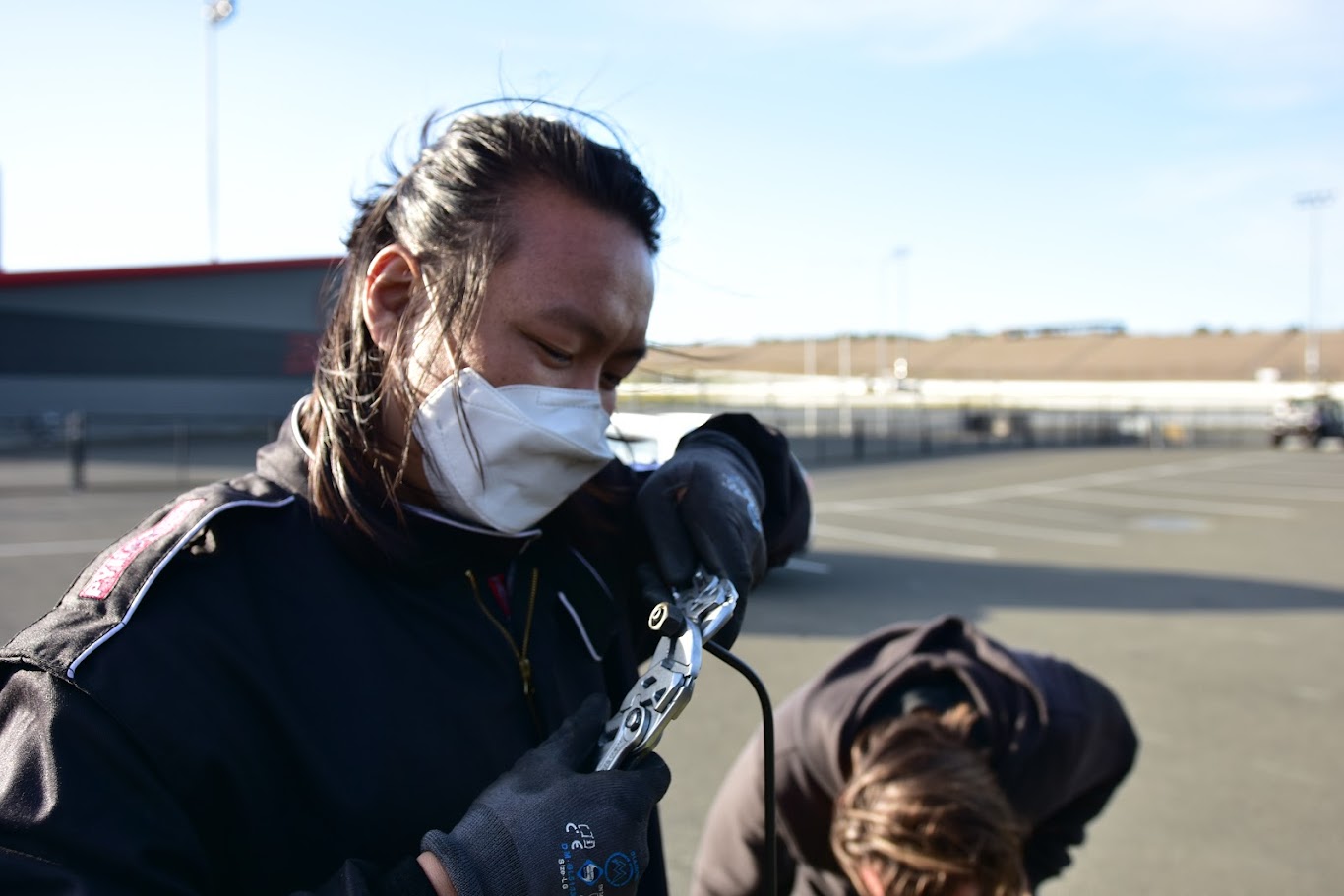
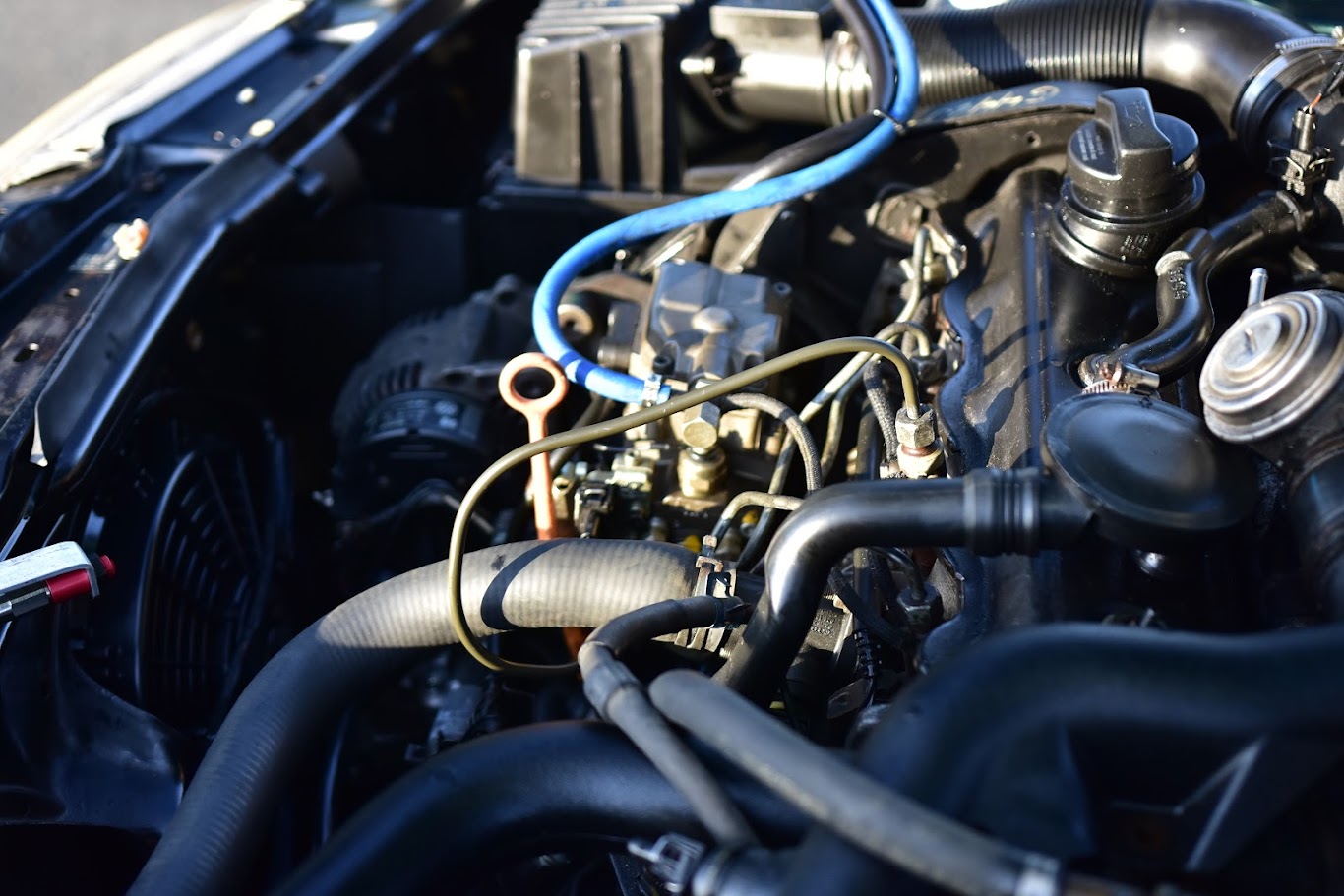
Somehow, after all of that, the car drove home without further incident. We took home the Judges’ Choice award, the theme was loved by everyone, and the weekend was a very effective introduction to what Lemons actually is: racing is hard, spares matter, every fix takes longer than it should, and it is all still incredibly fun anyway. In a lot of ways, that first race set the tone for everything that came after.
Cage build
The cage build was one of the first points where the Passat stopped being a questionable Craigslist diesel and started becoming an actual race car. We built it from 1.75 inch DOM tubing, all manually cut and notched to fit. There was no real CAD involved in laying it out. The whole thing was basically eyeballed into place with tape measures, string, and an angle finder, and then bent with a lot of feel and finesse on a manual tubing bender bolted to a trailer.
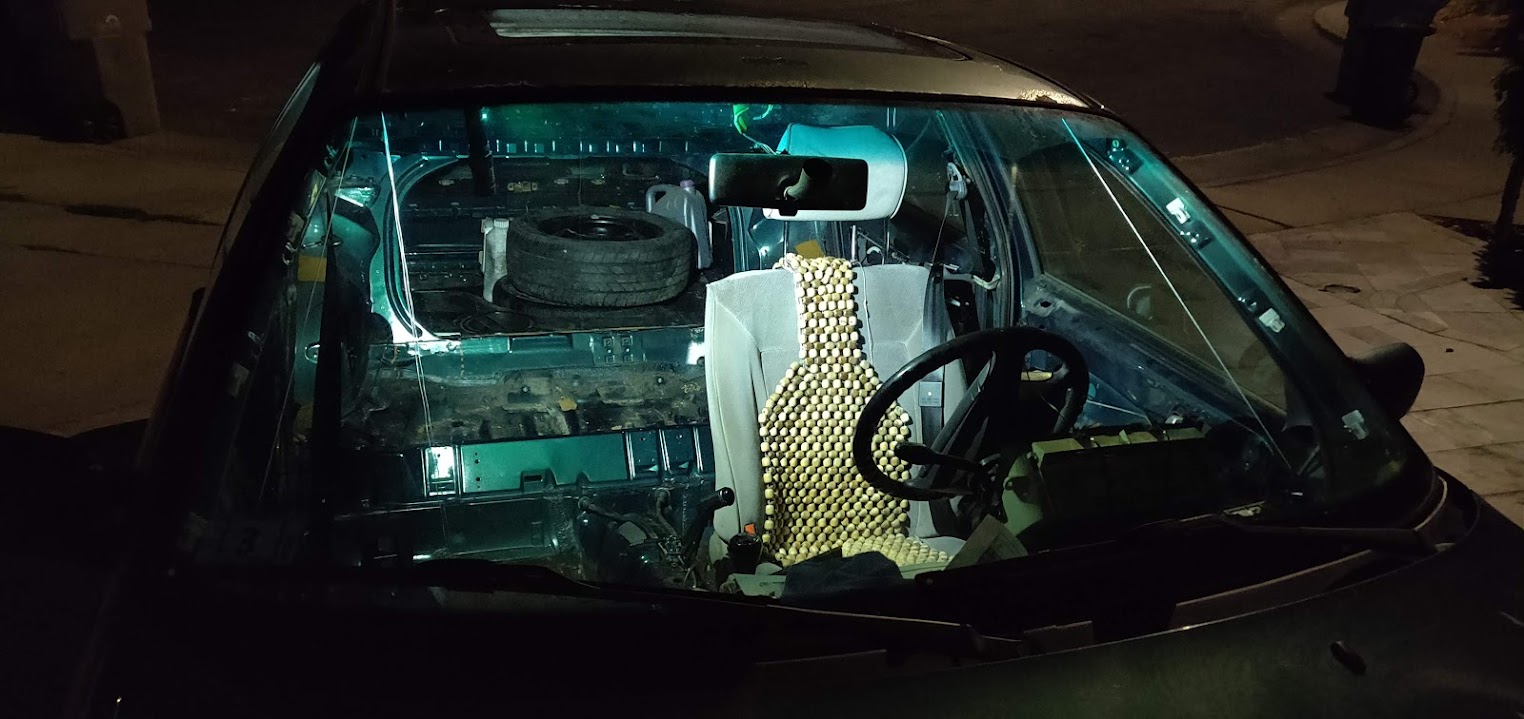
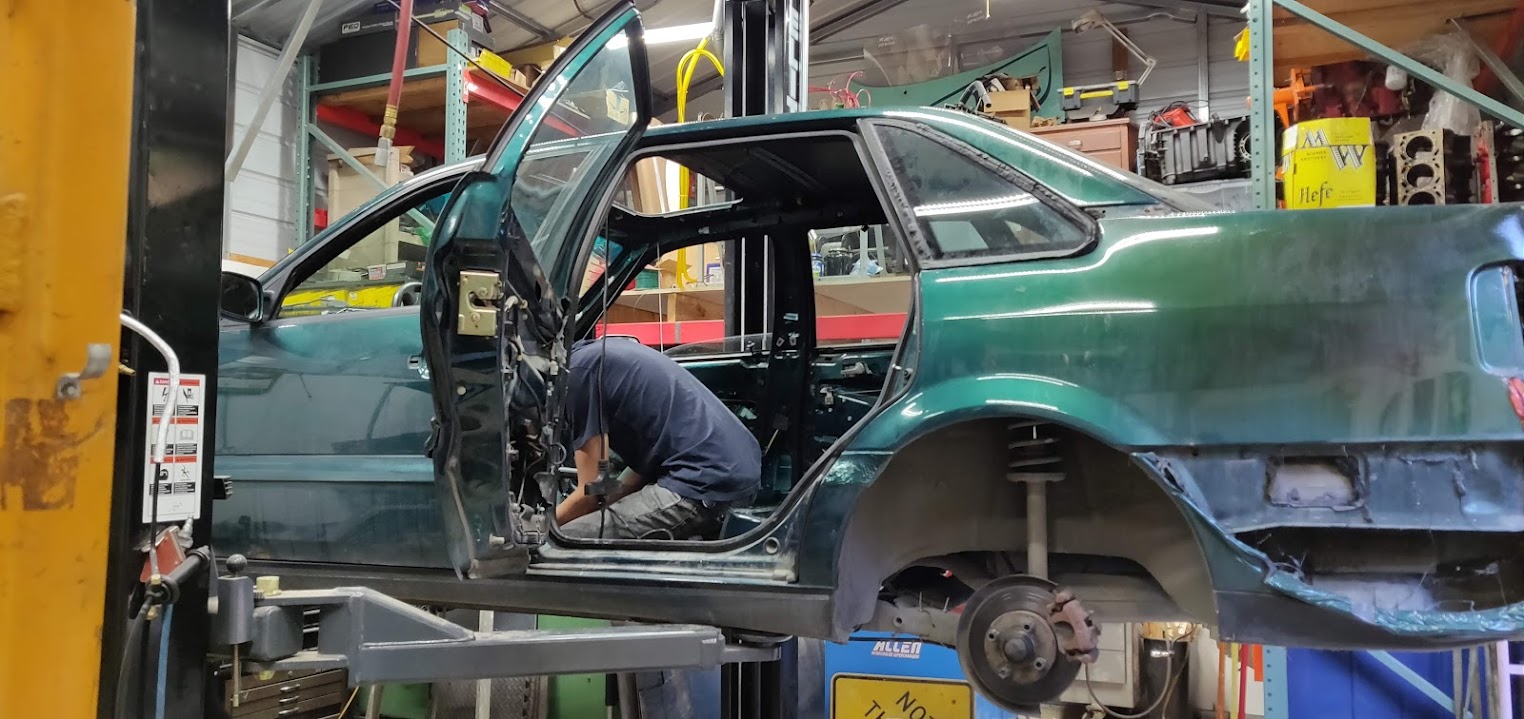
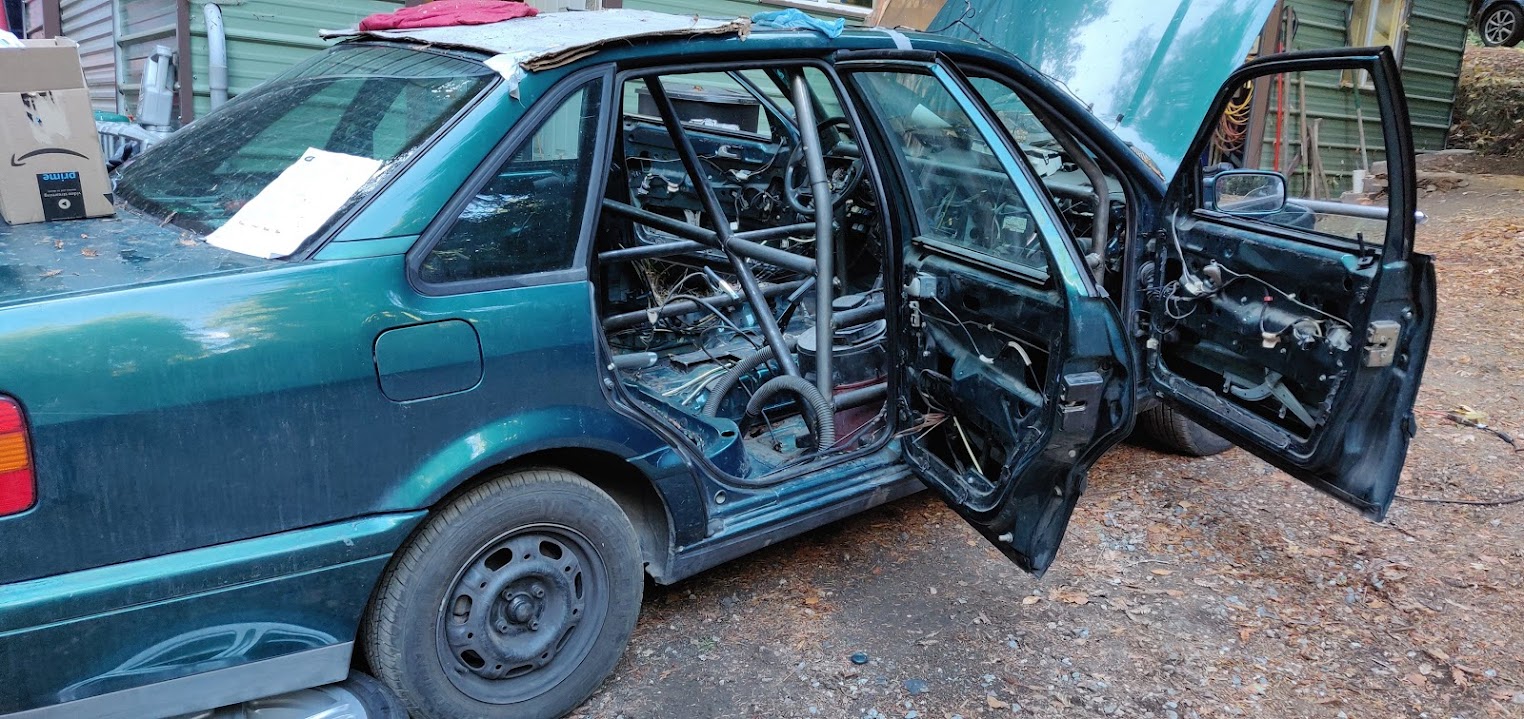
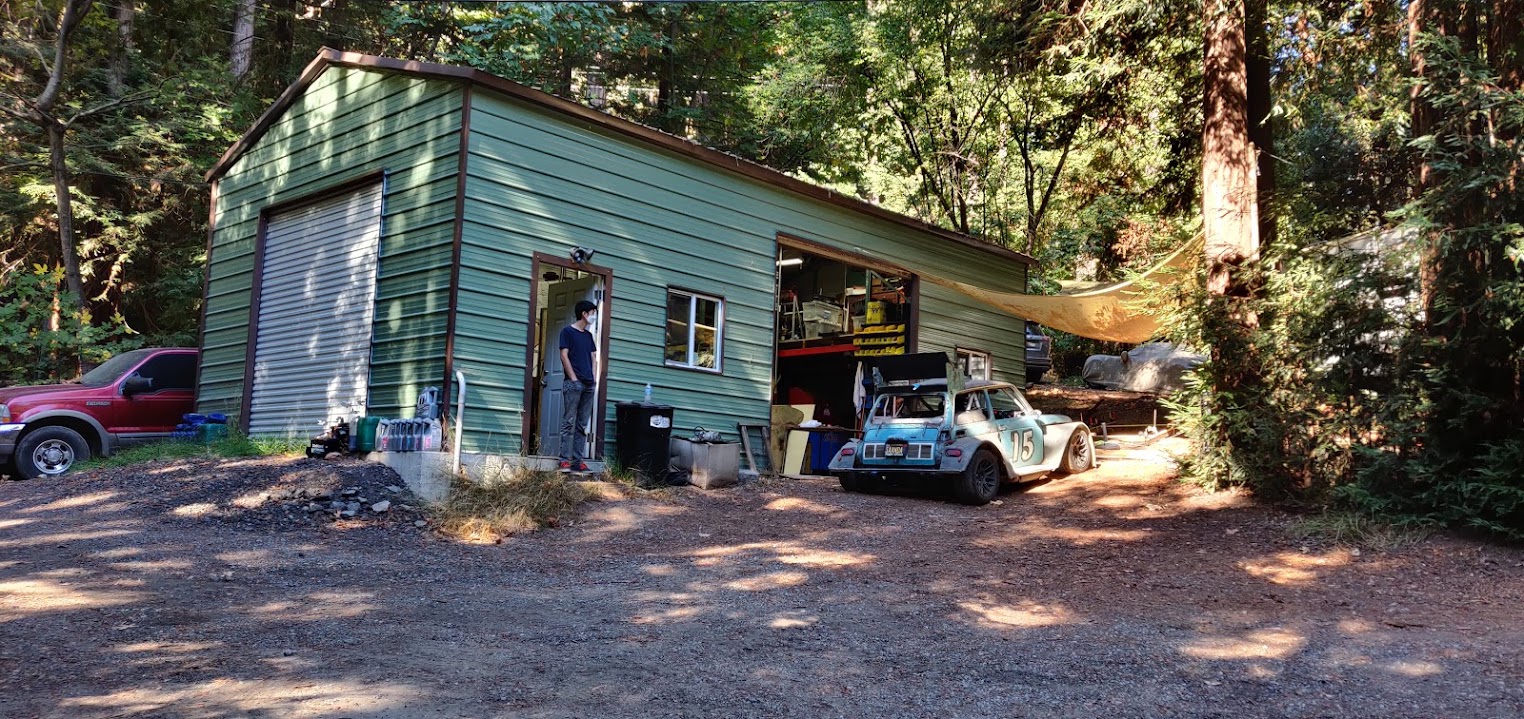
At the time, none of us really had a proper shop of our own, so the work happened at Team Apathy HQ. They were a much more experienced Lemons team running Saanda, a center-seat Honda N600 with a rear-mounted Saab engine, which tells you just about everything you need to know about the kind of place it was. Over a few weekends, the cage came together the old-fashioned way. I handled the welding while Mak, Pavel, and Brian did the cutting, notching, and bending. Most of the notches were done with a hole saw and then cleaned up with some grinding until everything fit well enough to stop arguing with it.
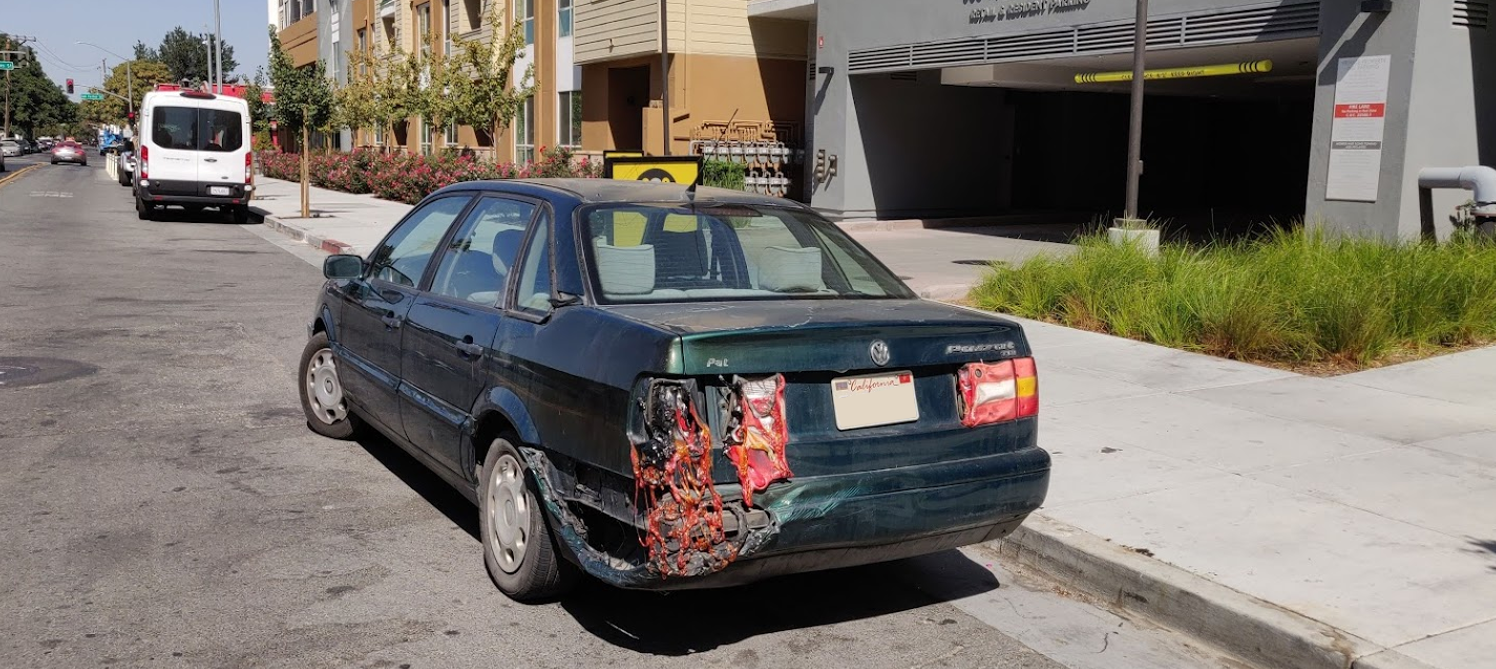
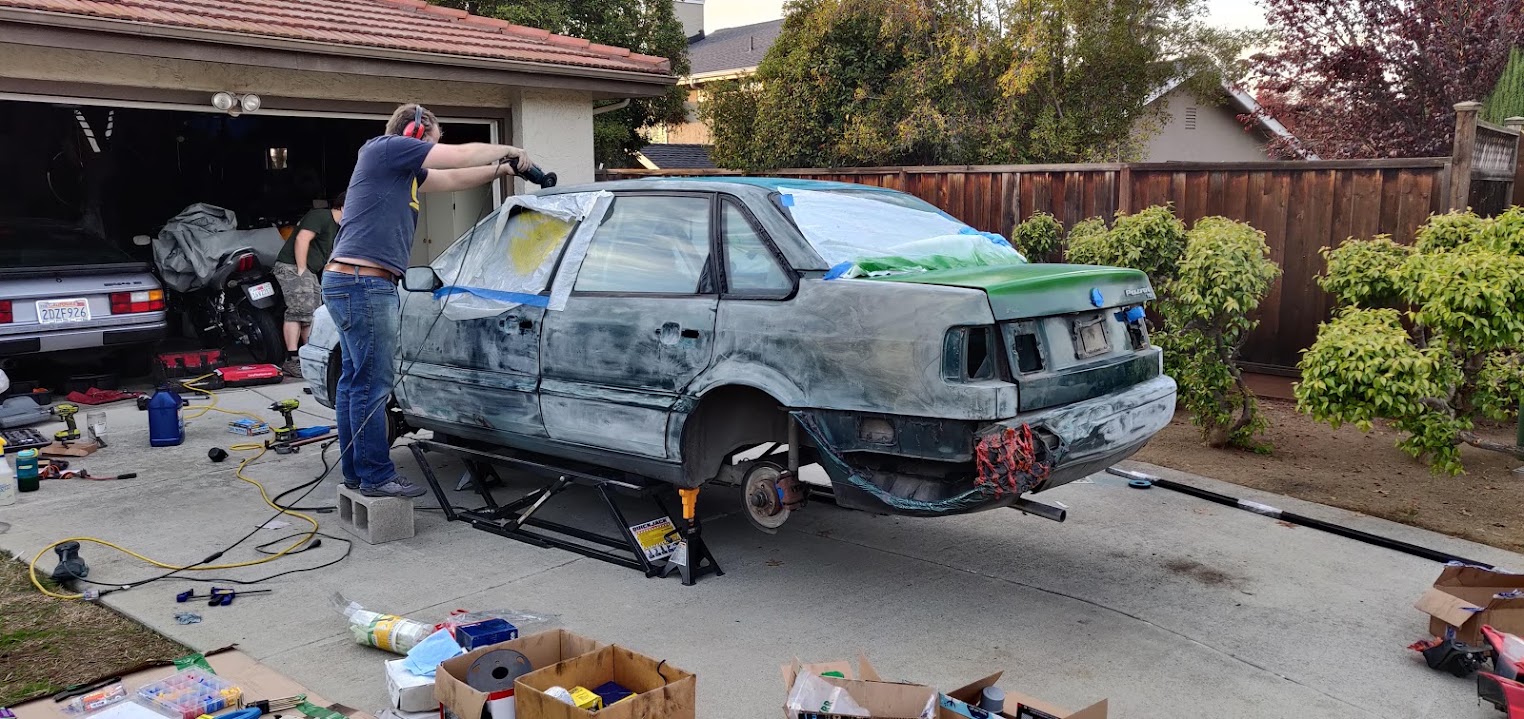
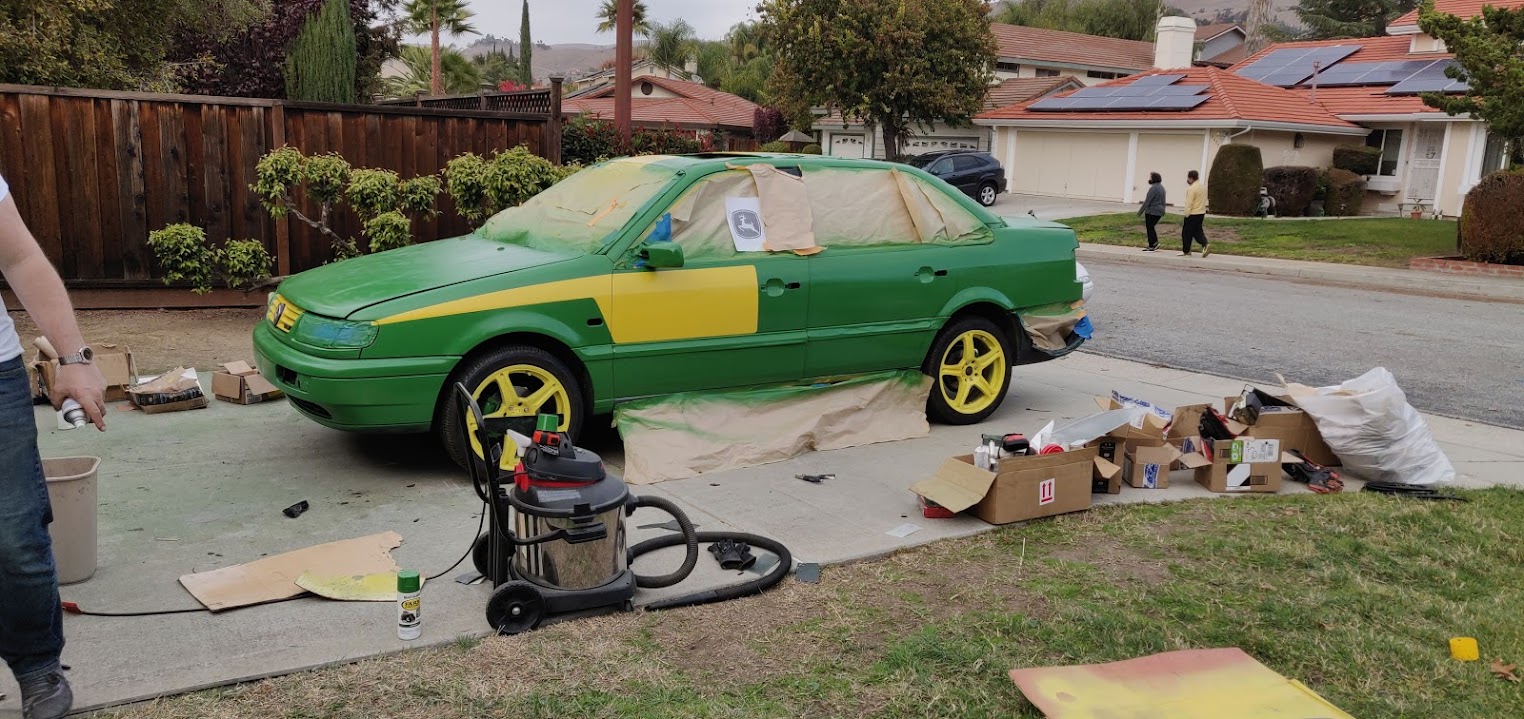
Once the cage was done, the car finally looked like it had a purpose. We drove it back home, finished off the livery with a few rattle cans of John Deere green and yellow, and with that Dohn Jeere was more or less born. From there it was ready for its debut race at Sonoma, which felt like a pretty satisfying result for a car that had started life as a slow, smoky tractor with a melted edge and a $700 asking price.
Blowing up the original 1Z
At some point the original 1Z engine also met a fairly comprehensive end. In an effort to keep exhaust gas temperatures under control, we experimented with water injection. In theory, this was supposed to help the engine live a little more comfortably under sustained load. In practice, we managed to flood the intake badly enough to hydrolock the engine, and from there things escalated in a way that was almost impressive.
The hydrolock bent a connecting rod, threw the timing belt, let the valves and pistons touch, cracked a cylinder liner, and seized the injection pump all in one event. It was not a partial failure. It was a complete and very efficient destruction of the original engine. The race itself went about as well as you would expect after that, which is to say we retired on the first day.
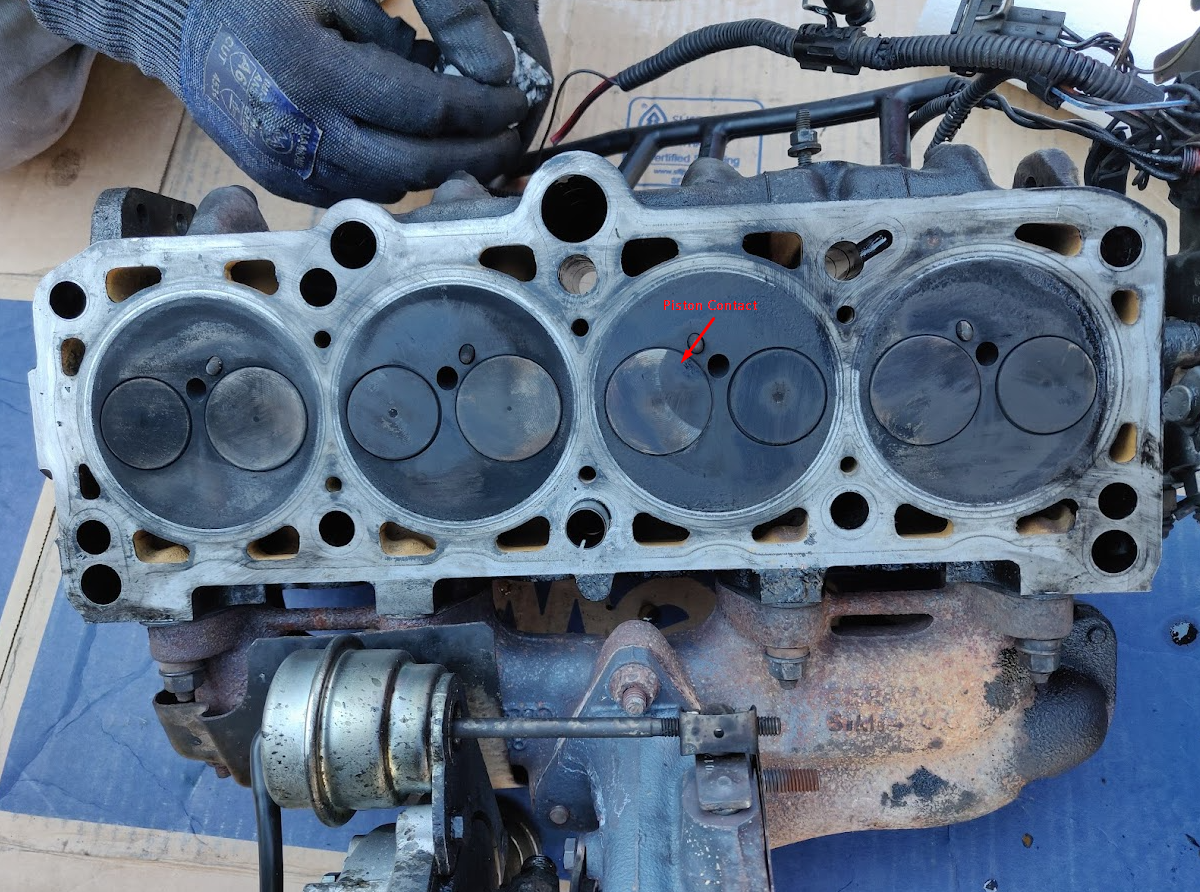
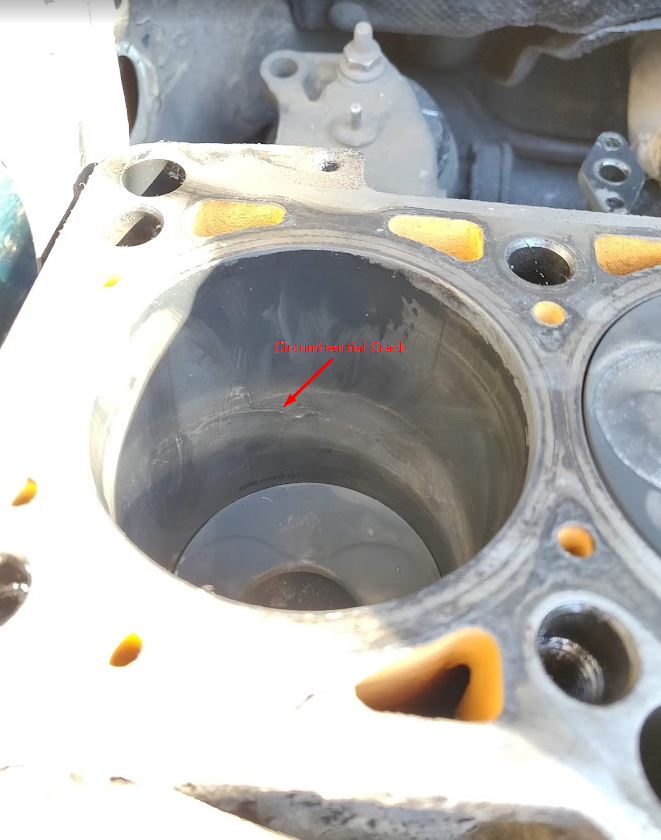
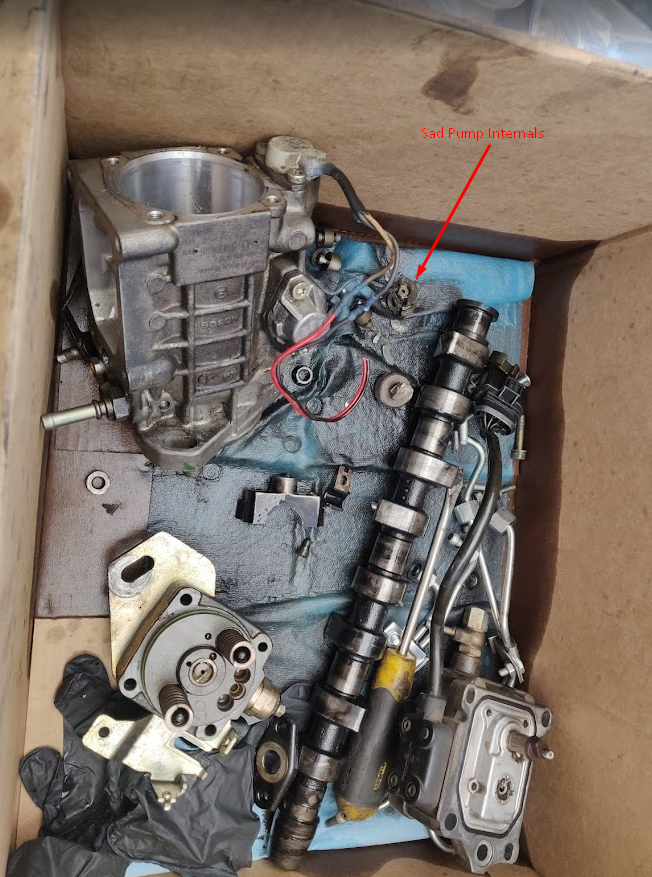
As far as catastrophic failures go, it was a useful reminder that there is a difference between adding another system and actually understanding how that system behaves under race conditions. It was also the event that finally pushed the car away from the original 1Z and onto the ALH that it runs now.
Big turbo retrofit / failures:
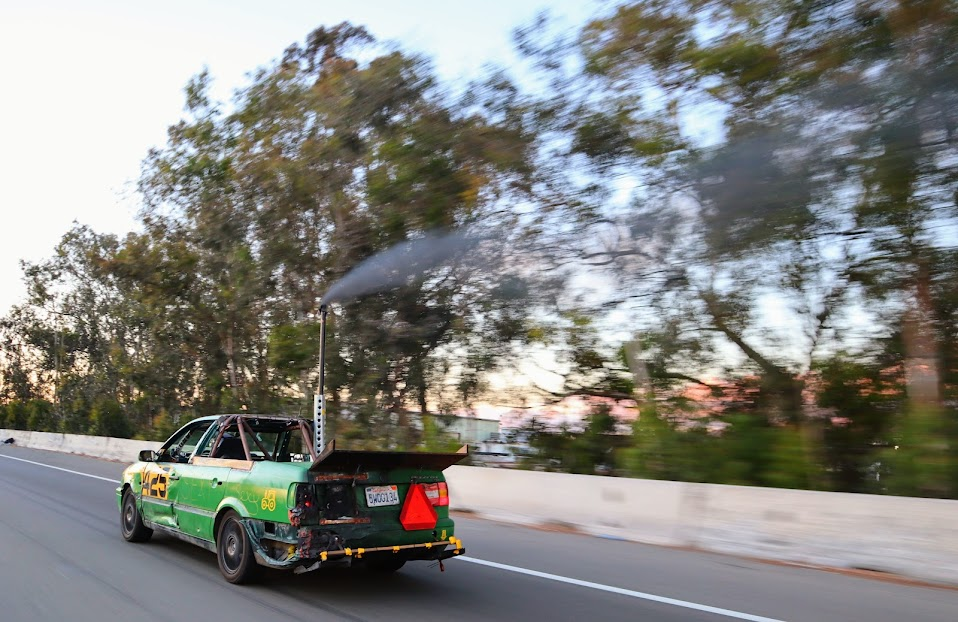
The turbo story happened in two stages, plus a few unplanned detours involving fire, runaway, and the usual diesel consequences. From the factory, the car ran about 10 psi of boost. The first real upgrade was a hybrid K03-K04 turbo from Kermit TDI along with injectors about 20 percent larger than stock to supply the added fuel. On a diesel, more boost by itself is not enough to make meaningful power if you do not also add fuel, so the injectors were part of the upgrade from the beginning. Going to the hybrid turbo was a massive improvement. The car immediately felt much faster and more competitive.
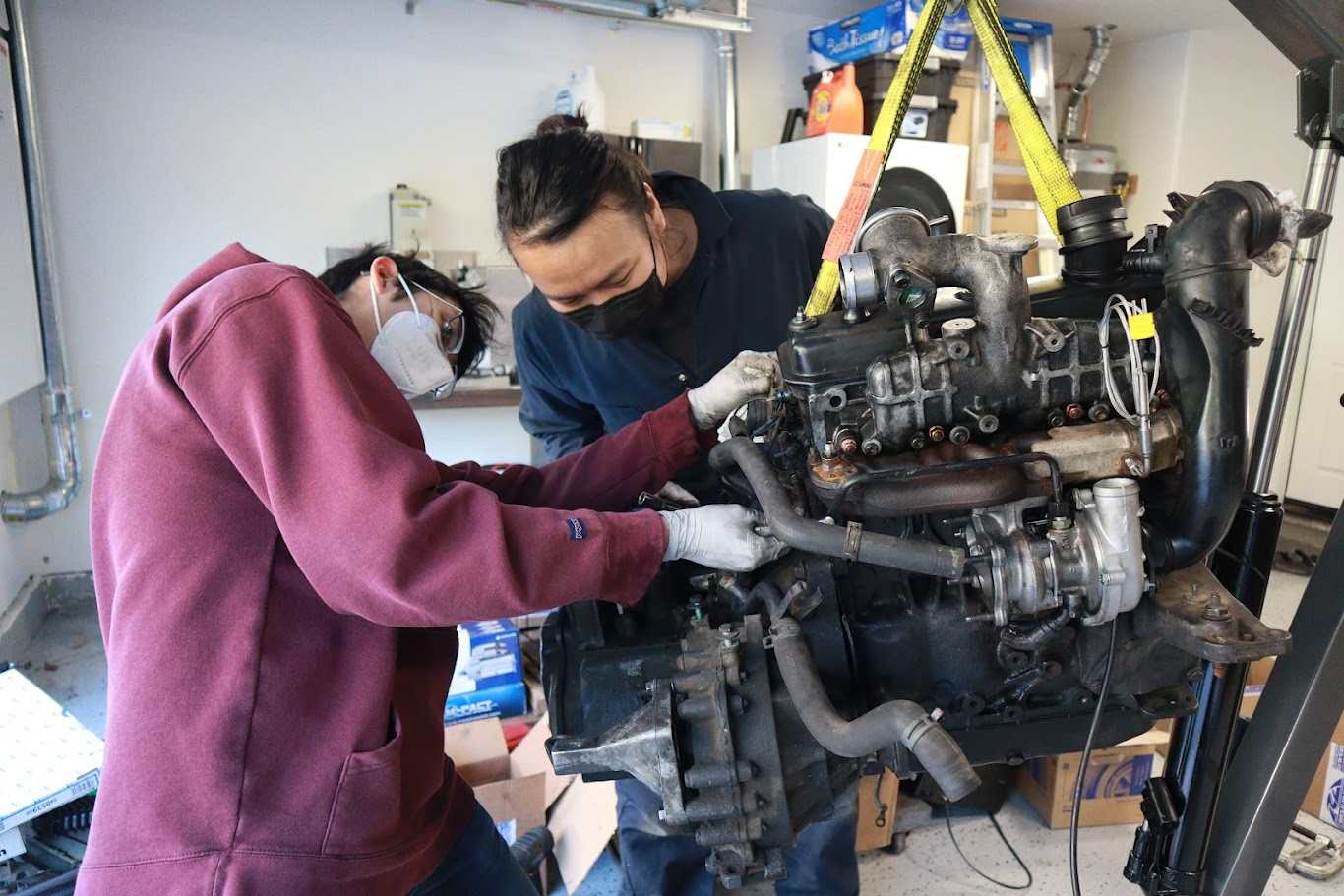
The problem was that while the hybrid setup worked well in the middle of the powerband, it still ran out of steam at the top end. At higher RPM, it simply could not move enough air for what we wanted and was effectively off the happy part of the compressor map. That is what pushed the second stage: a Garrett GT2056, still run at around 20 psi, but much more efficient at higher engine speed. In the spirit of Lemons, the GT2056 came from a diesel V6 box truck and was extremely cheap, which made it even more appealing.
The actual reason the second stage happened when it did, though, was not purely performance. The hybrid turbo first blew its seals, which fed oil into the intake and caused a full diesel runaway as the engine happily tried to consume the contents of the oil pan as fuel. After that, we rebuilt the hybrid with new seals, but in the process we believe the shaft got bent. During a later practice day, after about ten laps on track, there was a pop and suddenly no boost. That first turbo failure was not subtle: the turbo let go hard enough to send the exducer out the exhaust, oil in the exhaust stream ignited, and the car rolled into the pits trailing smoke so we could put the fire out with an extinguisher.
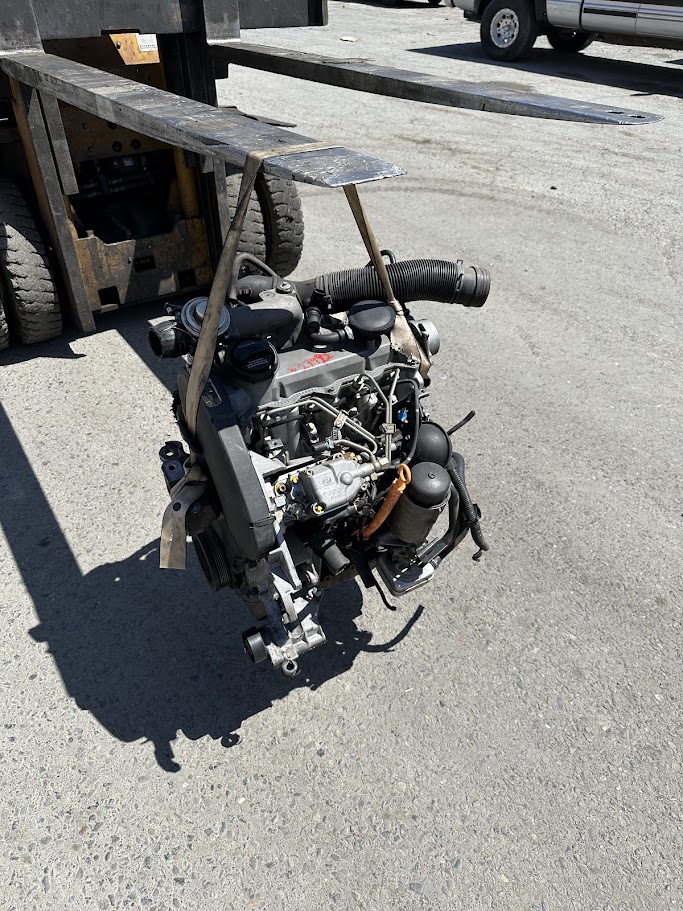
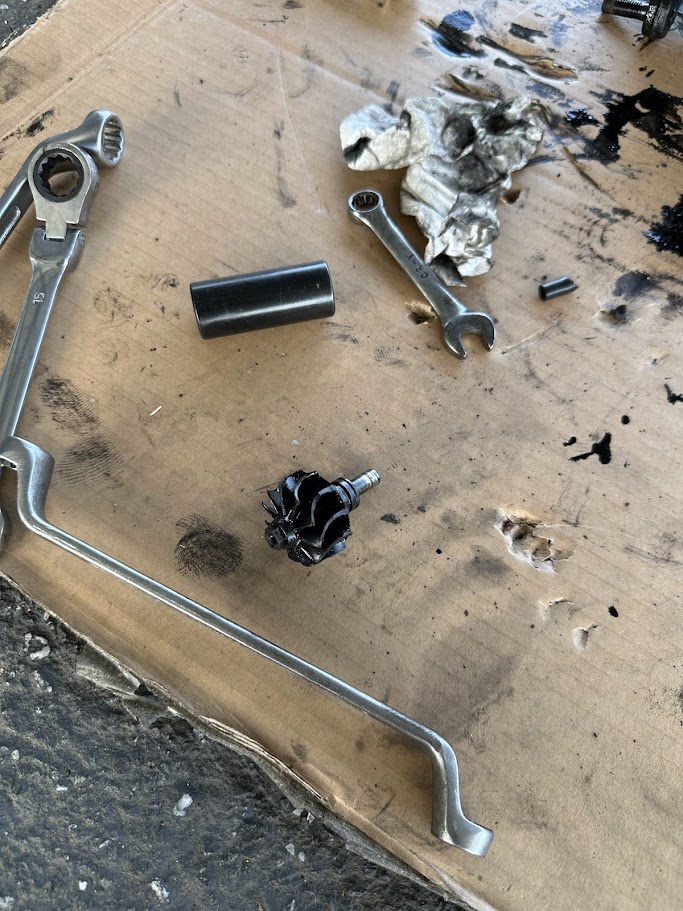
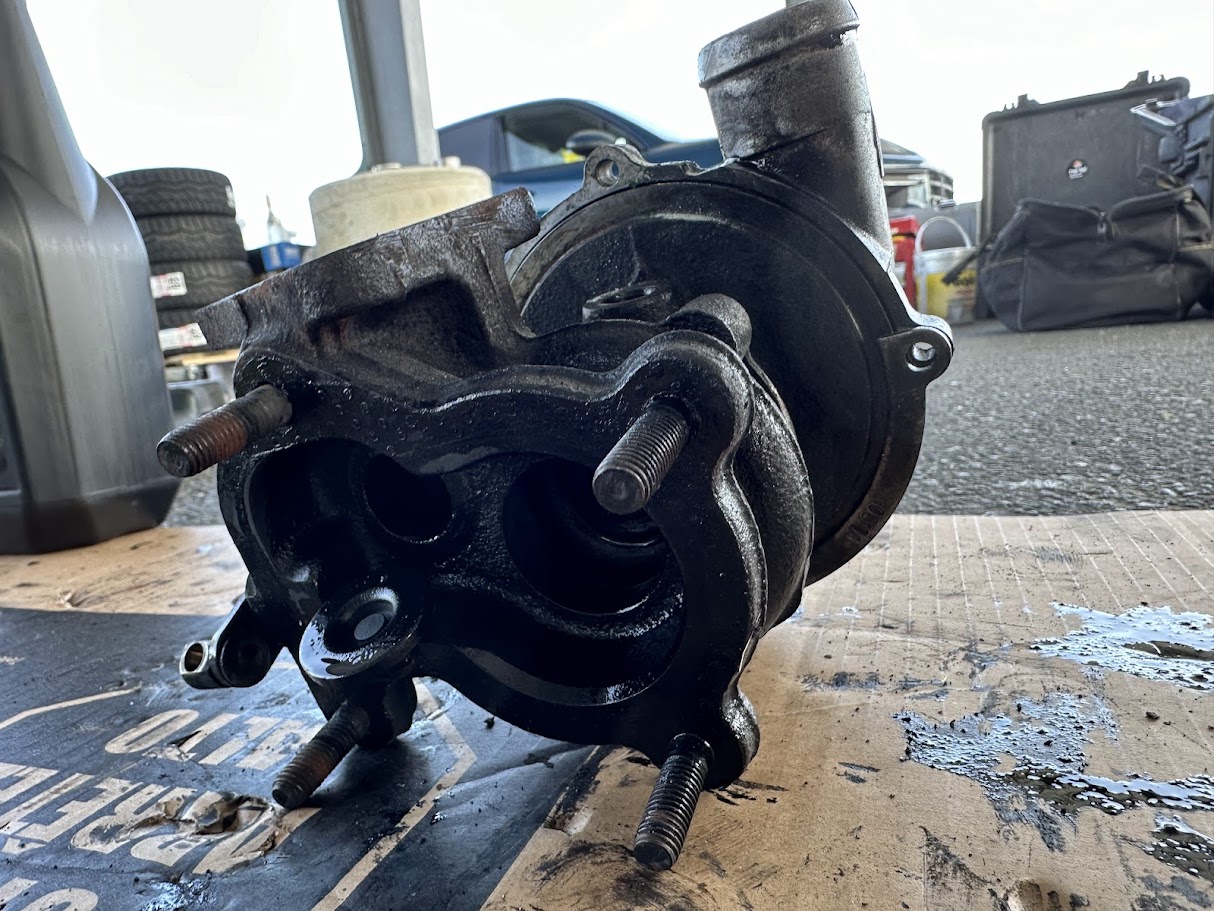
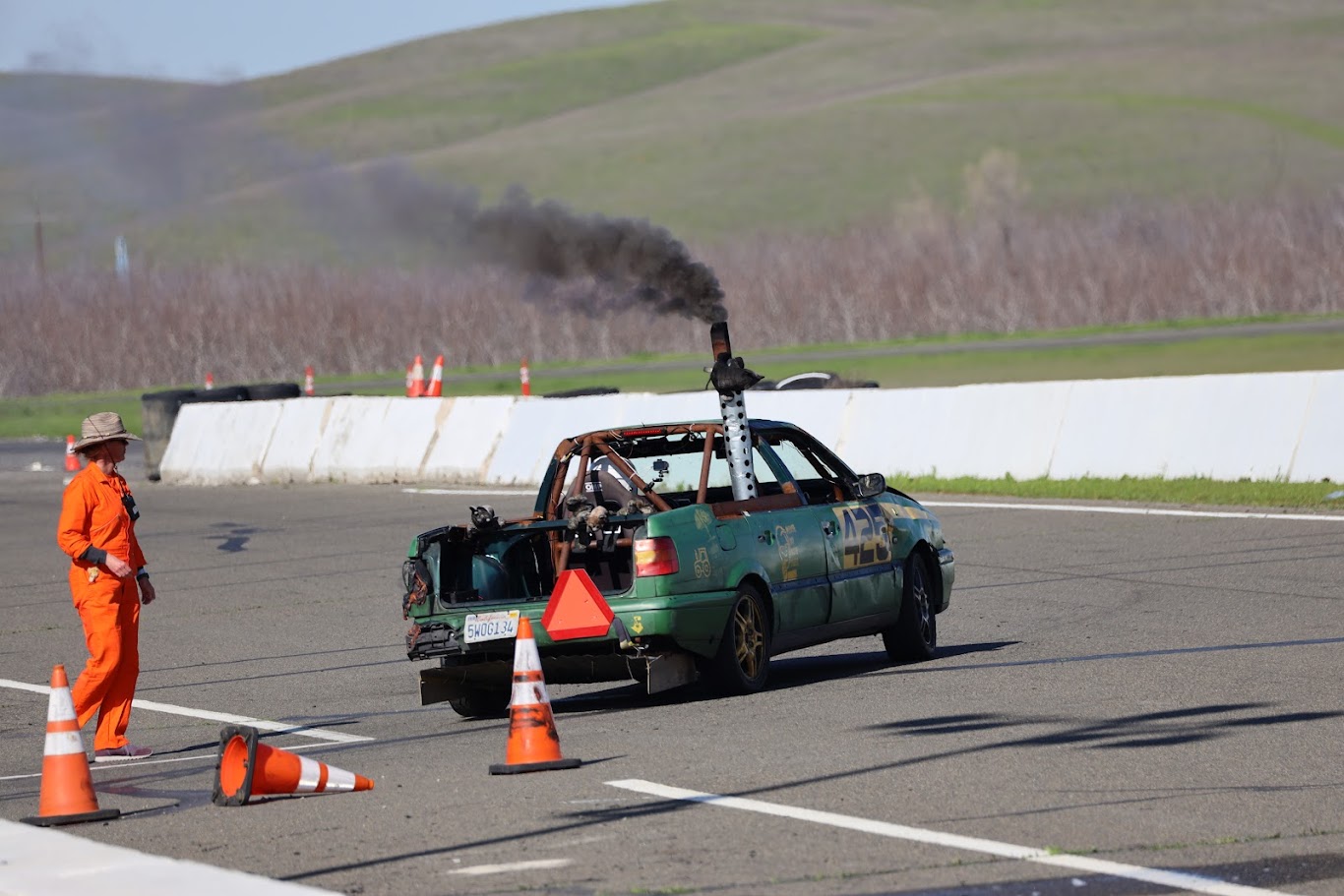
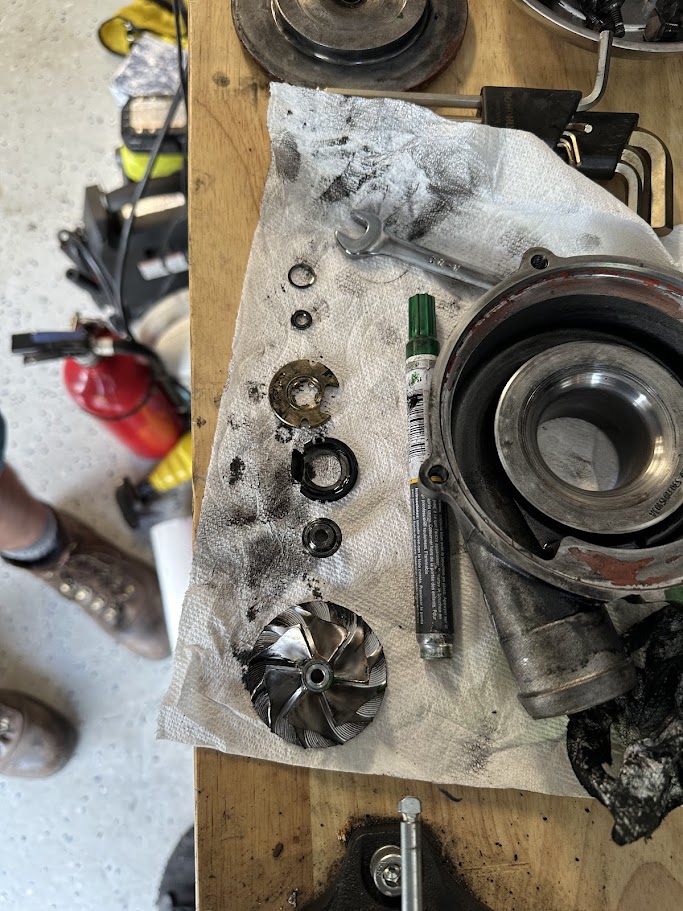
To get through that race, we bolted the original stock turbo back on and turned it up to 20 psi. It did its best, but by the end of the day it also snapped its shaft. It at least had the decency not to catch the car on fire. At that point the GT2056 upgrade became less of an option and more of a requirement.
Making the GT2056 fit required a custom adapter plate from the original 1Z exhaust manifold to the new turbo, and as with a lot of the fabrication on this car, I 3D printed the adapter first so I could fit check everything in the engine bay before making final parts. Each turbo change also meant building a new downpipe. On the fueling side, the GT2056 setup went to injectors roughly 50 percent larger than stock, again because diesel power depends on fuel as much as air. We also upgraded from the original side-mount intercooler to a front-mount intercooler from a Mercedes C230 Kompressor, mounted front and center for much better cooling.
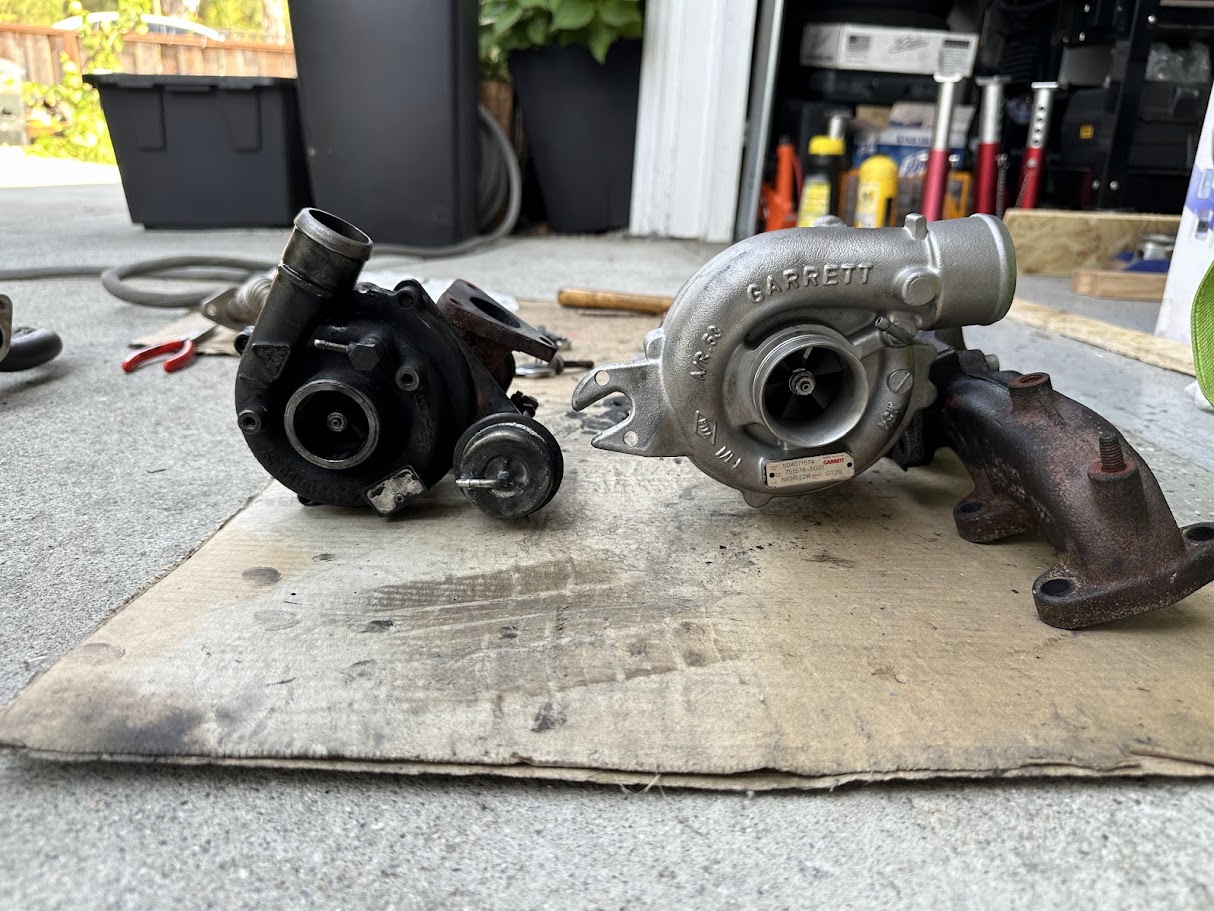
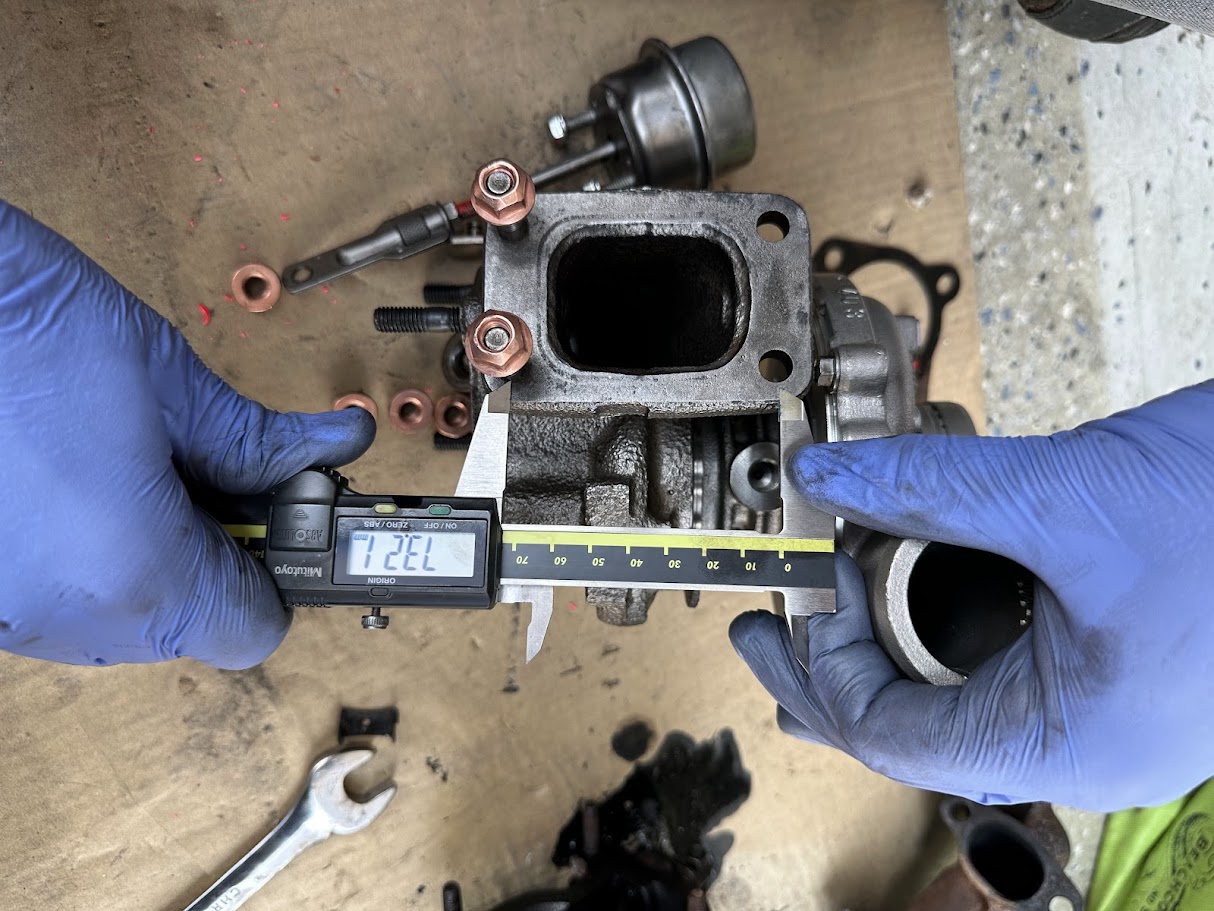
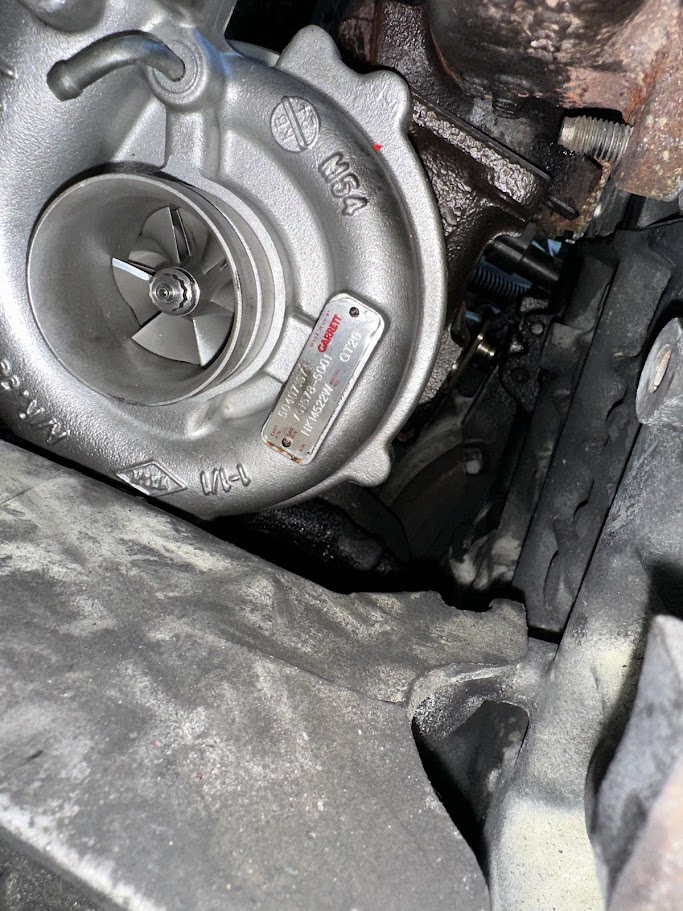
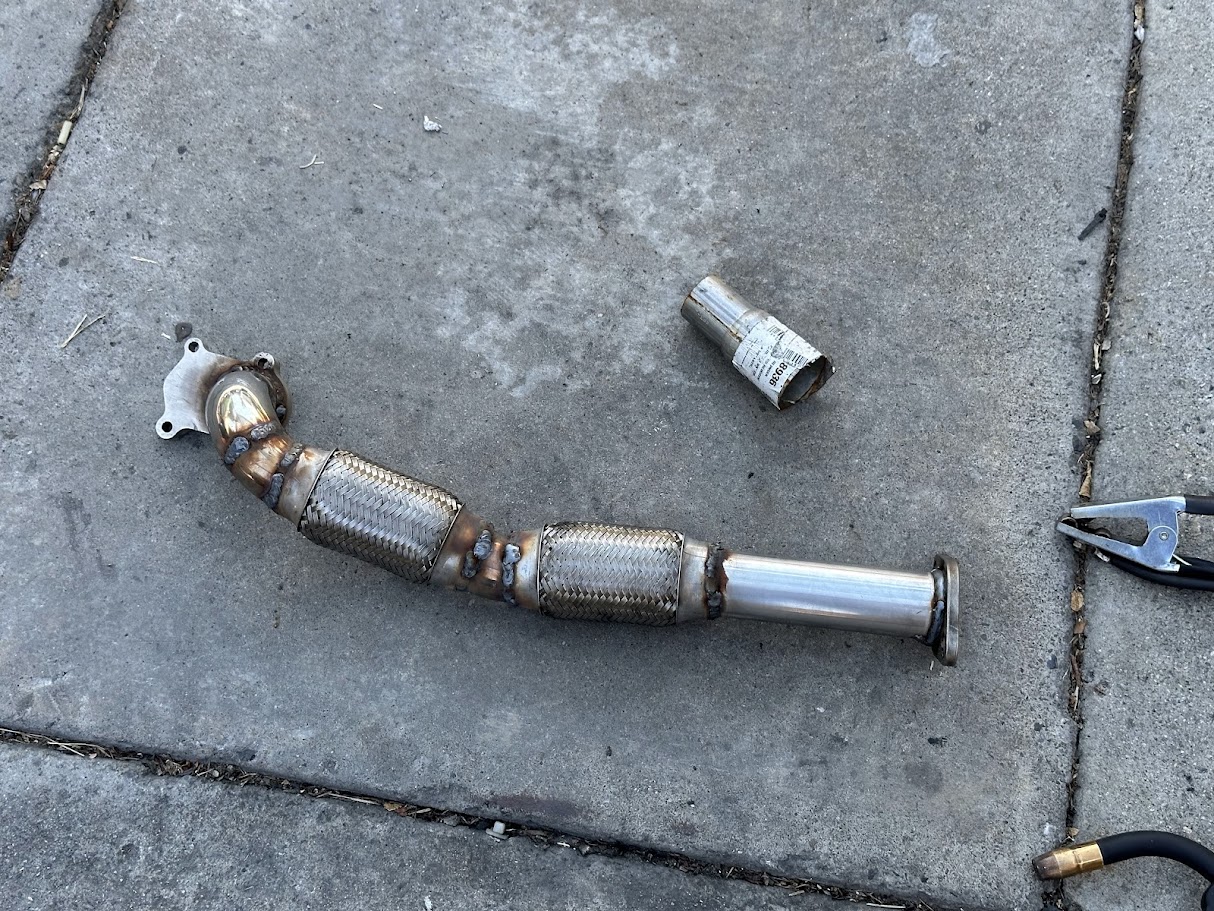
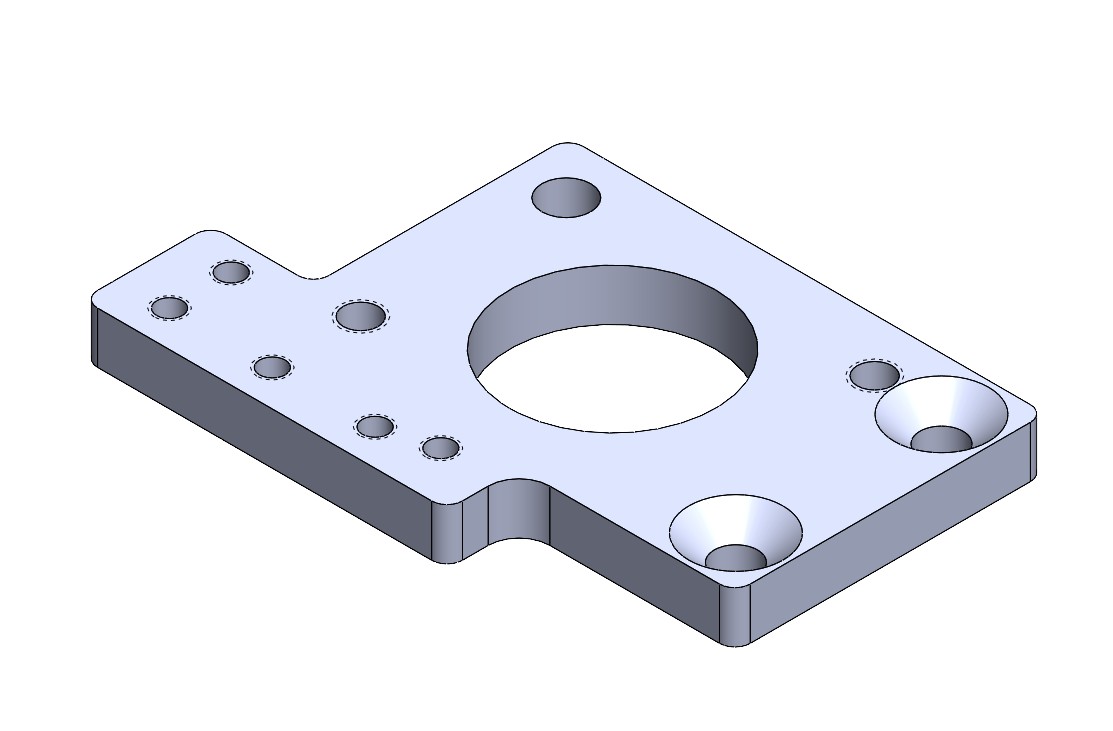
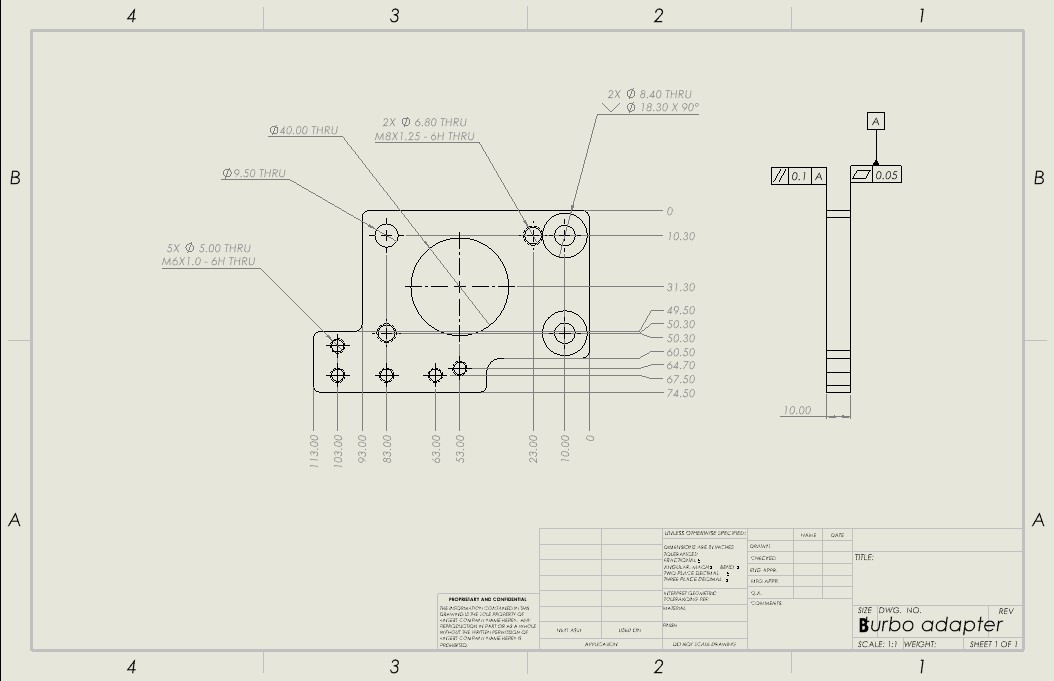
The GT2056 is a fairly large turbo for a 1.9 liter diesel, and below about 3,000 rpm it definitely surged. But if the car was driven like a race car and kept up near 4,500 rpm, it felt like it was flying. In the end, the turbo evolution was a good summary of the Passat as a whole: part performance upgrade, part necessity, part fabrication exercise, and part lesson learned the hard way.
Mk4 rear hub retrofit
The Mk4 rear hub upgrade happened for the same reason a lot of endurance-racing upgrades happen: the original setup kept proving that it was not up to the job. The stock hubs used taper bearings preloaded with a nut and set by running the correct bearing gap. In normal street use that is fine. In our case, it was not. The original hubs were unreliable enough that they would not last much more than about ten hours of driving, which was a major problem once we started looking at longer races, especially the first 25-hour event.
Before fixing it properly, we had already functionally lost a wheel twice on track and nearly lost one again on the road. That was enough motivation to stop treating the hubs like a consumable item and start treating them like a design problem. The upgrade path was to move from the original Mk3-style loose taper bearing arrangement to Mk4 hubs using a unitized angular-contact bearing cartridge. That made the assembly significantly stiffer, and on top of that, the stub shaft on the Mk4 hub was substantially larger.
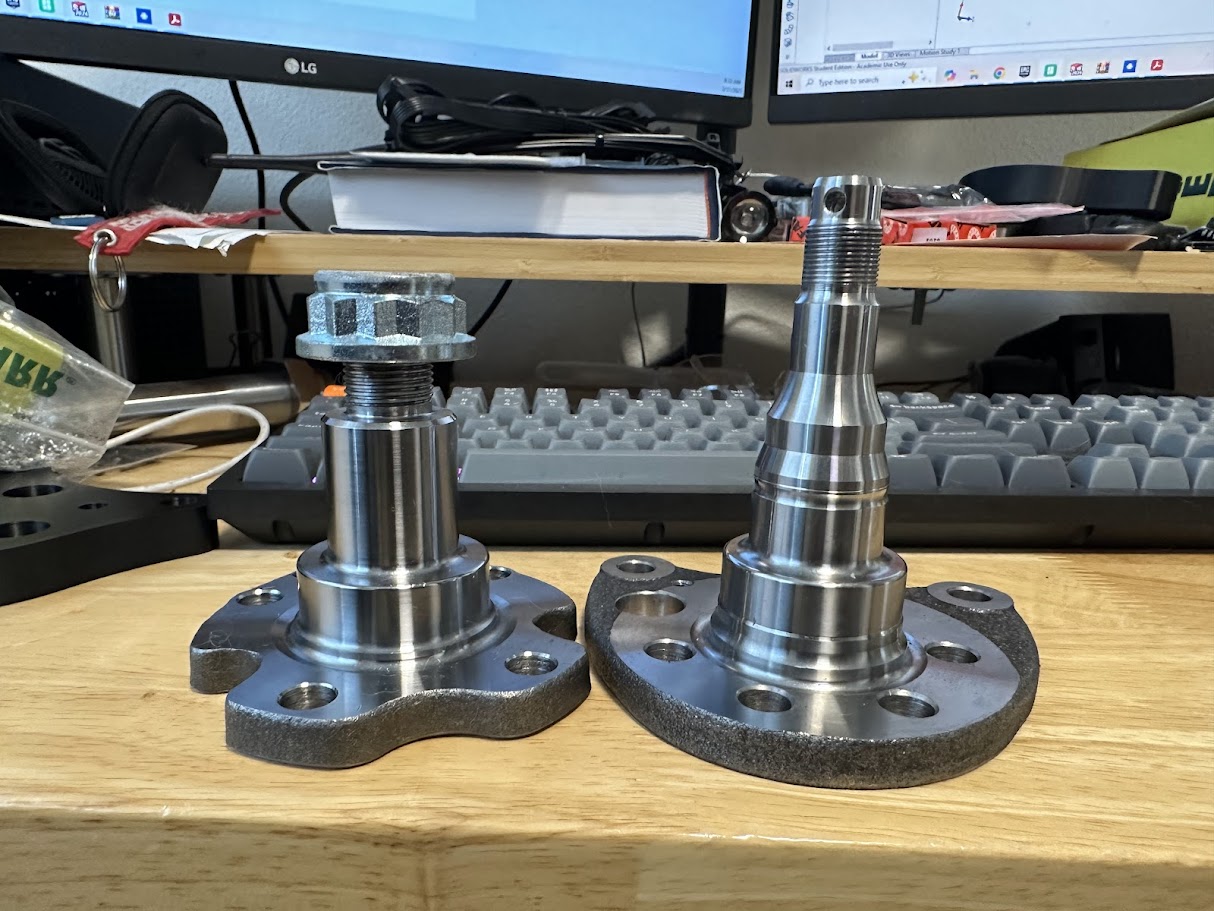
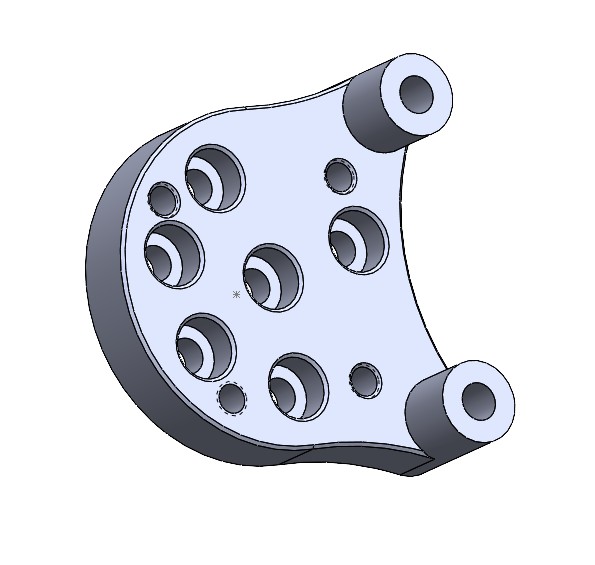
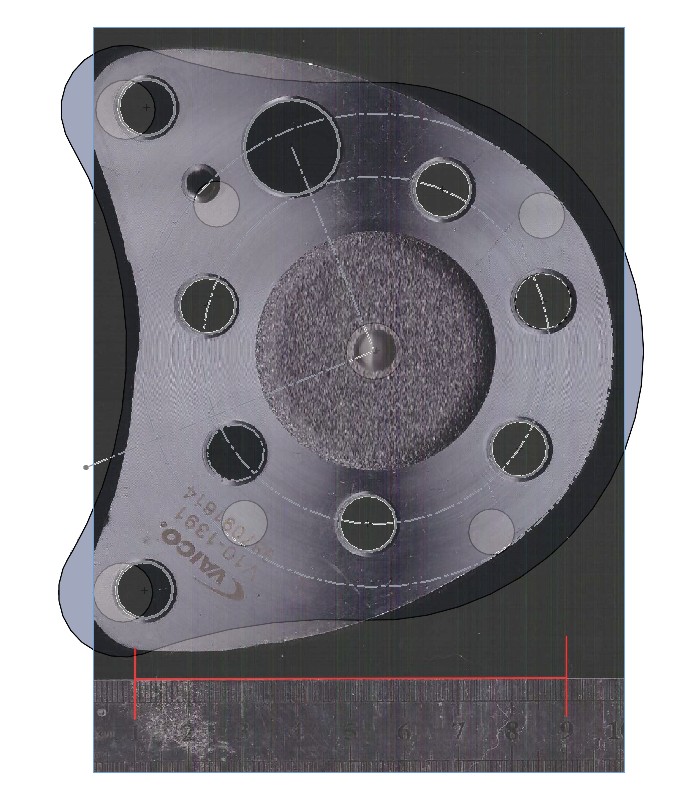
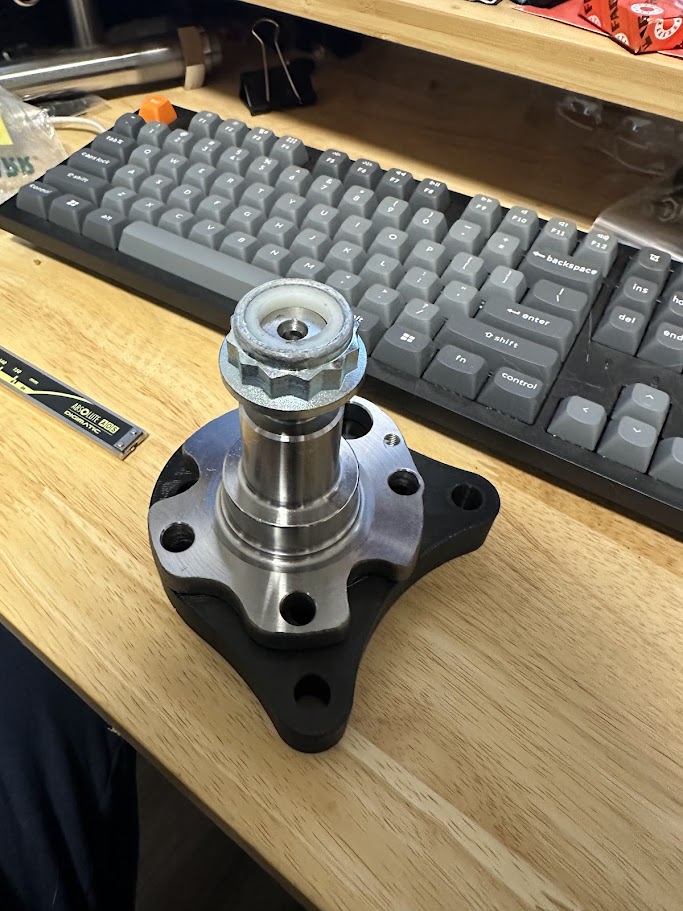
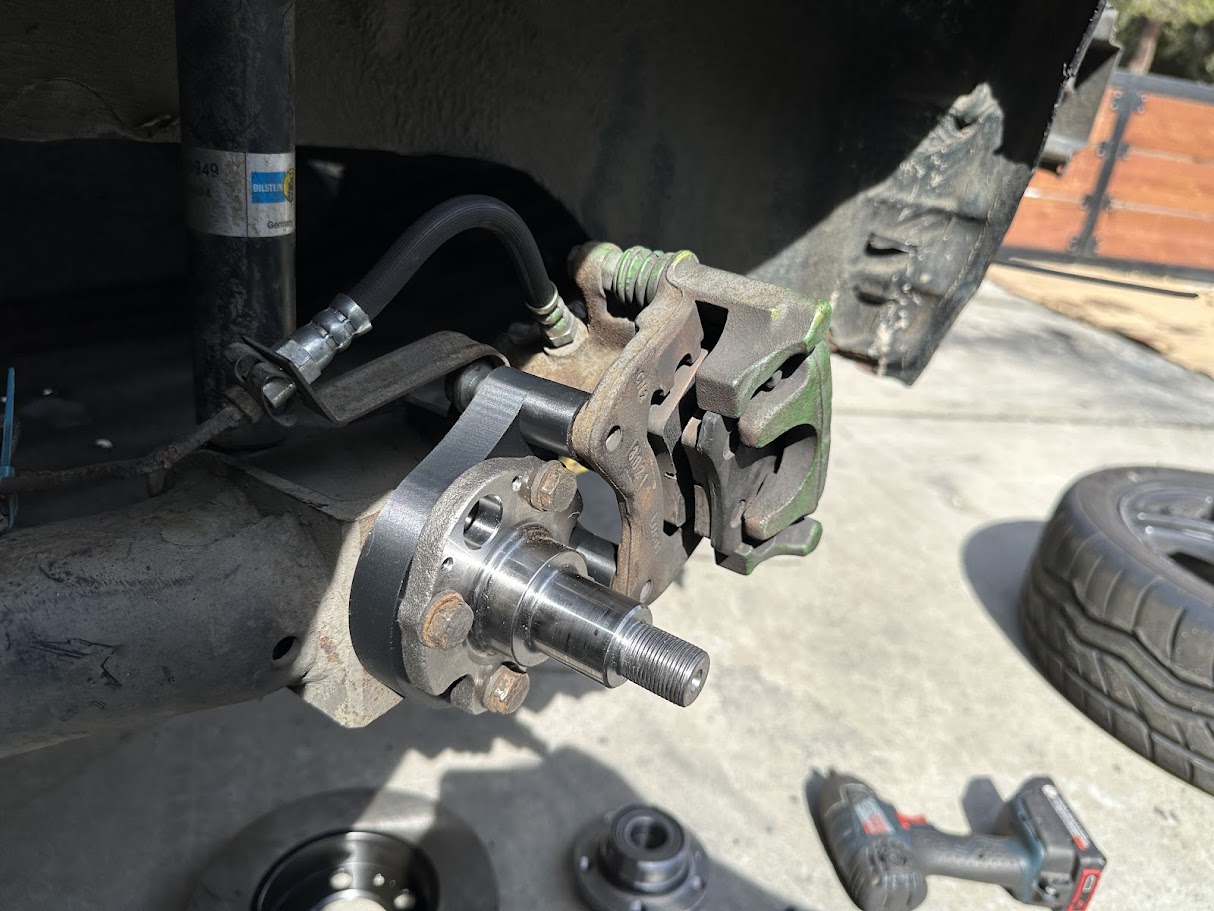
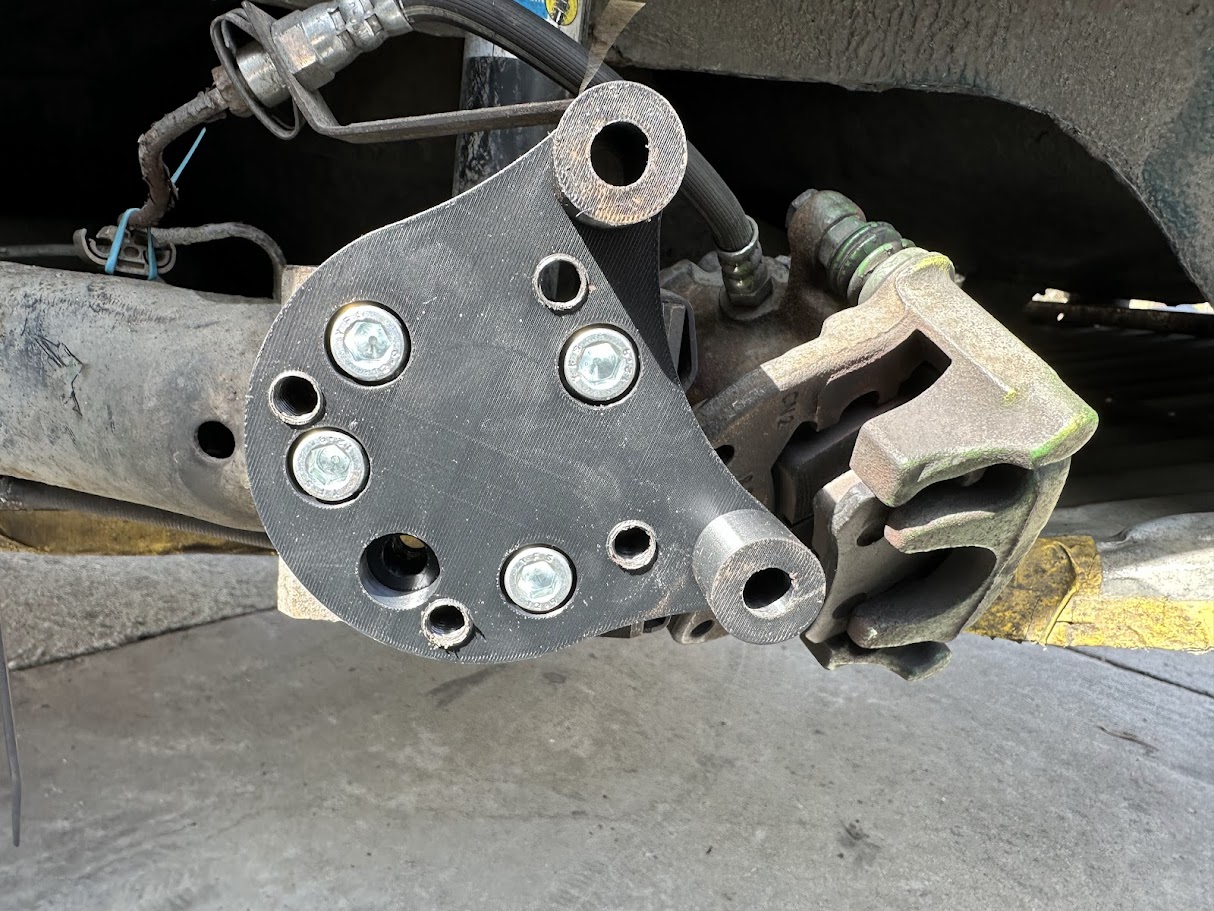
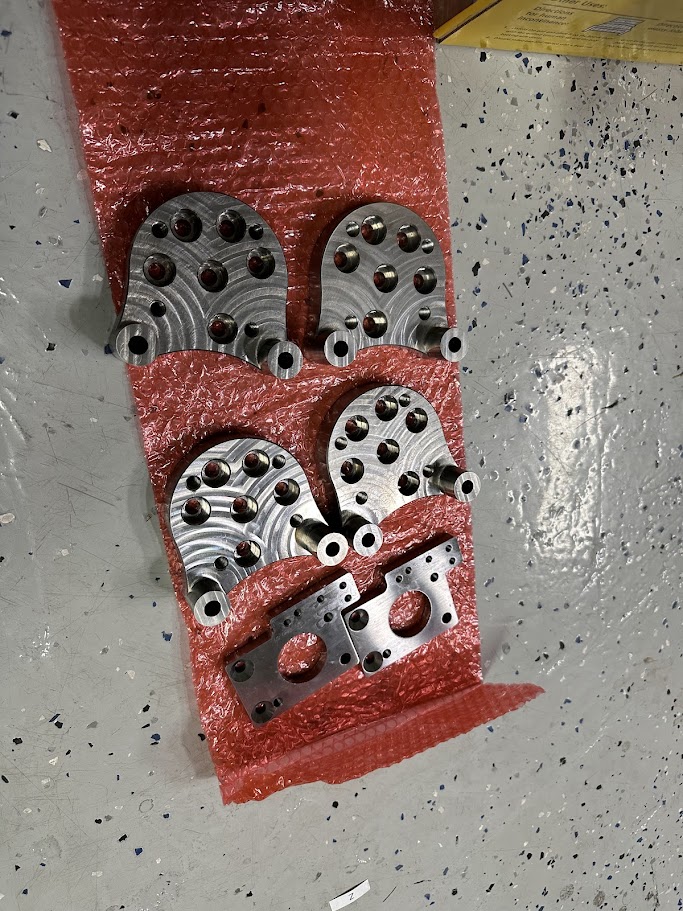
Making the swap work was not just a matter of bolting on newer parts. The key piece was a set of machined adapters that I designed to convert the Mk3 stub axle pattern to the Mk4 pattern while also integrating the caliper mounting. Before getting parts machined, I modeled the adapters and 3D printed them for fit checks so I could make sure everything located properly and cleared the rest of the assembly. Once the real parts were made, the result was a much stiffer and more reliable rear hub setup that finally stopped trying to eject wheels as part of normal race operations.
CV shaft bulletproofing / rollover
The CV shaft work came from a long list of failure modes that kept showing up until we finally overbuilt the problem far enough that it stopped fighting back. Early on, the shafts seemed to last only about eight hours at a time, which is not exactly a comforting service interval in endurance racing. Failures included the inner CVs loosening at the transmission output tulips, boots tearing and throwing out all their grease, and issues at the outer joints that were serious enough to affect wheel bearing preload and braking.
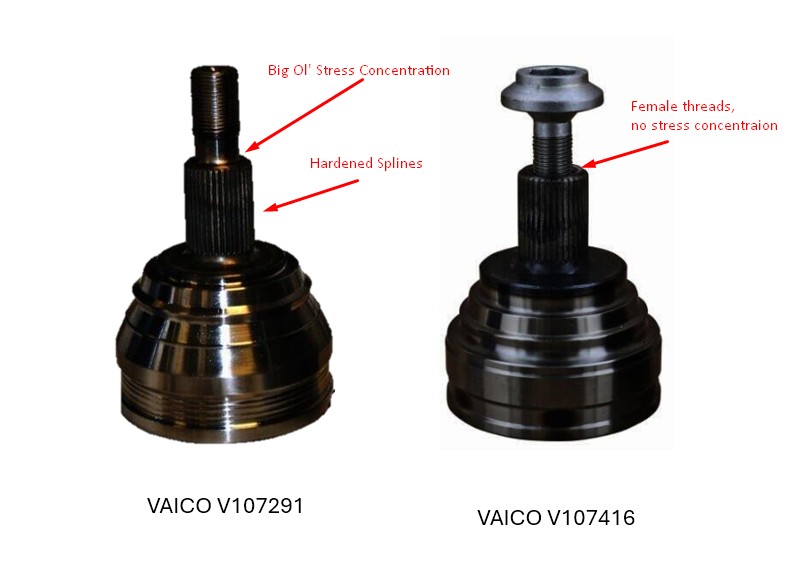
On the outer joints, the original Mk3 setup used a stud and nut. Our first attempt at fixing that was simply to add a Nord-Lock washer so the nut could not back off. That did prevent the nut from loosening, but it did not prevent the stud itself from breaking off completely, which happened twice. The second time was especially memorable because losing the stud also meant losing wheel bearing preload, which caused massive brake pad knockback going into a corner and ultimately contributed to rolling the car at Sonoma.
The real fix on the outside was to switch to Mk7 outer CV joints, which have the same spline count but use a bolt instead of the original stud. That was a much better design for our purposes because the bolt is more ductile and less prone to the kind of brittle failure we were seeing. To build the shafts, we started with Mk3 VR6 Passat shafts, removed the original outer CVs, and installed the Mk7 bolted joints instead.
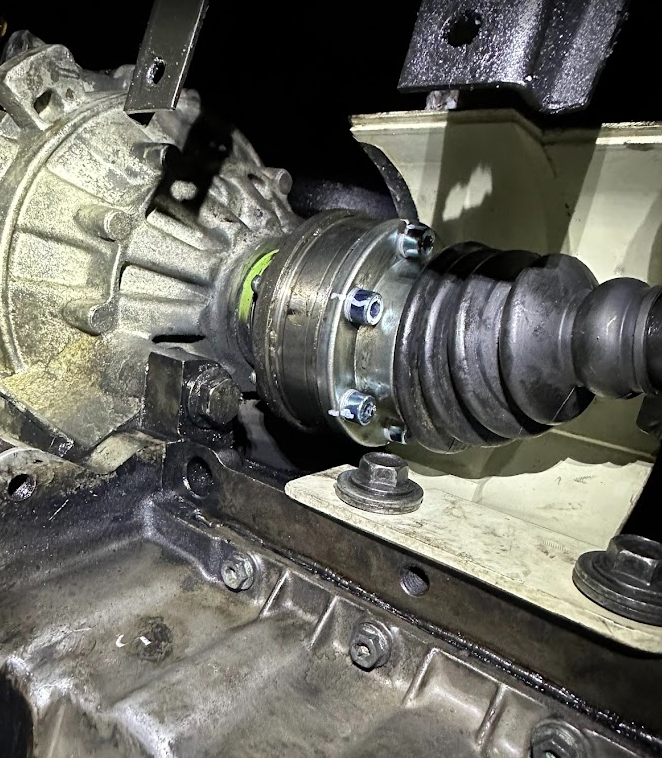
On the inner joints, there were two separate problems. The first was bolt loosening where the inner CV attached to the transmission output flange. That got solved with a proper belts-and-suspenders approach: upgrading the fasteners from class 10.9 to 12.9 so we could run higher preload, adding Nord-Locks under the bolts, and then also using washer bars to tie pairs of bolts together so they could not rotate relative to each other. The second issue was heat on the passenger side inner boot. The turbo and exhaust ran close enough to the joint that the boot and grease were getting cooked, which tore boots, expelled grease, and eventually killed the joint from lack of lubrication.
We first added a simple metal heat shield, then later found an OEM heat shield from a newer Volkswagen that happened to share the same mounting pattern. Between the upgraded outer joints, the improved inner joint fasteners, and the added heat shielding, the shafts became dramatically more reliable. Like a lot of the Passat, the final solution was not one magic part. It was a collection of fixes built from repeated failure analysis and the desire to stop discovering weak links one wheel at a time.
Headlights
The headlight project came out of necessity ahead of our first 25-hour race at Thunderhill. The original headlights were still on the car, but they were extremely dim and, more importantly, the beam pattern was all wrong for night racing. Street headlights are designed to illuminate a road in front of you, which is not the same thing as seeing into a corner on a racetrack at speed.
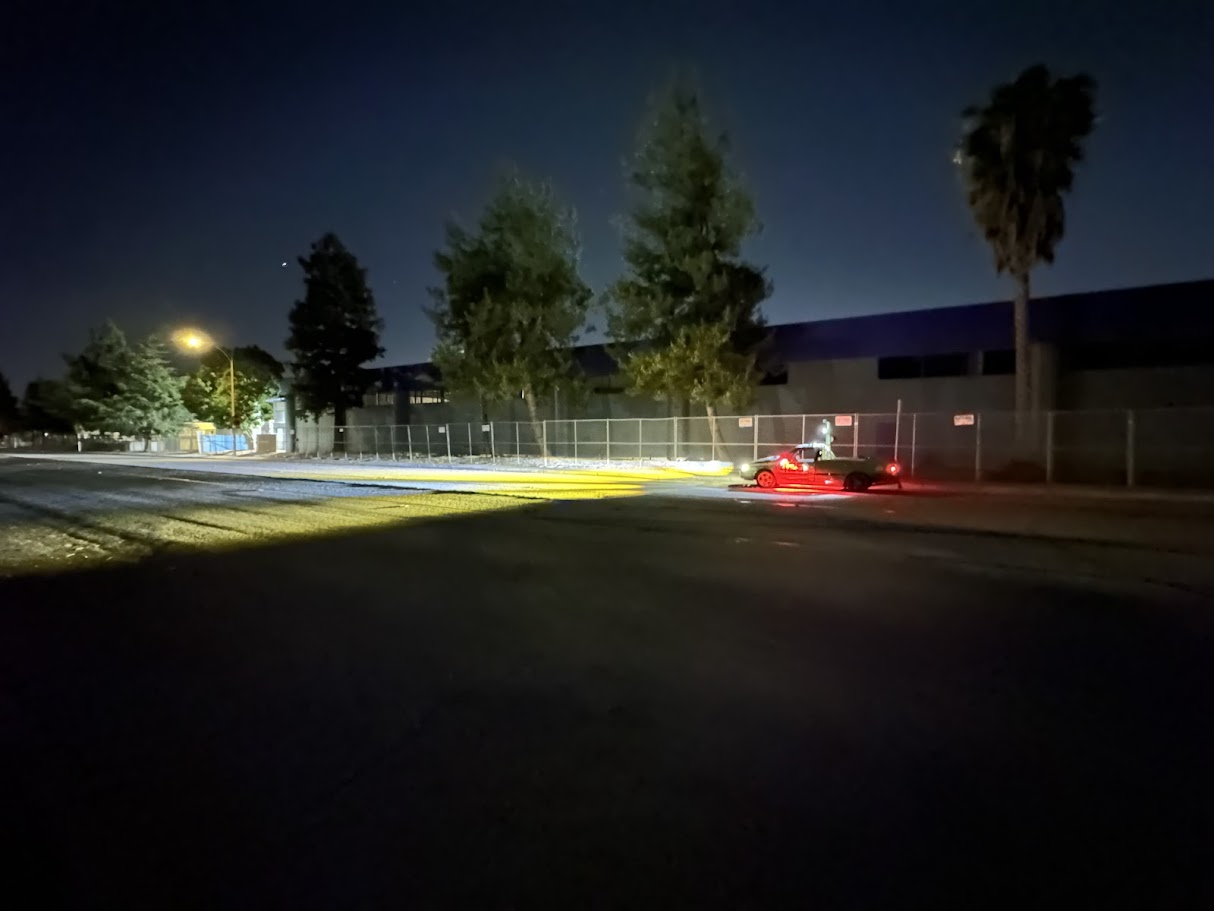
The solution ended up being a collection of inexpensive pod lights from AliExpress. The key was not just adding more light, but picking lights with a beam pattern that actually suited what we needed. They used lenses with a sharp cutoff and spread the beam quite wide, which made them much more useful for seeing both ahead and around corners. We ended up with a total of eight pod lights on the front of the car, mounted in a custom bent sheet metal housing that bolted in where the original headlights had been.
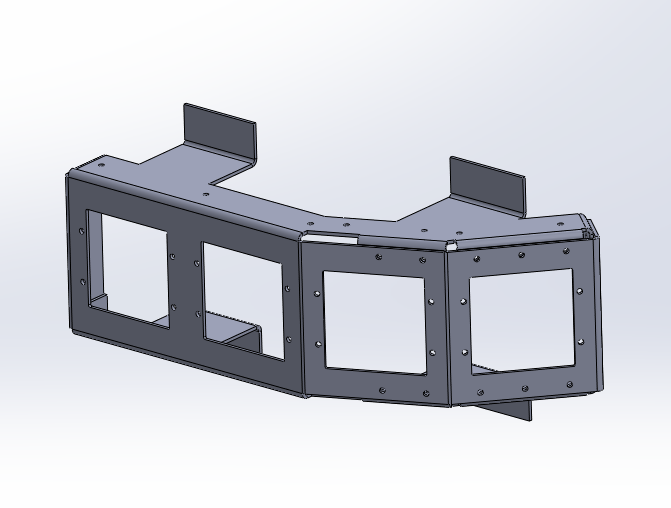
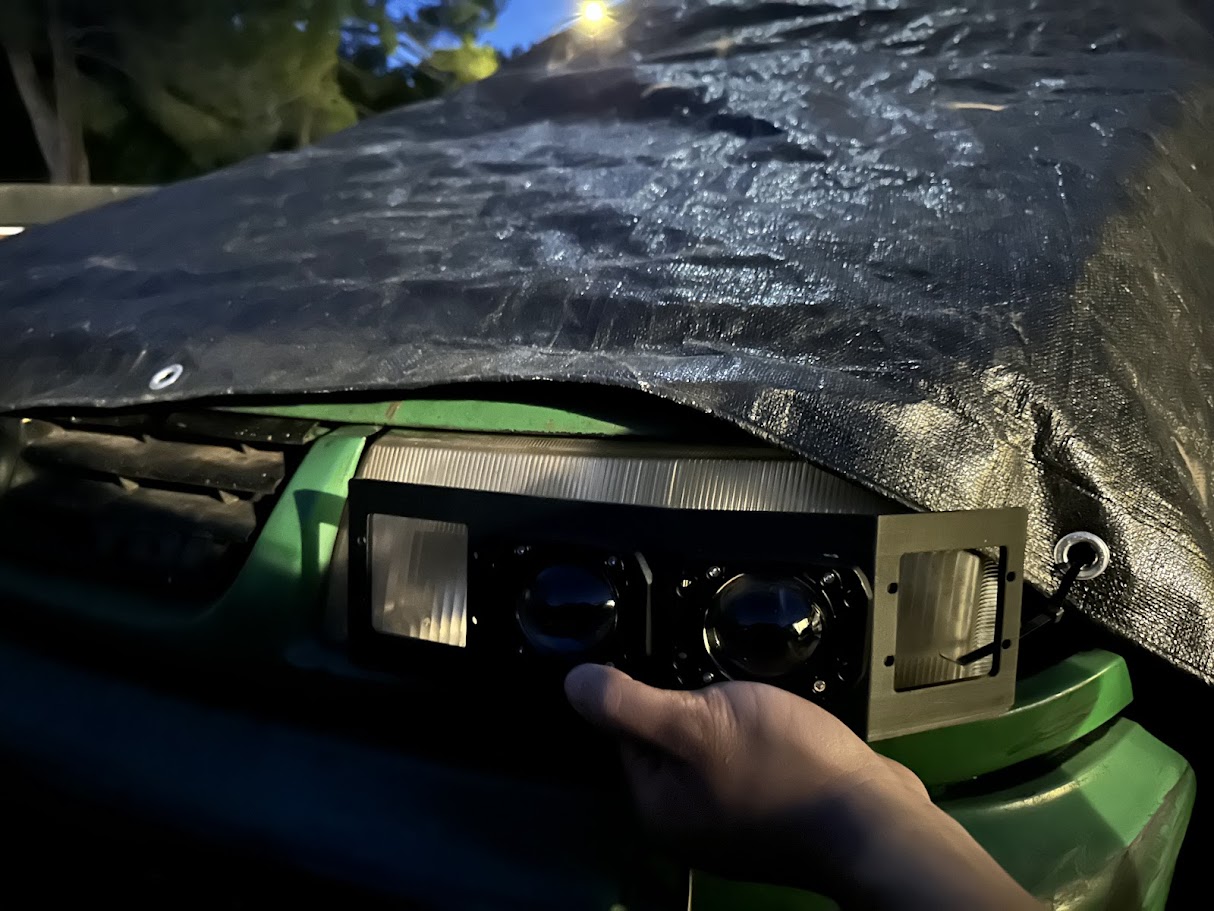
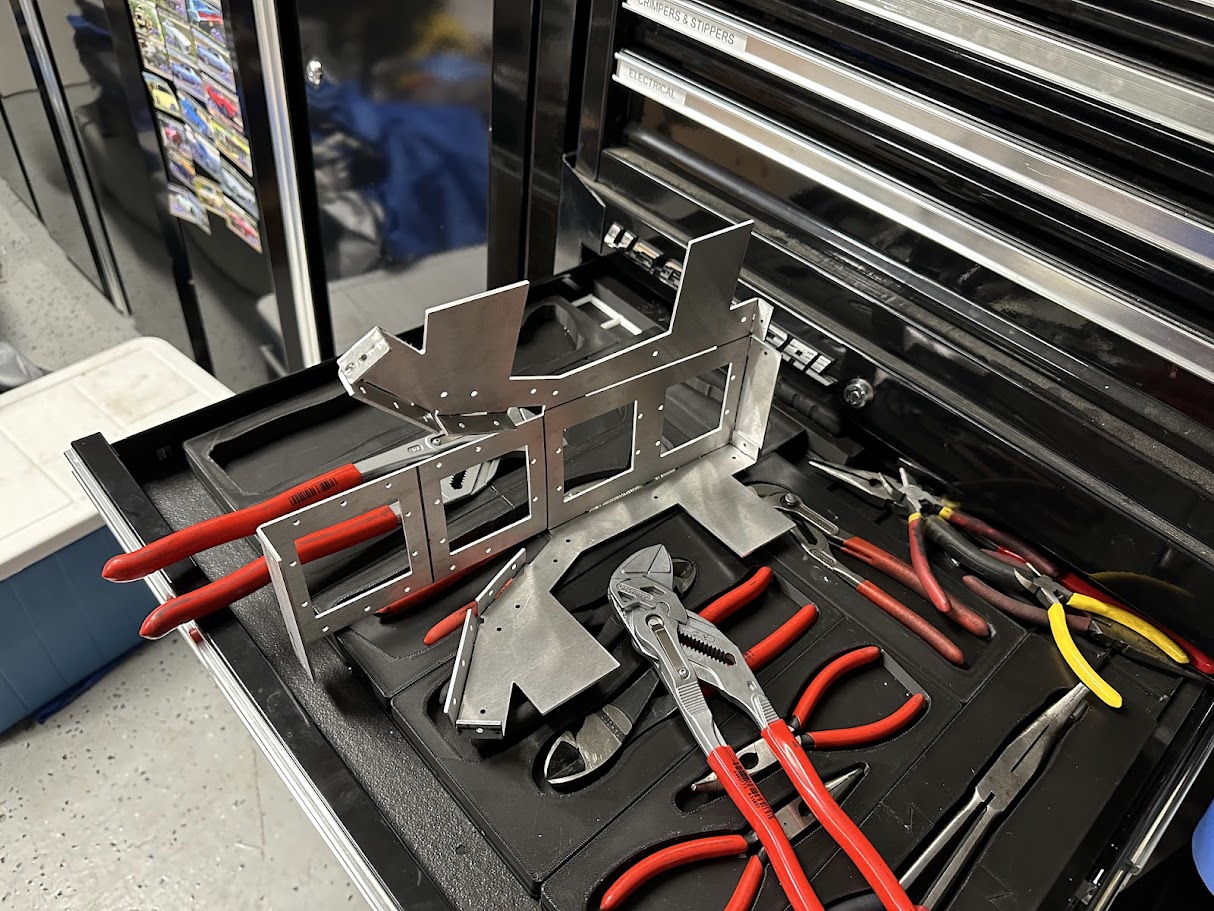
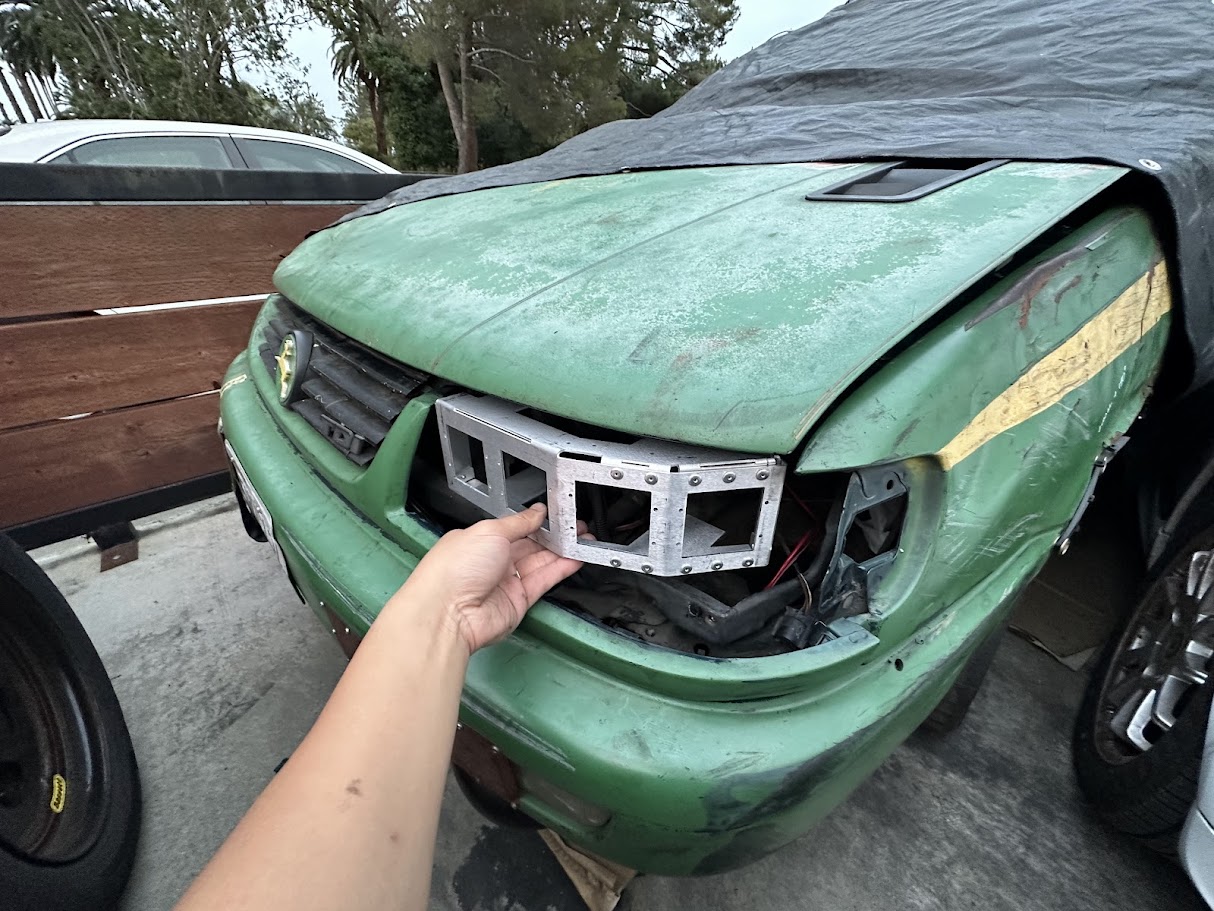
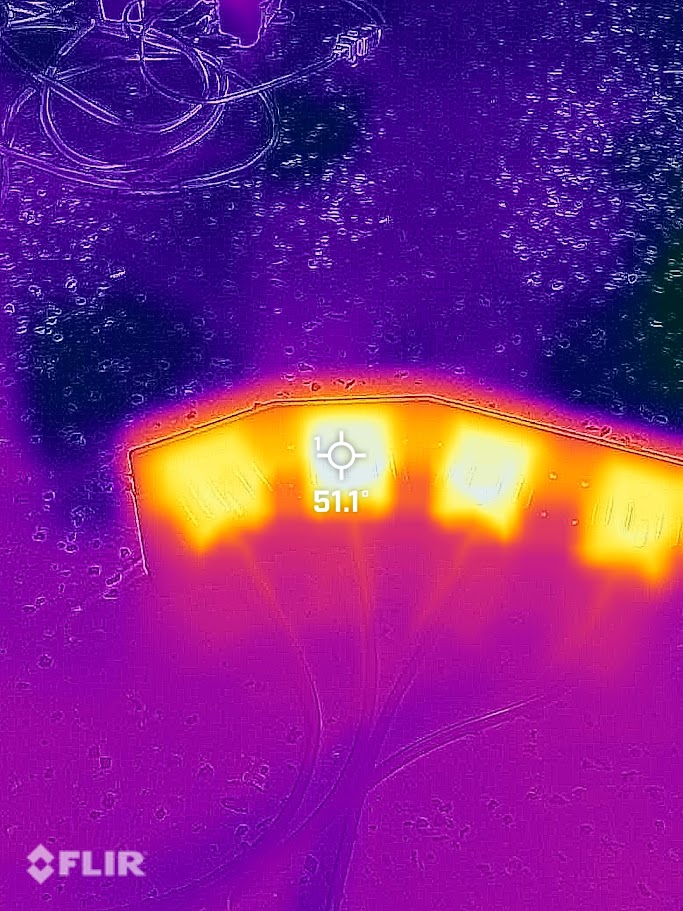
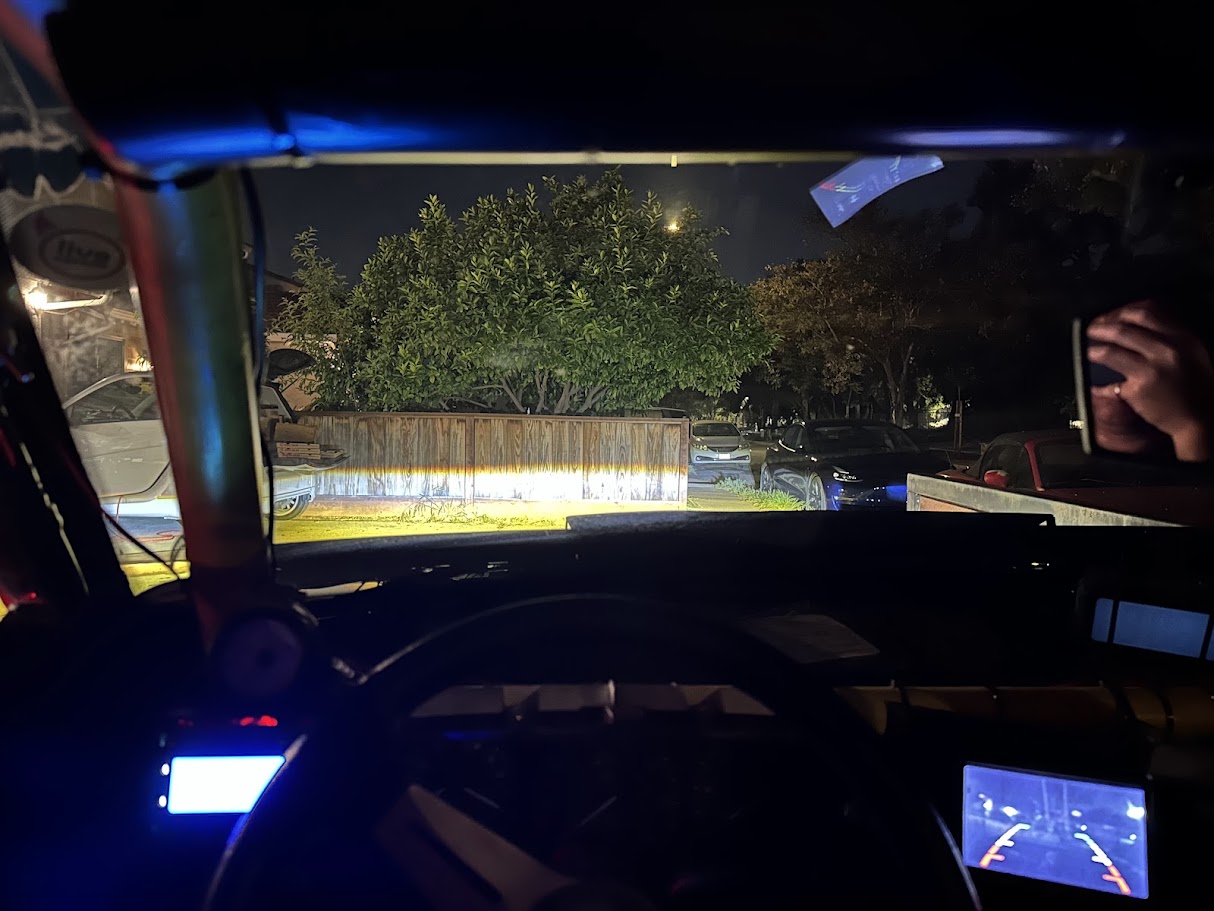
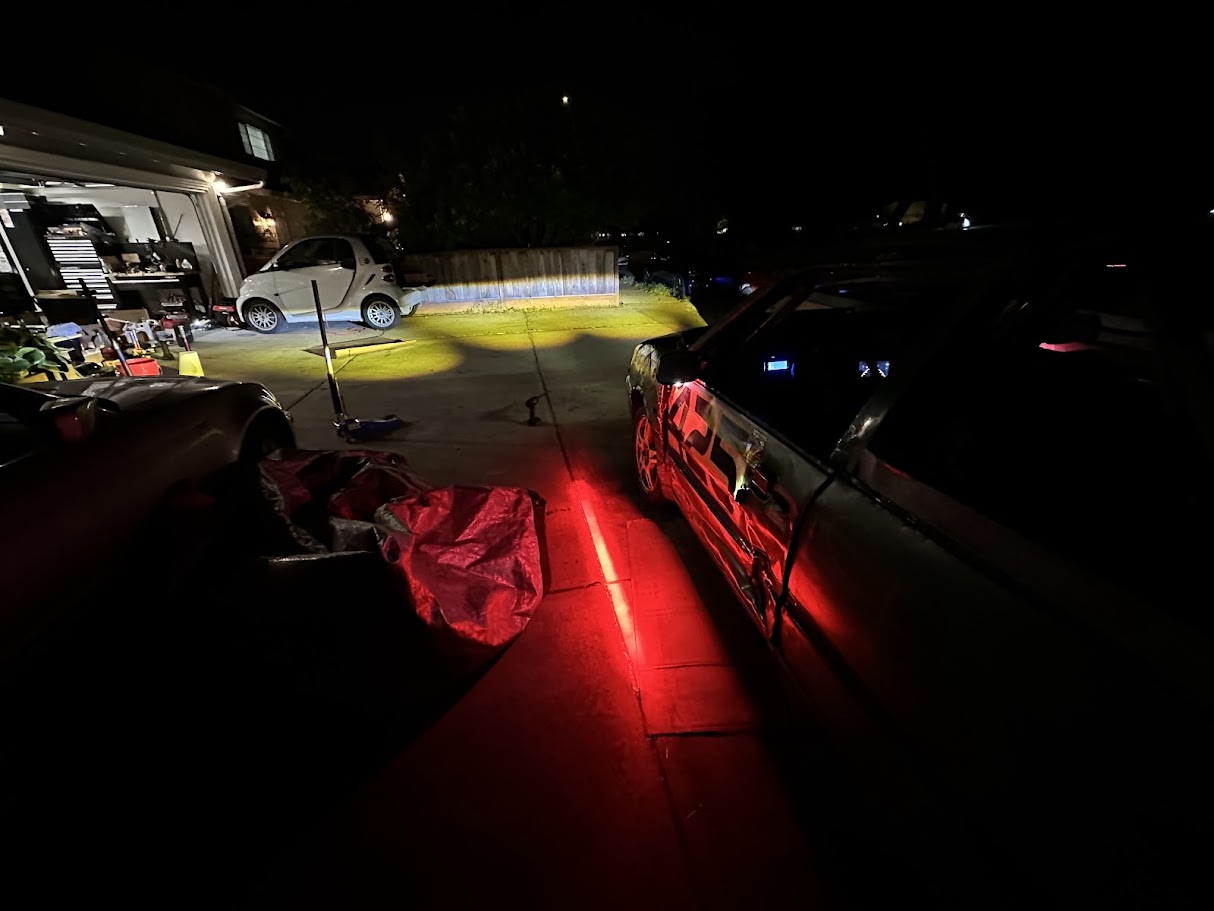
There were also rules and packaging constraints to work around. The lights could not be mounted any higher than the original headlight location, and we needed to stay within a maximum cutoff height. The forward-facing lights were aimed almost horizontal so we could maximize distance visibility while staying barely within the rules, while the outer lights were aimed farther to the sides and slightly lower as apex lights so the driver could see around corners and closer to the car.
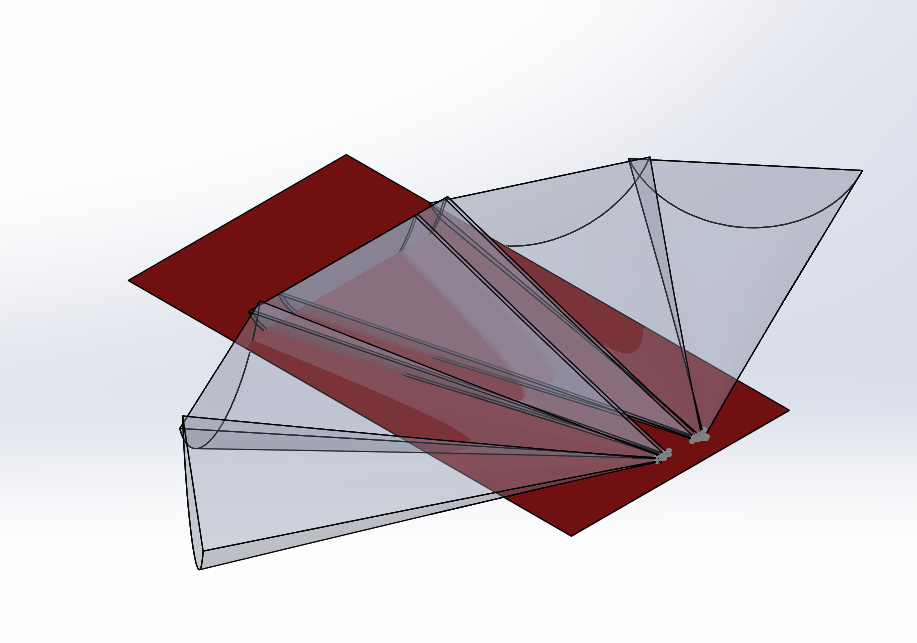
Before finalizing the layout, I bought one pod light, manually measured the beam spread, and modeled the beam pattern in SolidWorks so I could get a better sense of how the full arrangement would cover the track. In total, the setup added about 100 watts of LED lighting to the front of the car, with each light drawing roughly one amp at 12 volts. The wiring was done so that each light was individually fused, meaning one failure would not take out the whole system. We also wired the lights ahead of the kill switch so that if the engine had to be shut off for some reason, we would not suddenly lose all forward visibility at the same time.
In practice, the setup worked extremely well. It gave us great confidence driving at night, with strong forward visibility and much better side visibility into corners, all without blinding other drivers. Like a lot of the Passat, it was a low-budget solution that ended up working far better than it had any right to.
Brakes
The brake setup on the Passat is one of the less glamorous parts of the car, mainly because it has worked well enough that it usually does not demand attention. We run Hawk Blue pads with 288 mm OEM VR6 Passat rotors, which has turned out to be a very solid combination for the car. Brake balance is handled by a particularly nifty mechanical valve connected to the rear suspension that reduces rear brake pressure as the car dives, helping prevent rear lockup under heavy braking.
In normal operation, the system has been excellent. The car brakes beautifully, and even in very hot ambient conditions around 40 C and over the course of a full 25-hour race, we still have not had an actual brake fade problem. That is a pretty good result for a car that started life as a smoky diesel commuter and now spends its weekends trying to be something much more dramatic.
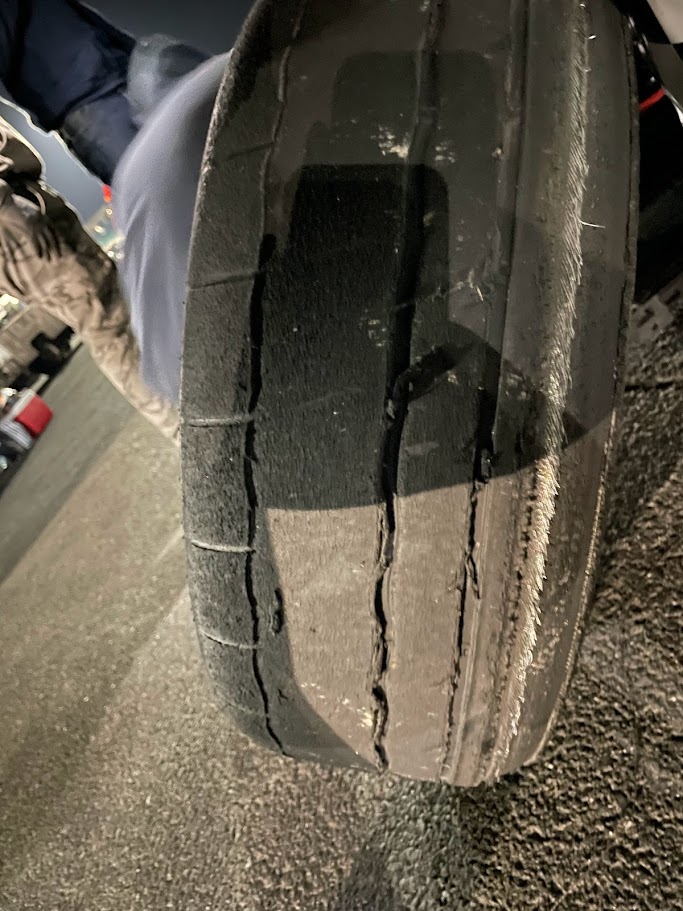
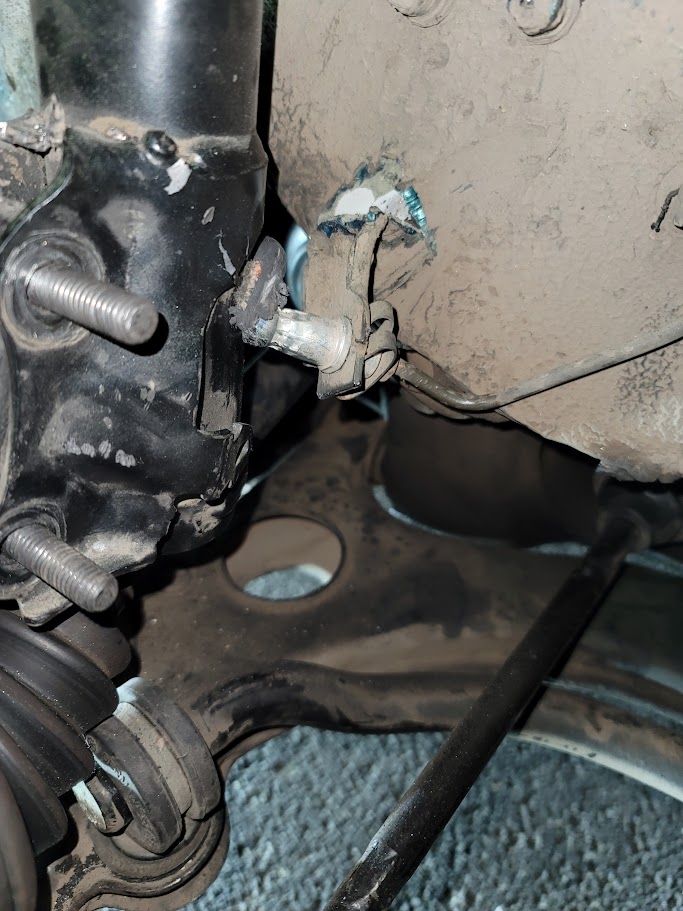
The two real brake failures we have had were not really the fault of the brake package itself. The first was entirely self-inflicted. We ran tires that were too large, which allowed the sidewall to contact the body. The tire cords then started coming loose and eventually wrapped themselves around the front brake line hard enough to sever it from the caliper. The second failure was more indirect and came from the front CV and wheel bearing issues. After losing a CV shaft stud and the resulting wheel bearing preload, we ended up with enough brake pad knockback to lose meaningful braking.
So the short version is that the core brake setup has been very good, and the actual failures have mostly been collateral damage from other bad ideas or mechanical problems elsewhere on the car. Which, for a Lemons car, is honestly a fairly strong endorsement.
Fueling and lift pump
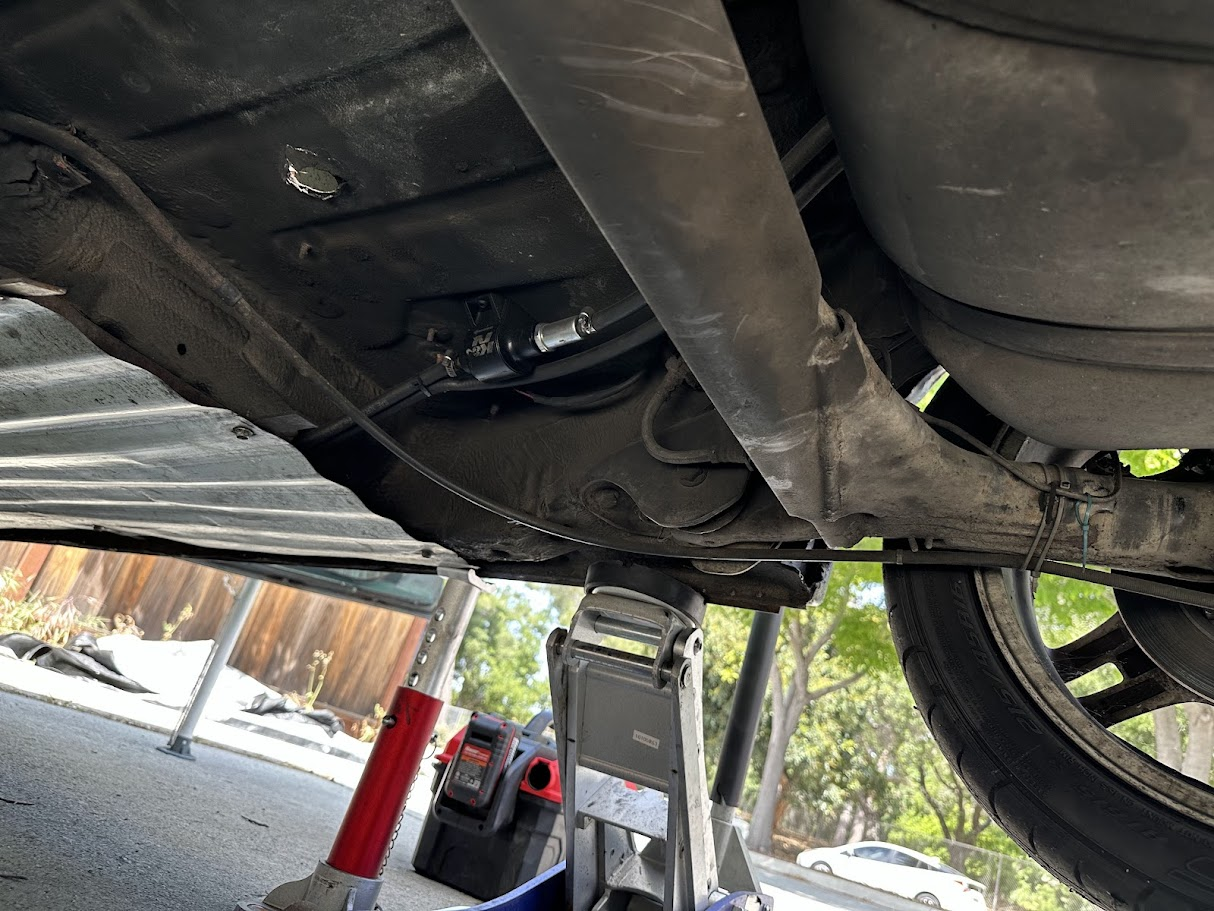
The fuel system on the Passat gradually evolved for two different reasons: keeping the engine supplied with fuel reliably on track, and giving it enough fuel to support the turbo upgrades. Originally, the car only had the mechanical distributor-style injection pump and relied on siphoning fuel from the tank. That meant the whole system depended on the vane pump inside the injection pump pulling fuel forward under vacuum. In normal driving that works well enough. In racing, especially with fuel slosh, it was much less happy.
Any loss of prime in the feed line would result in fuel starvation and the engine stalling, which is not an especially useful feature in endurance racing. Adding a lift pump gave the car a continuous positive fuel supply instead of depending entirely on suction from the injection pump. It was not a glamorous modification, but it made the fuel system much more stable and predictable under race conditions, which is exactly what it needed to do.
The injector and nozzle changes followed the turbo changes, because on a diesel engine you do not make more power with boost alone. You also need more fuel. The car originally came with 0.184 mm injector nozzles, which were fine for a stock setup but not enough once we started asking the engine to do more. The first step up was to 0.220 mm nozzles, which paired well with the early hybrid turbo setup. Later, once the GT2056 went on the car, we stepped up again to 0.3 mm nozzles so the fueling would actually match the available air. Like most things on the Passat, the injector changes were not about chasing numbers on paper so much as making the whole combination work as a system.
The injector hard lines also turned out to be a small but memorable part of the fueling story. They were remarkably difficult to source locally in the US, but seemingly easy to find in Europe. The catch was that the shipping was absurd enough that the practical solution ended up being to ship them to a friend over there while he was on a trip and then have him hand-carry them back. It was a very diesel-project kind of parts-sourcing problem. It is also worth noting that at this point the car is running an ALH engine after the original 1Z finally let go. So while the overall spirit of the car remains exactly the same, the fueling and turbo setup evolved along with an engine change that gave us a better foundation to keep developing the package.
Telemetry and comms
The communications setup started with a very simple goal: let the driver talk to the pit crew. Our first attempt used Baofeng UV-5R handheld radios, which in one word worked poorly. Even with line of sight down the straight, they could barely communicate with the car from the stands, which made them borderline useless once the car was actually moving around the track in anger.
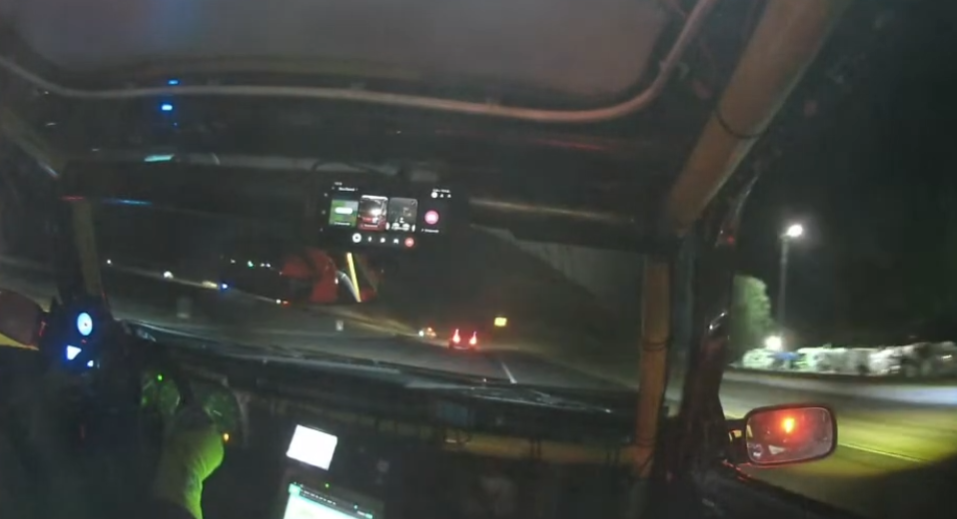
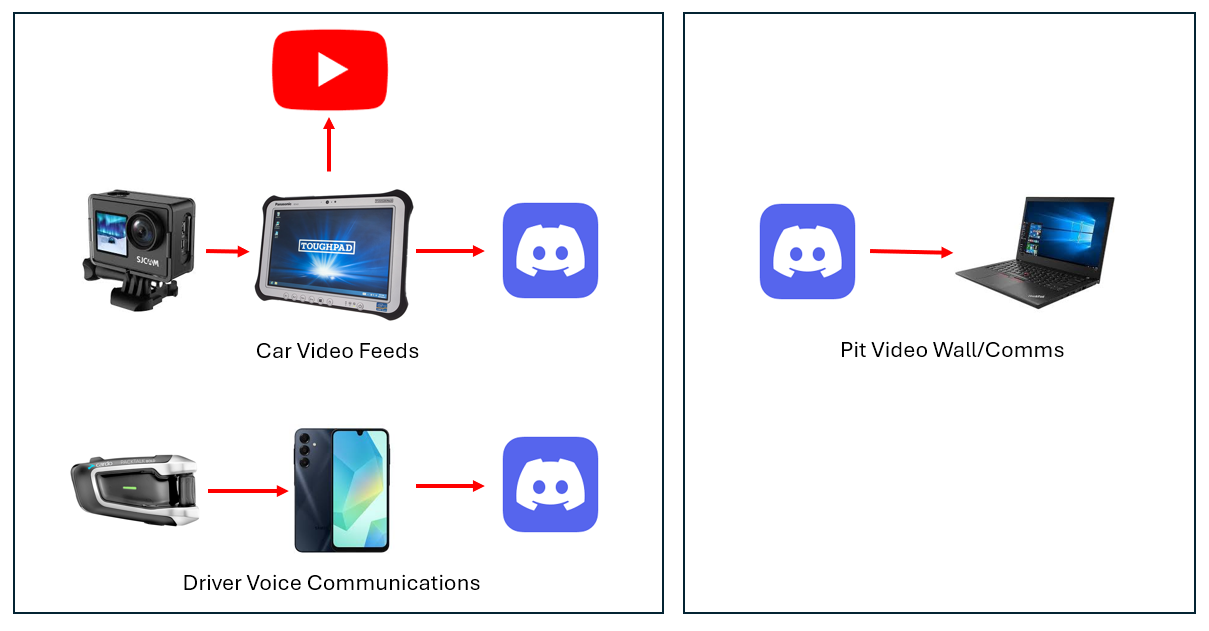
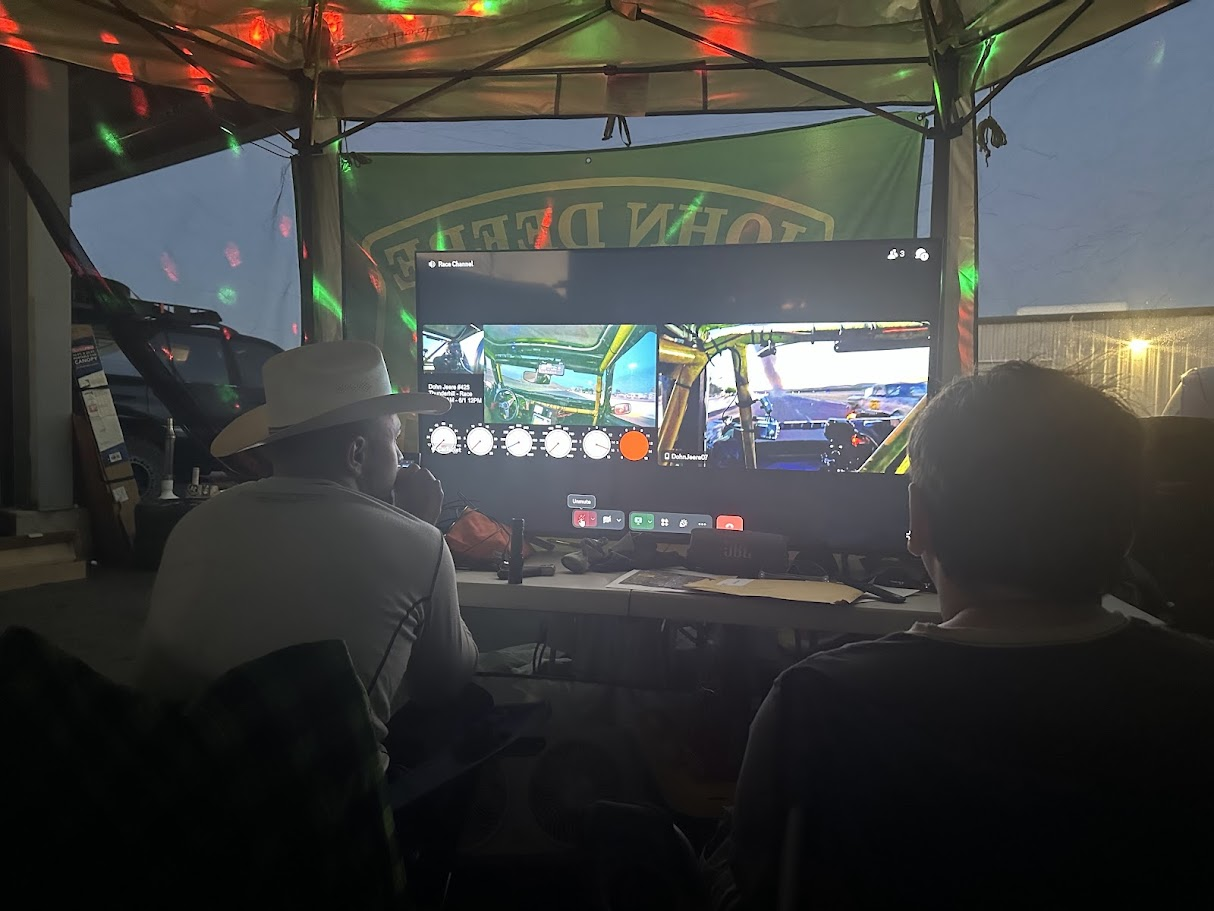
The second version worked vastly better and was built very much in the spirit of Lemons. Instead of buying an expensive race radio or telemetry package, we put a prepaid burner phone in the car with unlimited data and paired it with Cardo units in the helmets. The Cardos had far better noise canceling, so audio was dramatically clearer. The phone simply stayed on a Discord call with our pit laptops, which meant we got voice communication plus live video from inside the car. That alone made it much easier to understand where the car was on track, how the driver sounded, and whether something looked obviously wrong.
The improvement in actual race operation was enormous. We could communicate issues with the car in real time, ask the driver for key information about fuel level, drivability, vibrations, or other symptoms, and often diagnose problems before the car ever made it back to the pits. It also made it much easier to coordinate pit stops and tell the driver exactly when to come in. Instead of waiting for a tow and wondering what had happened, we often already had a decent working theory by the time the car stopped.
From there the system grew into a more complete low-budget telemetry and driver information setup. We added a tablet in the car on the same Discord call, screen sharing an Excel sheet with the vital information the driver actually needed: stint length, time in the car, expected fuel remaining, and a text box for communication if voice dropped out. Between the tablet, the camera feed, and simple hand signals for yes or no through the video call, we ended up with genuinely redundant communications without spending race-radio money.
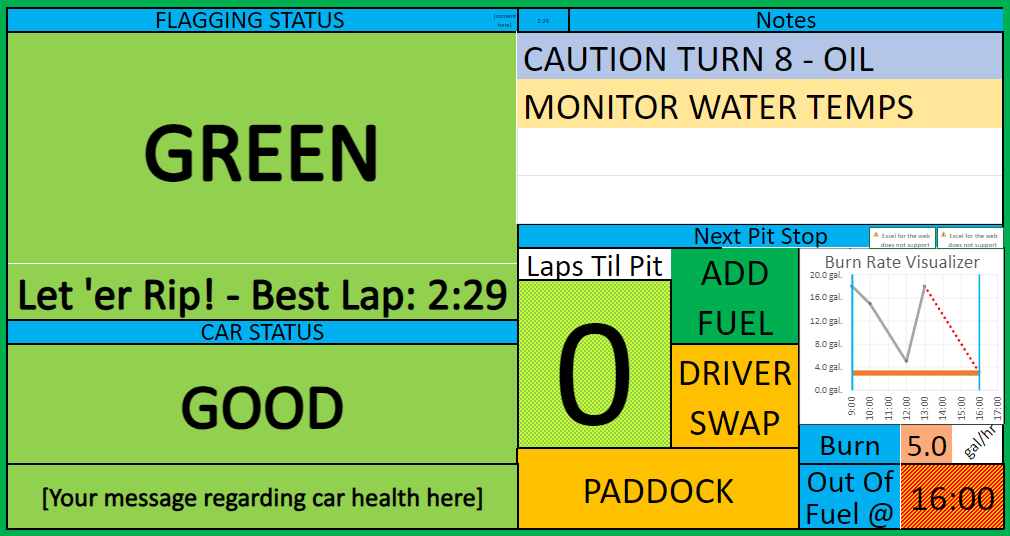
The same setup also enabled something we had wanted for a long time, which was livestreaming the race to YouTube so we would have a record of what actually happened. Rather than buying a dedicated race broadcast system, we used a Panasonic Toughbook with built-in LTE. In true Lemons fashion, the burner phone cost about $65 for the race plan and came with a free phone, while the tablet had its own completely separate SIM card for true double redundancy. Over a 25-hour race, the phone handling the voice and video call used about 30 GB of data, while the tablet, which was also involved in the livestream setup, went through about 90 GB. It was an absurd amount of data, but the result was communications that were infinitely better than where we started.
Cool suit
The cool suit setup was added for the same reason most endurance-racing comfort mods eventually happen: once ambient temperatures start pushing toward 40 C, being stubborn is no longer a substitute for not getting heat stroke. The system circulates cold water through a cooling shirt worn under the fireproof race suit, which makes the car dramatically more tolerable and makes it much easier to stay focused during long stints.
Our setup uses a rotomolded cooler with supply and return ports run through the drain fitting. For the pump, we used a Volkswagen auxiliary coolant pump. The main appeal there was that it is a centrifugal pump with relatively low head pressure, which means a kinked line is much less likely to turn into an overpressure problem. For the driver connections, the shirt lines use CPC quick disconnects with dry-break valves so driver swaps stay quick and mostly mess free instead of turning into an ice-water incident in the paddock.
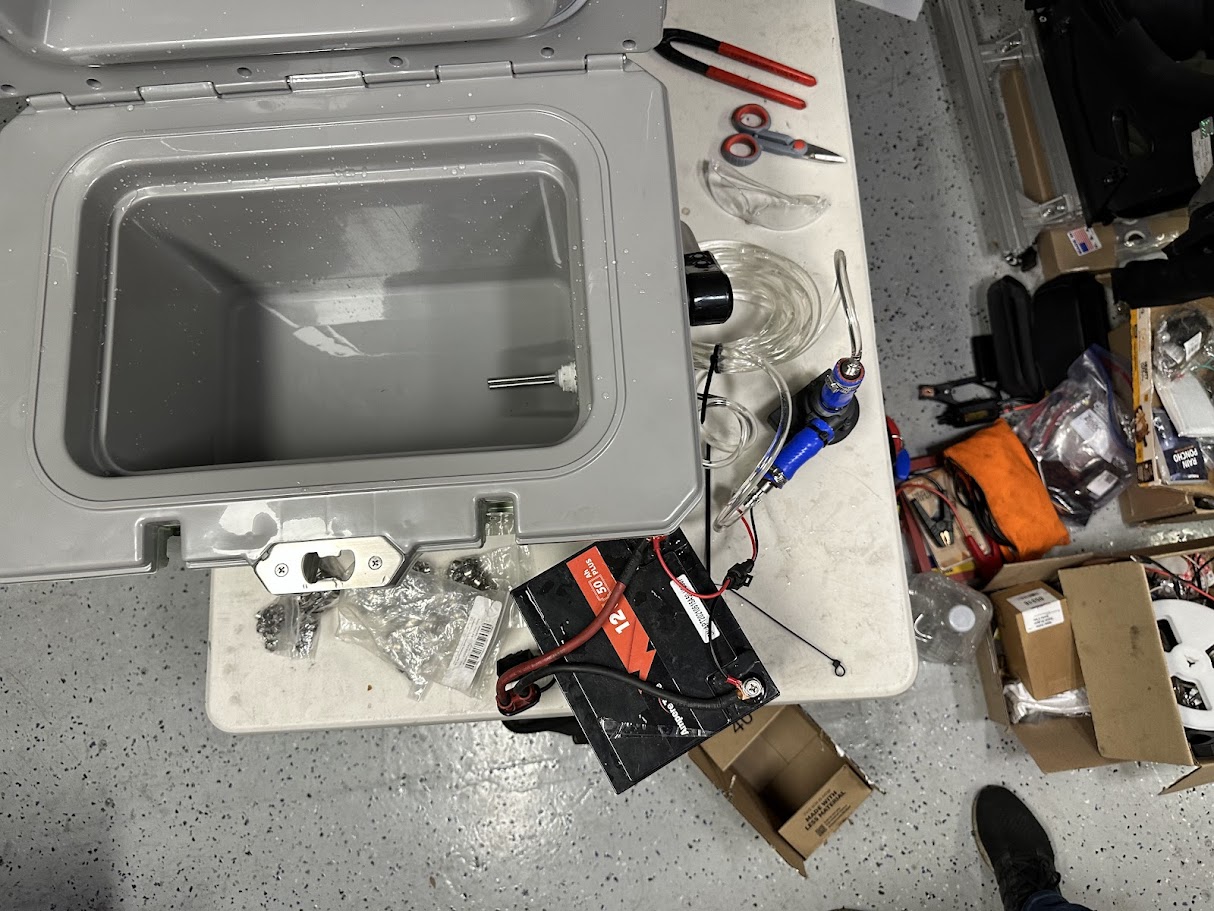
In practice, the system works extremely well, but it is not exactly subtle about how much cooling it consumes. We go through roughly 2.5 kg of ice per hour, which is a fair trade for keeping the driver cooler, sharper, and significantly less cooked by the end of a stint.
Suspension, strut failures, and alignment
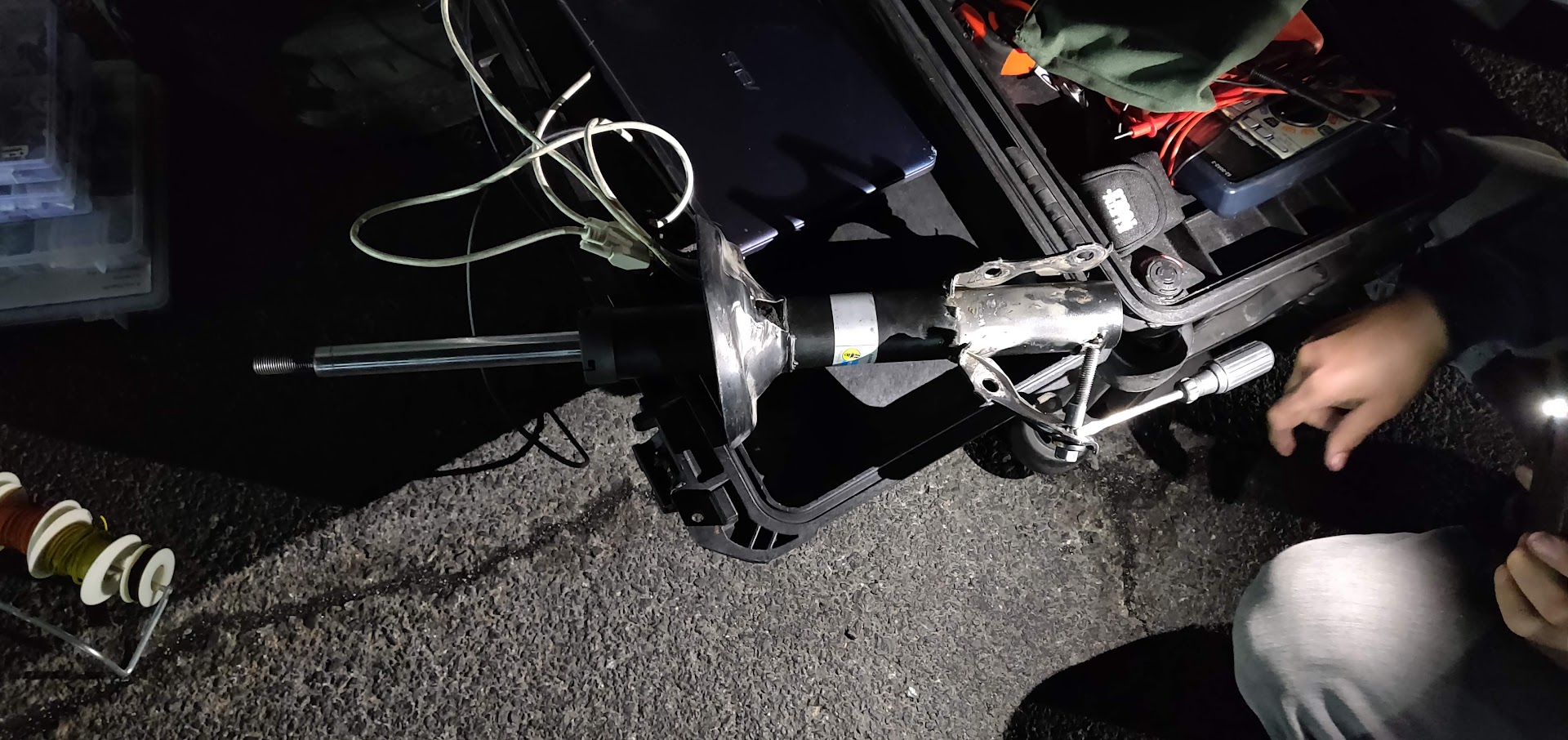
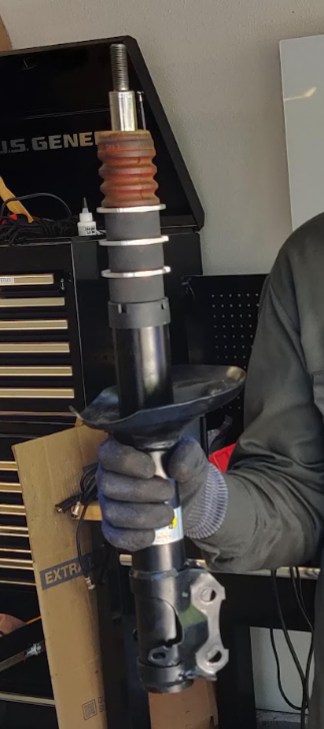
When we first got the car, it had four different brands of struts on it and all of them were blown. The first step was simply replacing them with OEM Bilsteins to get back to something like a sane baseline. That did not mean the suspension story stopped there. For our first race, we tried stiffening the car with spring spacers whose instructions suggested they would make it handle like a Mercedes-Benz, which was a very optimistic claim.
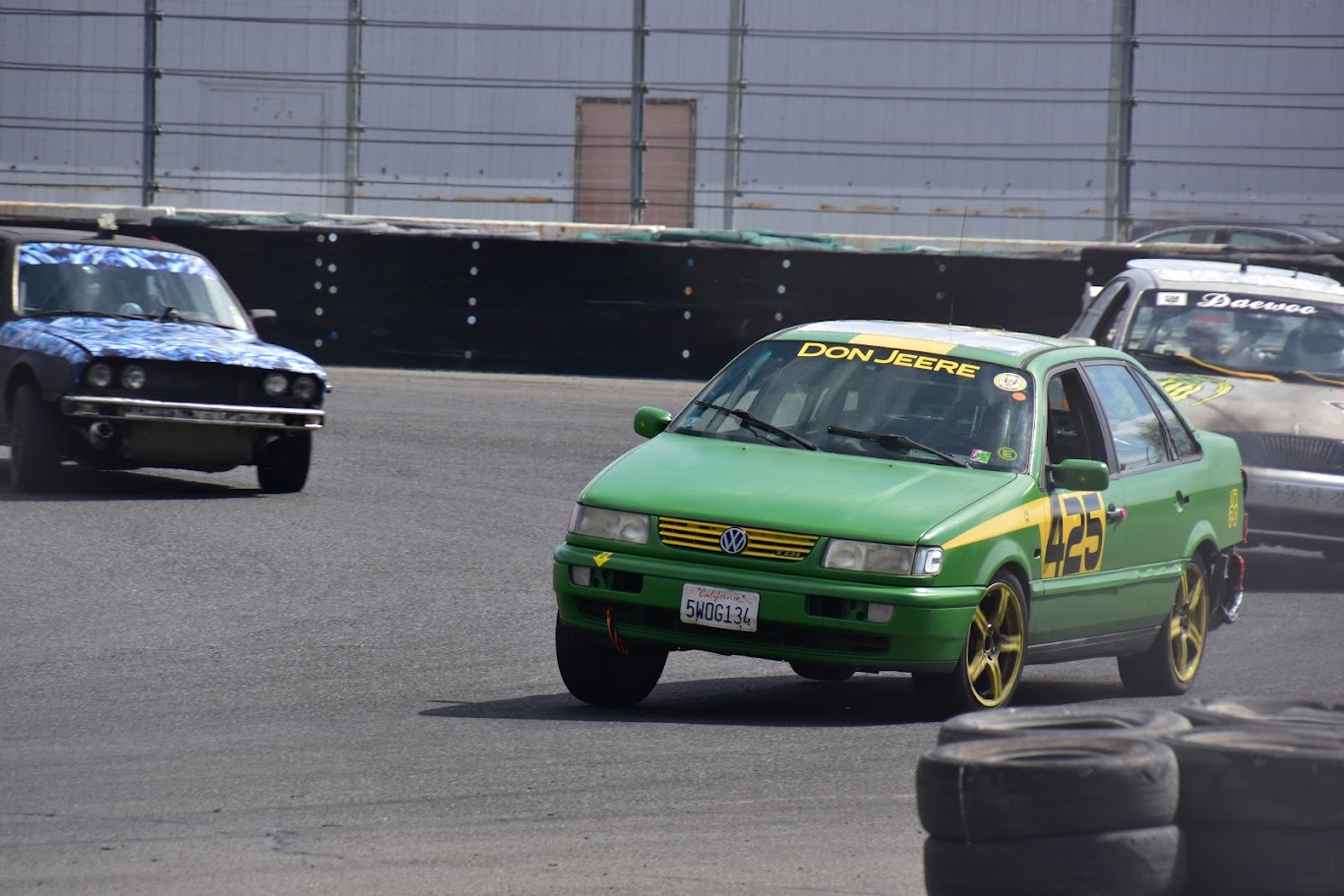
From there the suspension evolved in a more Lemons-specific direction. We cut the springs, which lowered the car, but the original TDI spring rates were still soft enough that the car rolled far too much in corners to inspire confidence. To deal with that, we added shaved-down hockey pucks and shims so the car would effectively ride on bump stops in a more controlled and predictable way when loaded up in corners. It was not exactly textbook suspension tuning, but it worked far better than it had any right to.
Alignment changed dramatically as well. We ended up running about three degrees of front camber and roughly one degree of toe-out to get the car to turn in much more aggressively. Together with the suspension changes, that gave the Passat a setup that felt far more responsive and race-worthy than the original soggy commuter-car baseline ever suggested it could be.
 Kenneth Wong