The E46 started as a very clean 325xi wagon with a blown engine from oil starvation, which made it exactly the kind of problem worth dragging home. The original goal was to make the least leaky BMW in the world by starting with a junkyard engine, redoing every seal I could get to, replacing the entire cooling system, and cleaning up everything else along the way. Being an all-wheel-drive car complicated that plan in the usual BMW way, because the front driveline passes through the oil pan and turns basic engine work into a much larger exercise.
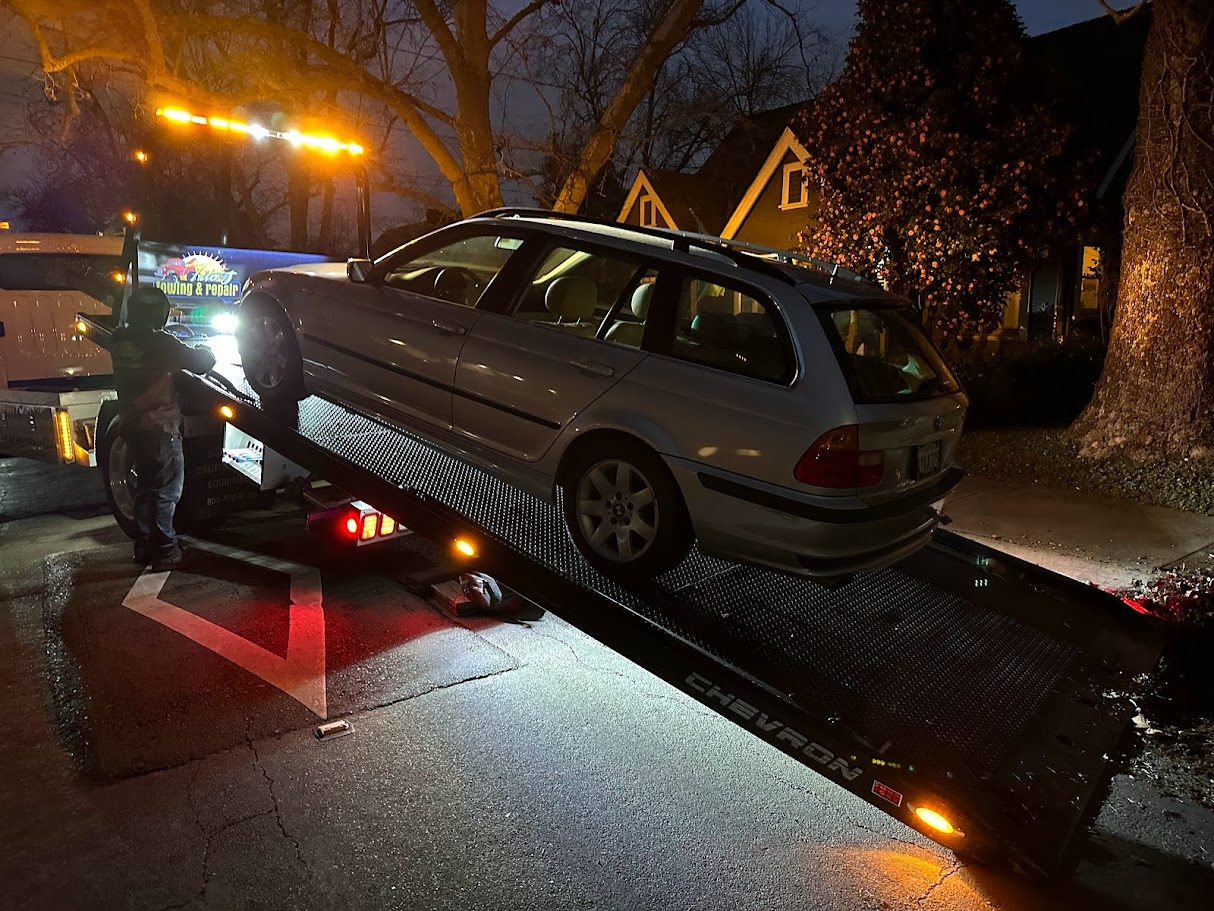
Over time it turned into a ski wagon, a suspension and bushing project, and one of my favorite cars for the simple reason that it still feels tight, analog, and worth the effort. This section covers the engine replacement, the thread-repair work that went with it, the X3 suspension parts, and the other fixes that made the car both more usable and slightly less BMW-like underneath.
Engine replacement
The engine replacement was the main reason I bought the E46 in the first place. The car had lost its original engine to oil starvation, but the rest of it was clean enough that it still felt worth saving. That made the plan pretty straightforward in theory: start with a junkyard engine, reseal everything I could get to while it was out, replace the full cooling system, and try to build what might qualify as the least leaky BMW in the world.
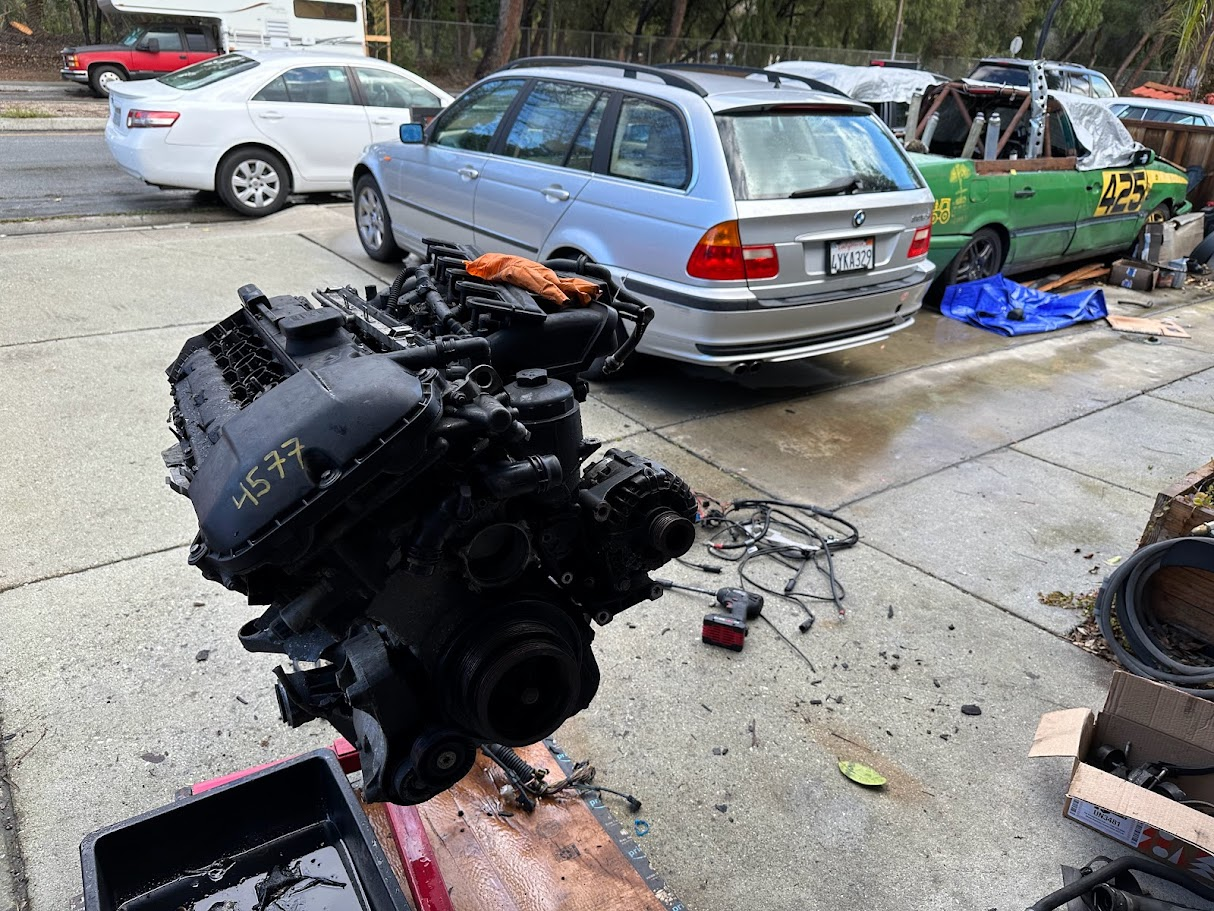
Being a 325xi complicated that plan in the usual all-wheel-drive BMW way. On this car, the front driveshaft runs through the oil pan, which means even basic engine work becomes a much larger exercise. Getting to the point where the engine could actually come out also meant pulling the front CV shafts and disassembling a good portion of the front suspension. At that point, fighting the drivetrain one piece at a time stopped making much sense.
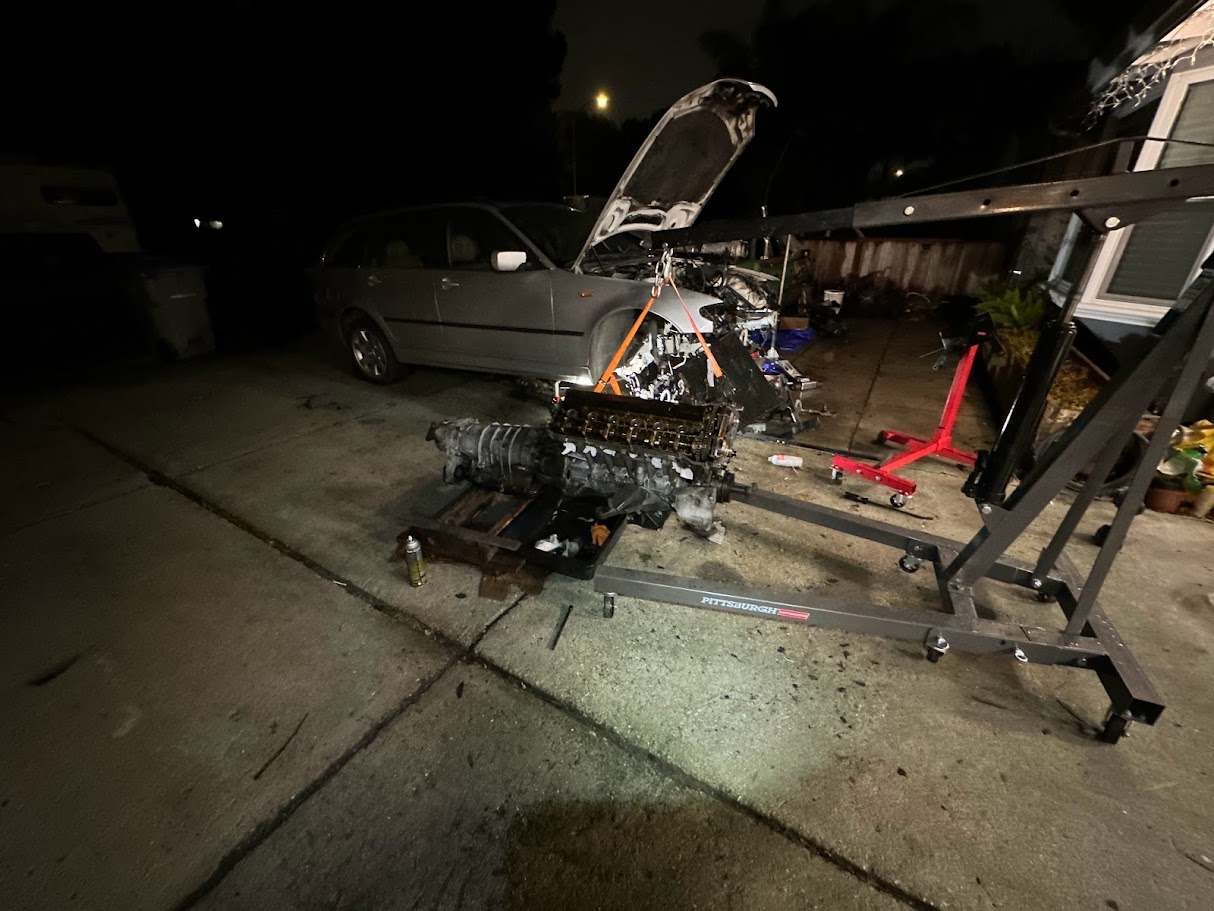
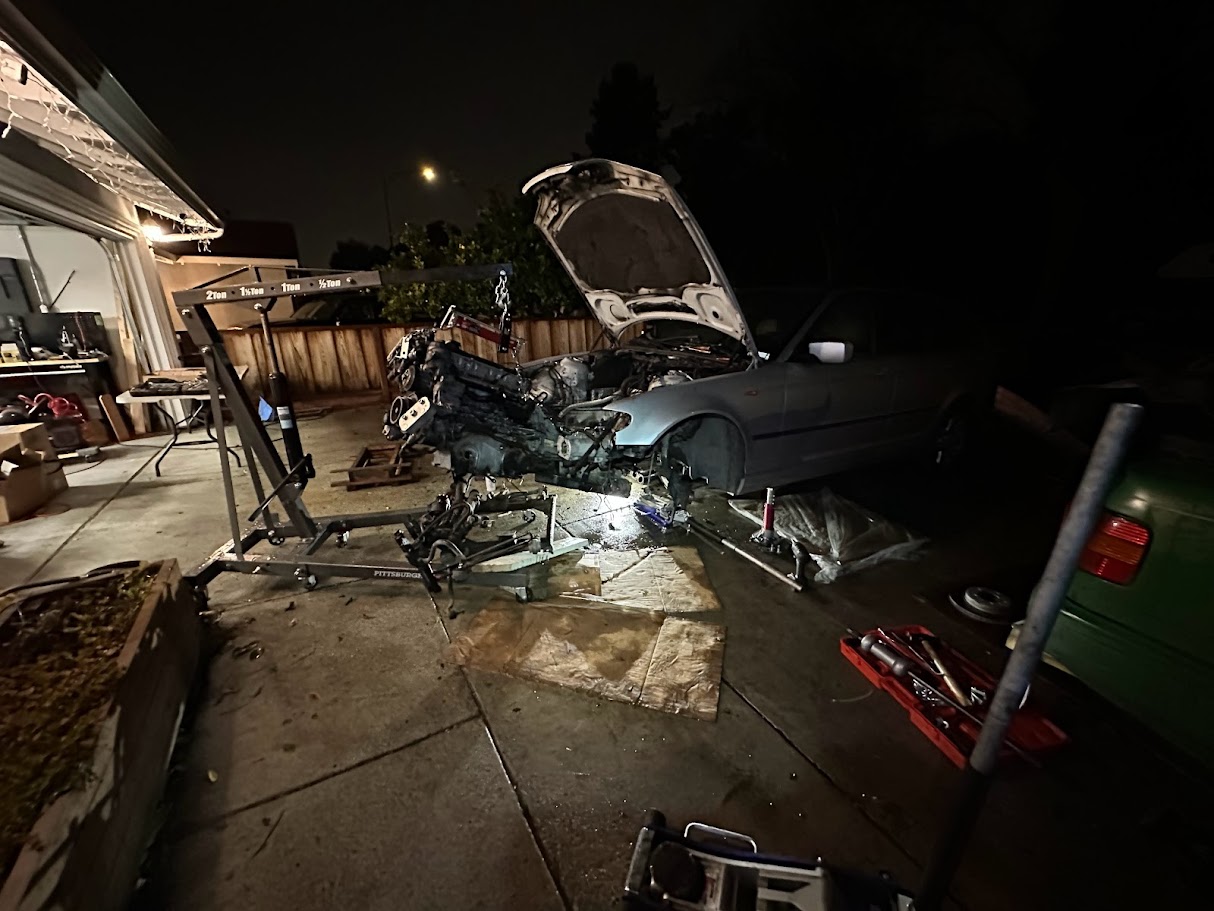
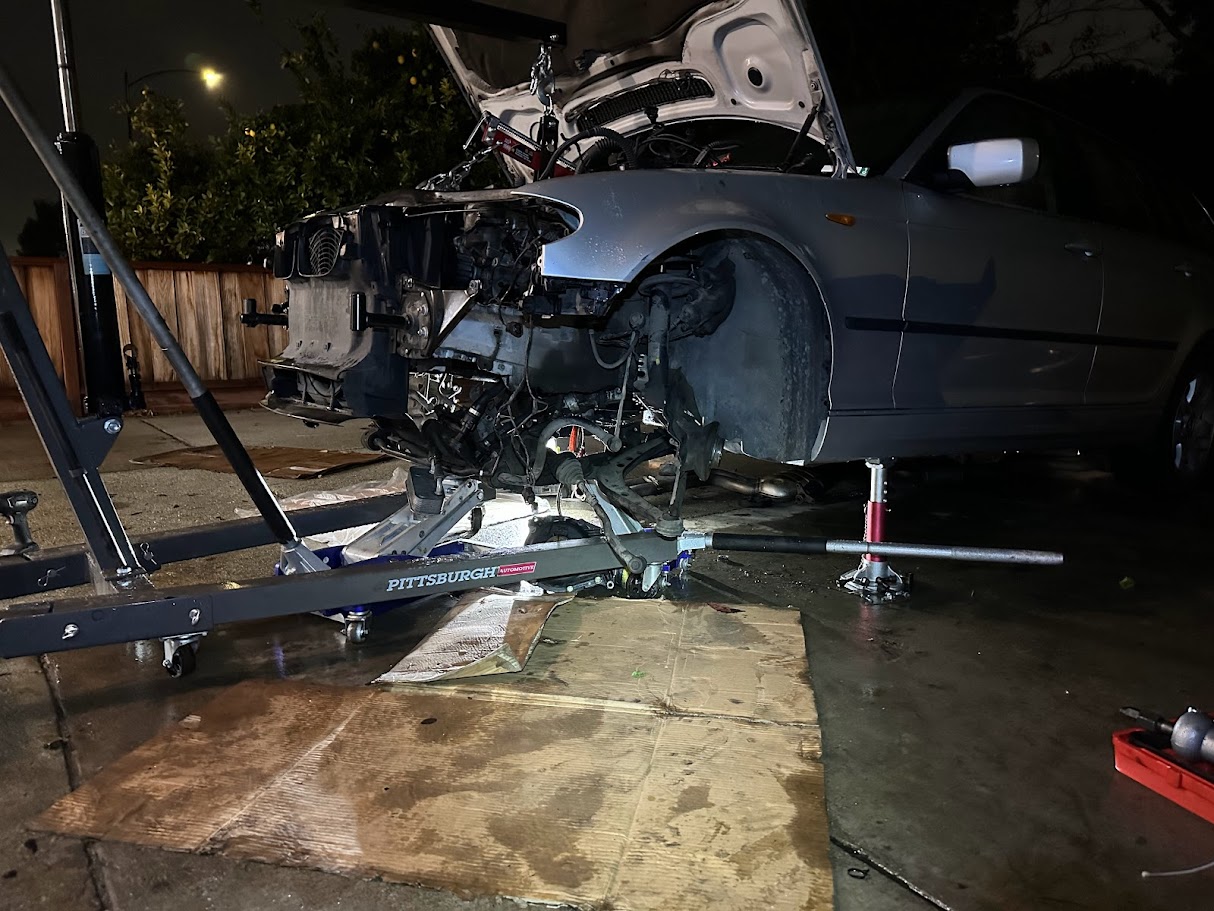
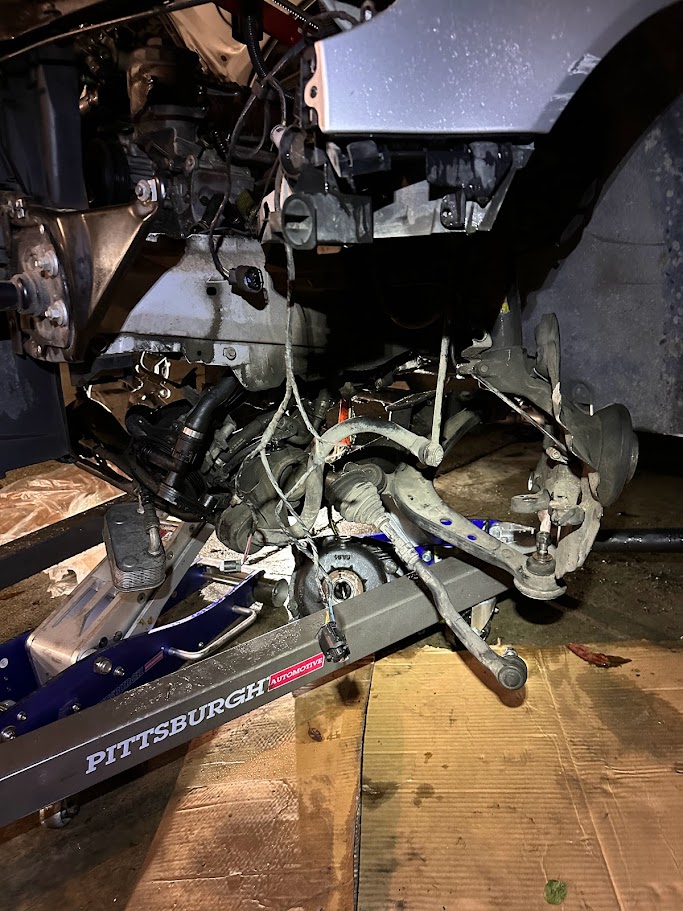
Rather than try to snake the engine out from above, I dropped the engine, transmission, and front subframe together as one complete assembly. That gave dramatically better access and also let me put it back together in roughly the same way the car would have been built at the factory, by lifting the full powertrain and suspension back in from the bottom. It was more work up front, but it made the whole job more logical once the scale of the teardown was already decided for me.
With everything out, the real focus was not just swapping in another engine, but using the opportunity to get ahead of the usual BMW problems while access was easy. That meant going after oil leaks, coolant leaks, and all the smaller maintenance items that are much more annoying once the car is assembled again. It also included Time-Serting the head bolt threads, which is a common enough fix on these engines if you want to stop worrying about head bolts pulling out of the block later. The whole project was less about doing a quick engine swap and more about resetting the car mechanically so it could go back to being a good wagon instead of a clean shell with a dead engine.
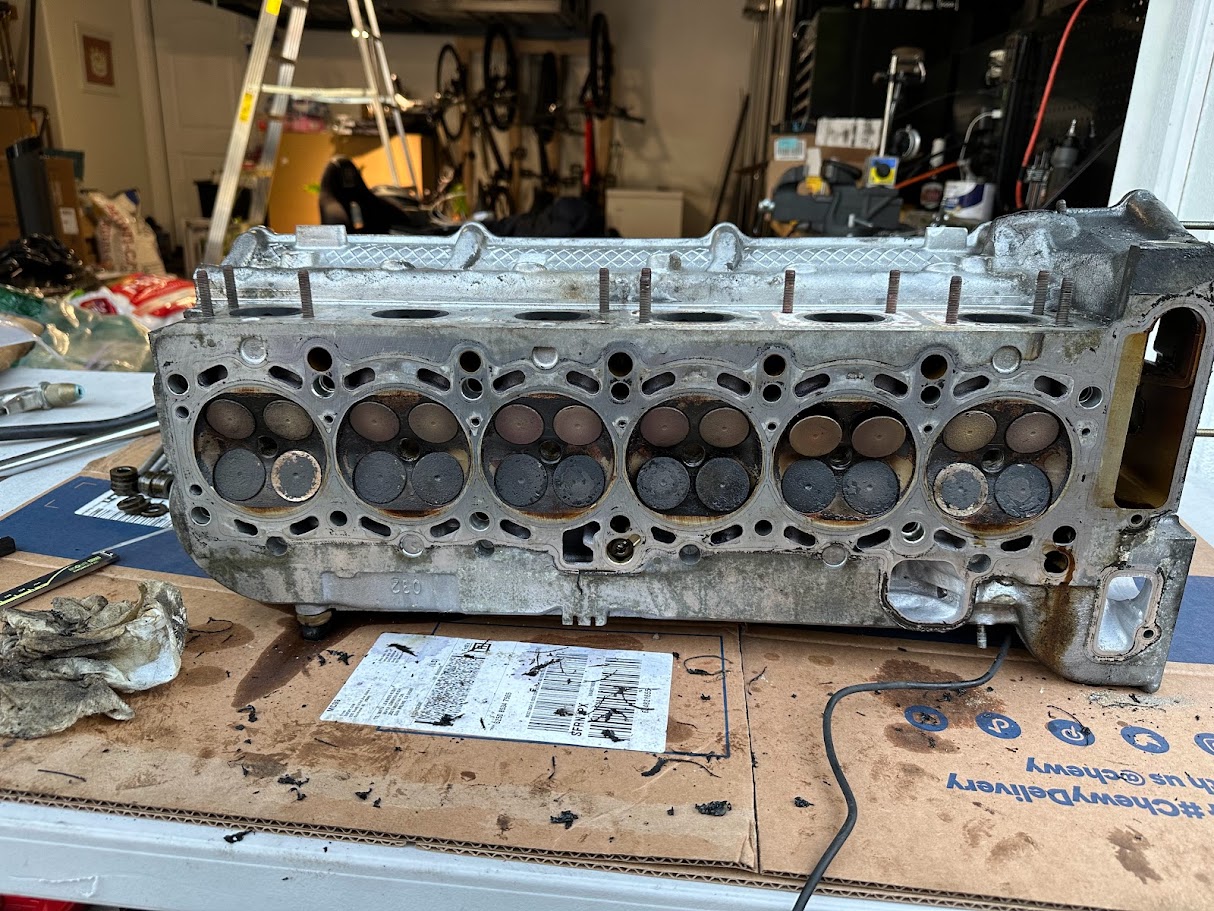
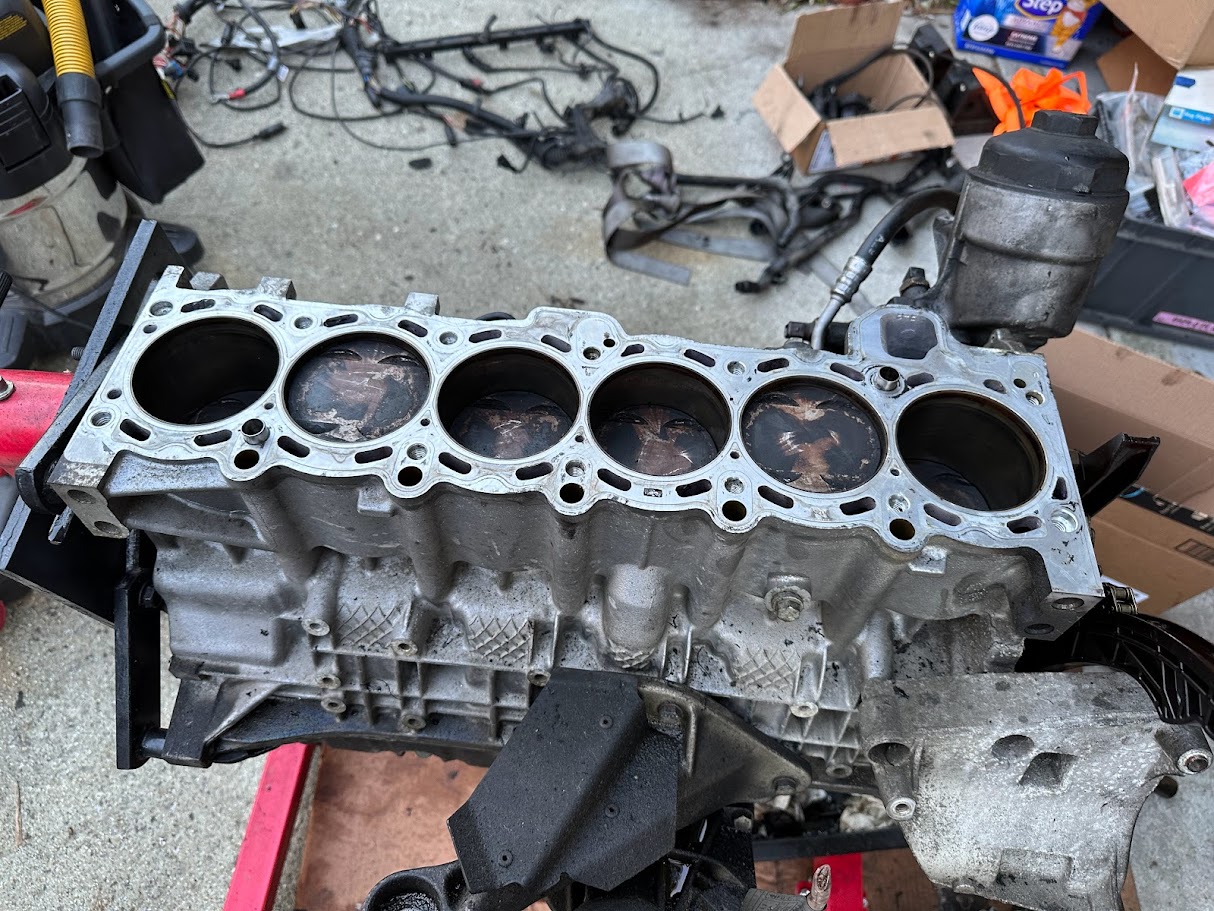
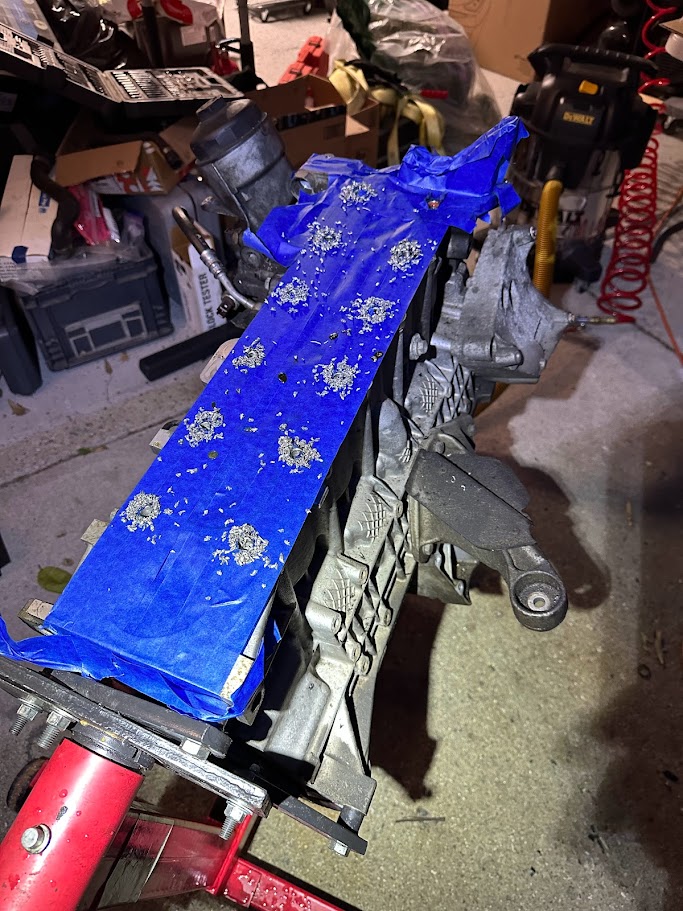
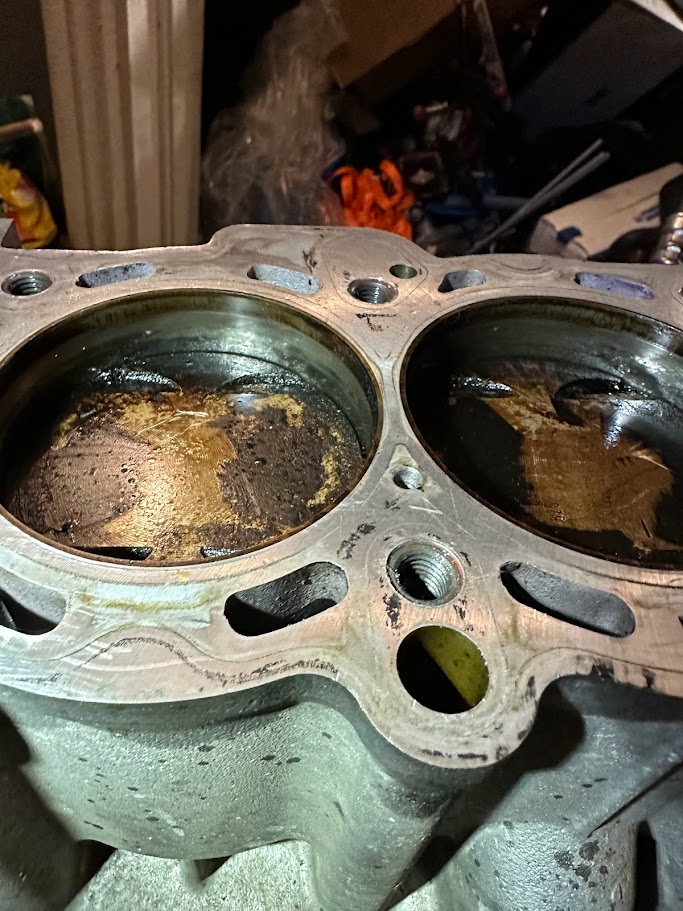
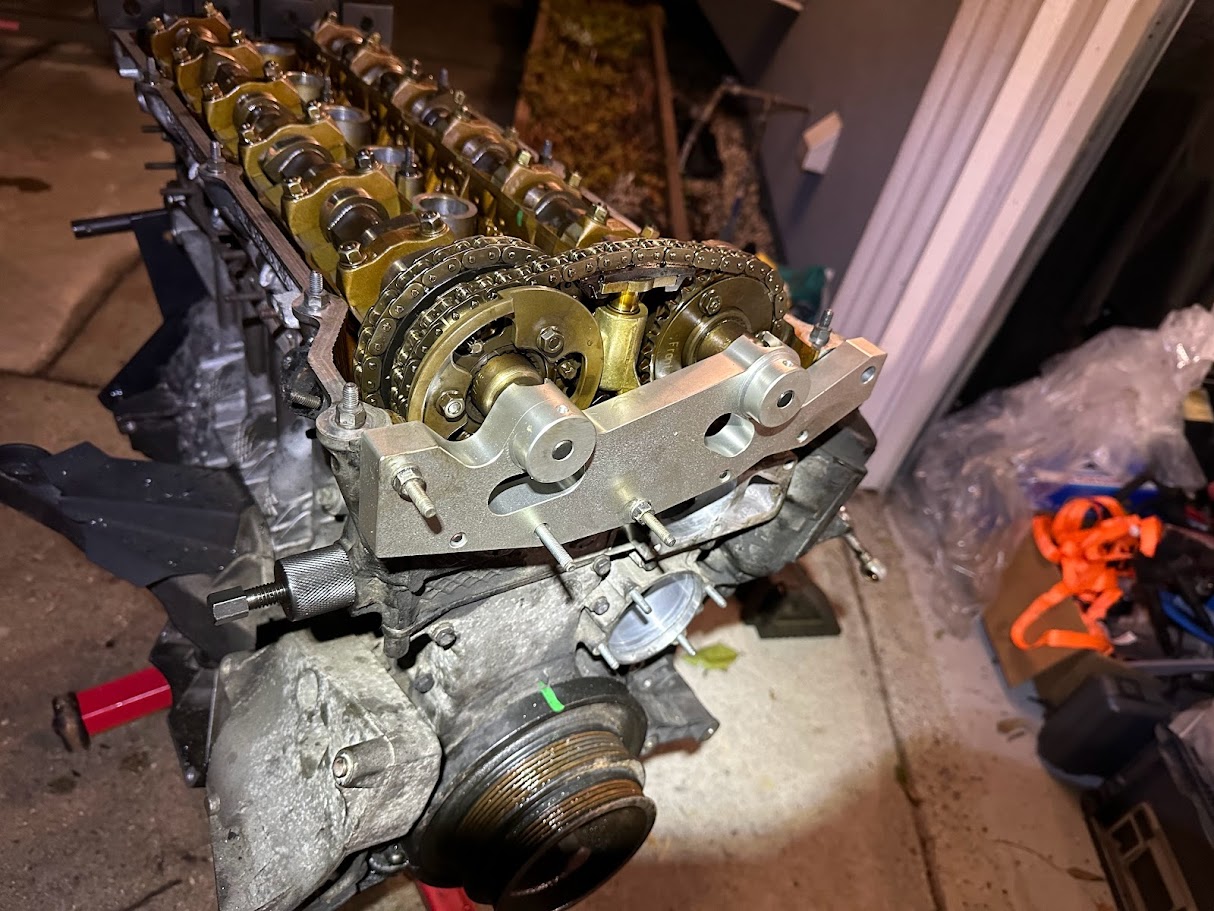
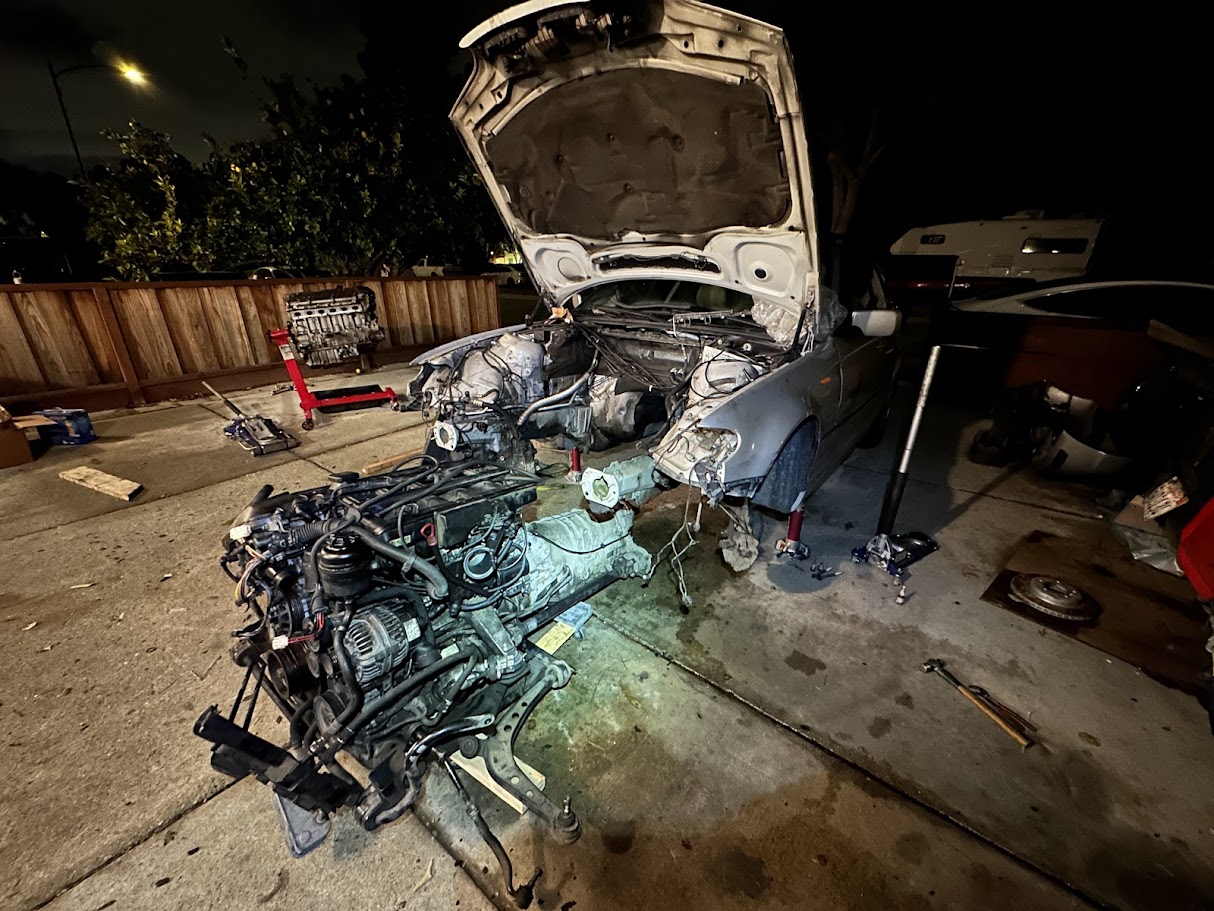
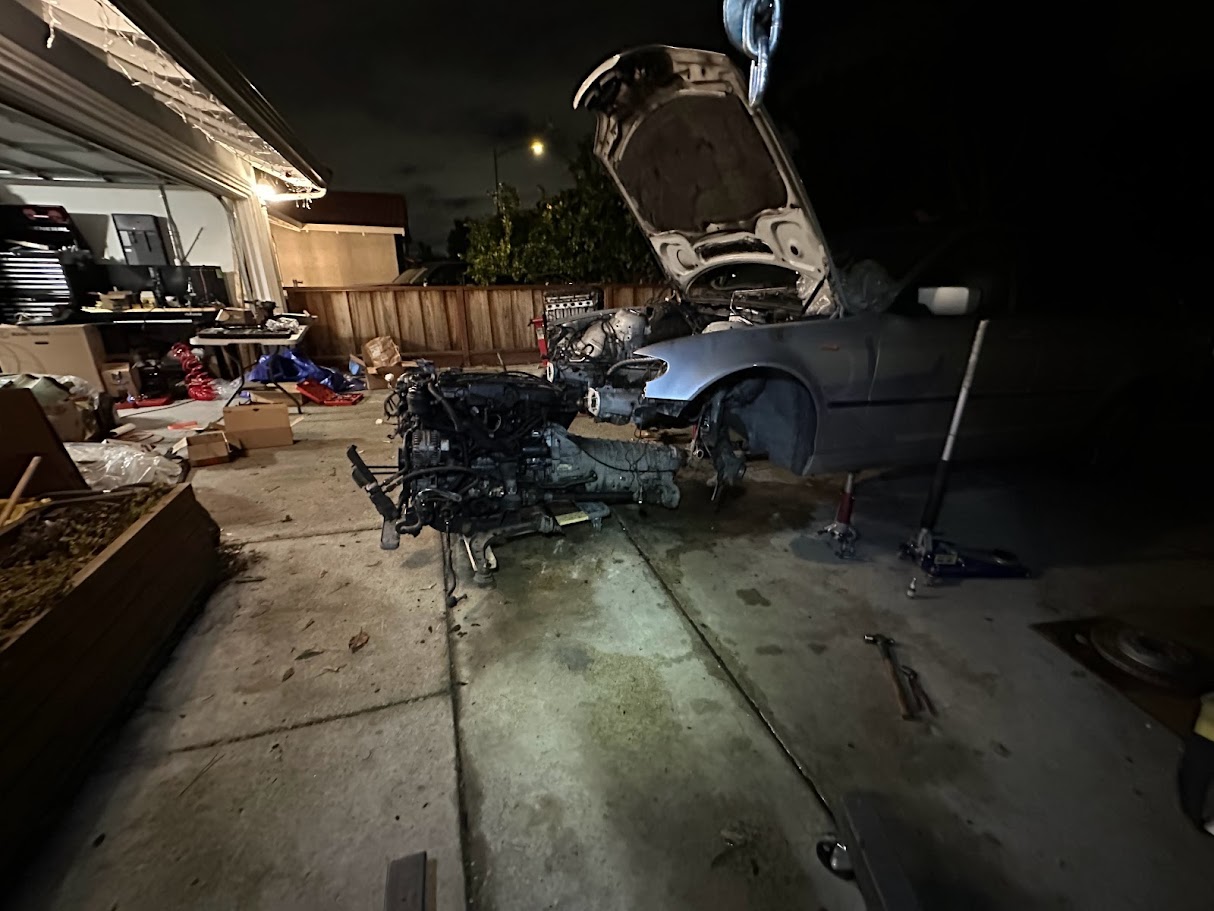
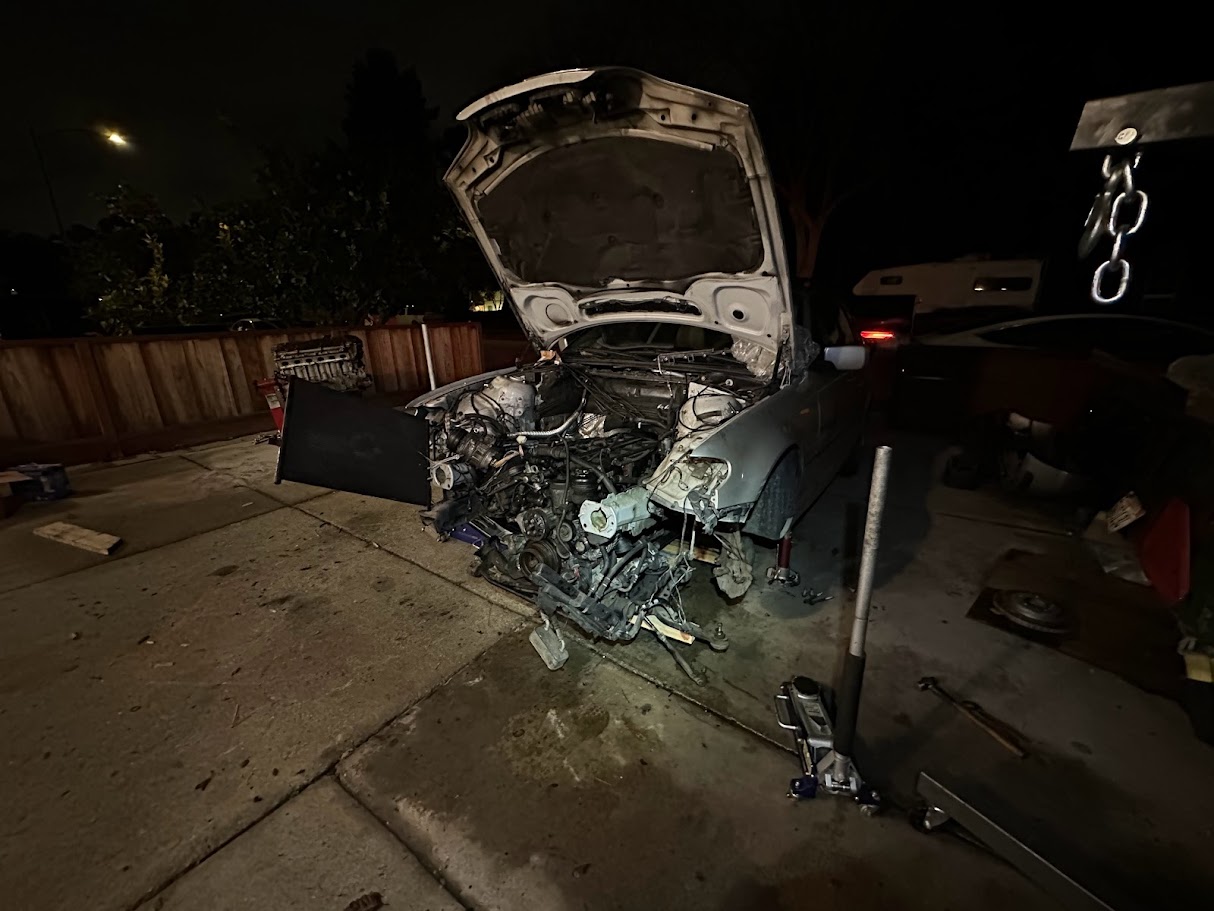
In the end, that approach was worth it. The car went from being a very clean but non-running 325xi to a genuinely useful ski wagon that still feels tight, analog, and better sorted than most old BMWs have any right to be. It was a larger job than a normal engine replacement would have been, but the all-wheel-drive complication was also what made it interesting enough to bother doing properly.
X3 rear suspension / bushing refresh
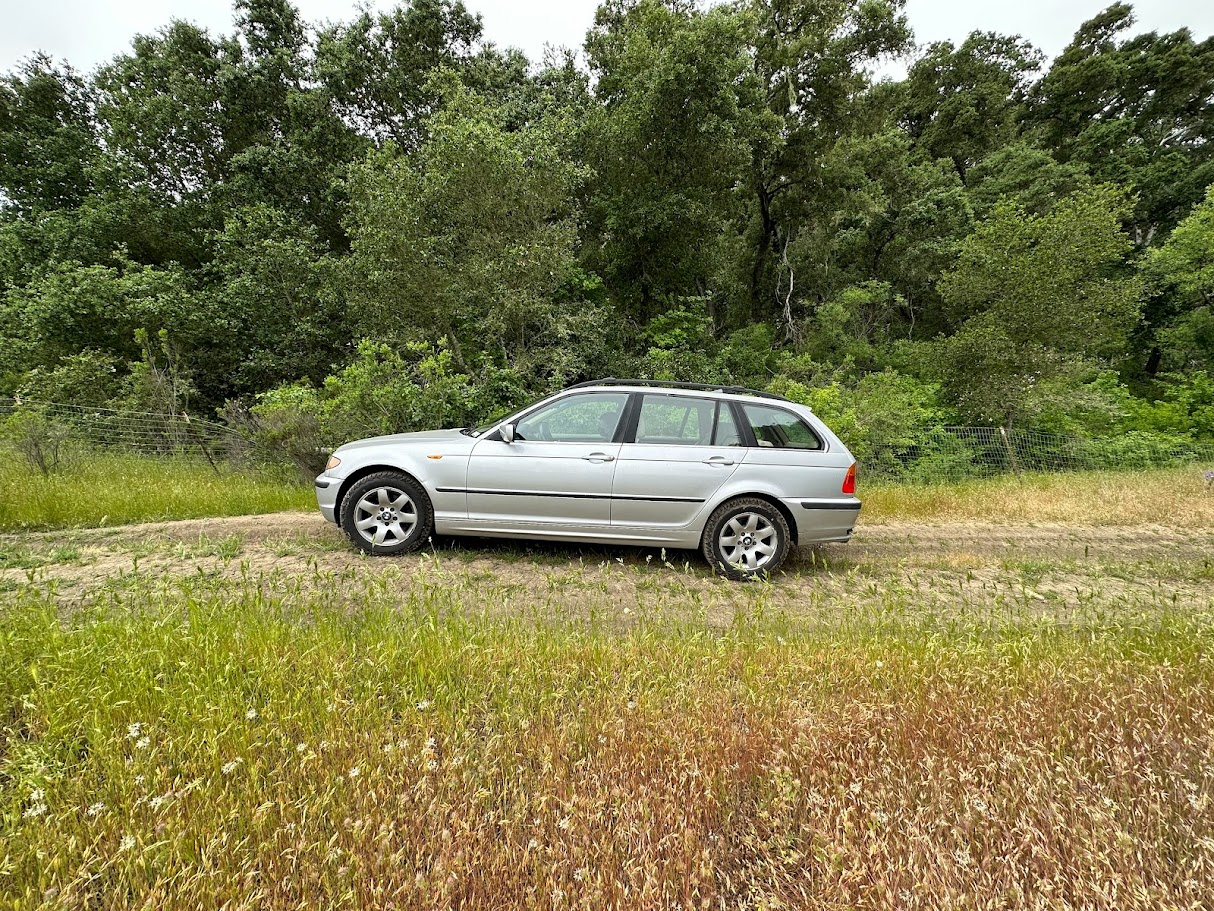
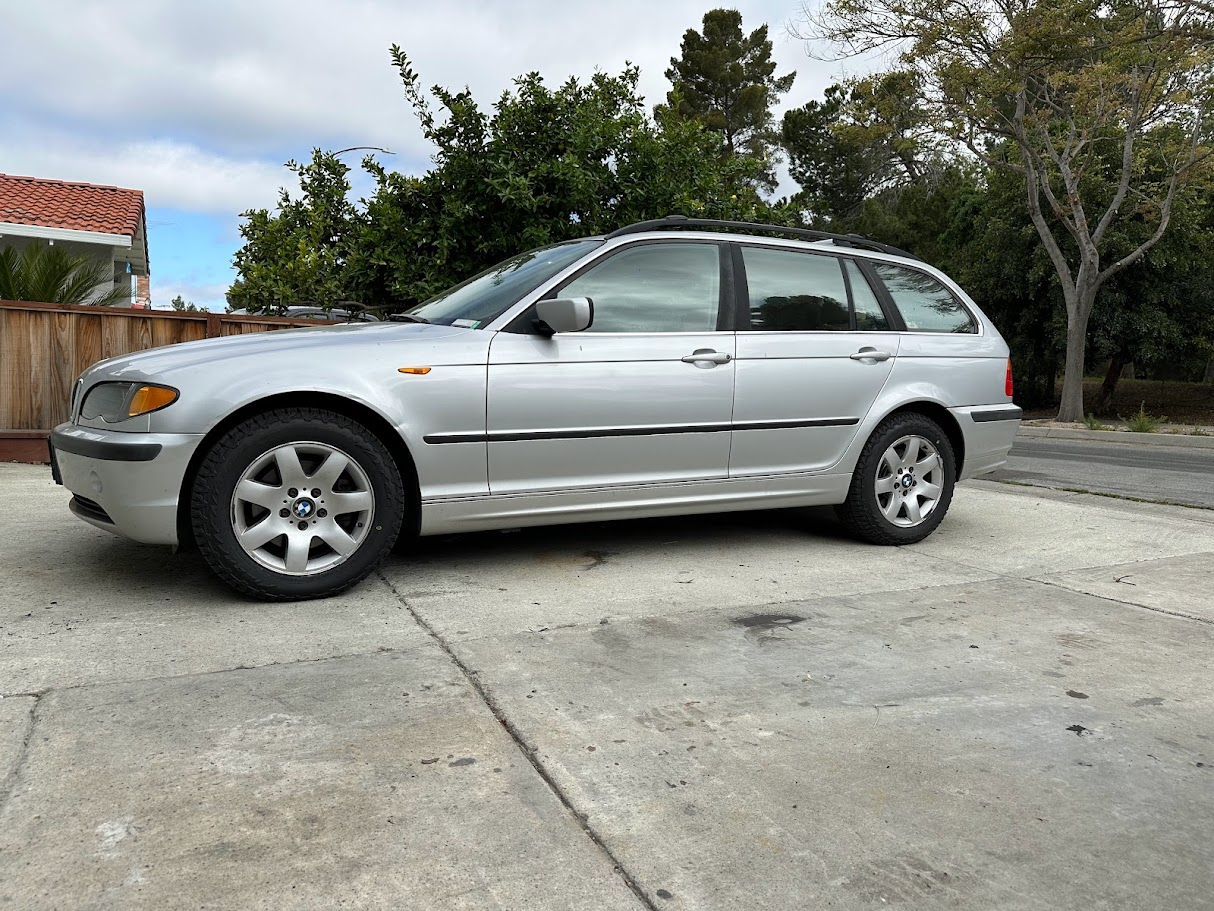
Like most E46 wagons, this one had the usual tendency to squat in the rear. It was not catastrophic, but it did make the car look a little tired and sit lower in the back than I wanted. Conveniently, X3 rear springs happen to fit the wagon well and are a very simple way to level it back out.
The spring swap itself was about as straightforward as suspension projects get: install the X3 rear springs and gain back roughly 30 mm of ride height. It is one of those unusually satisfying BMW fixes where the parts fit, the result is obvious, and the car immediately looks more correct afterward. While I was in there, I also pressed in new bushings in every control arm, which made the whole rear suspension feel a lot more sorted instead of just taller.
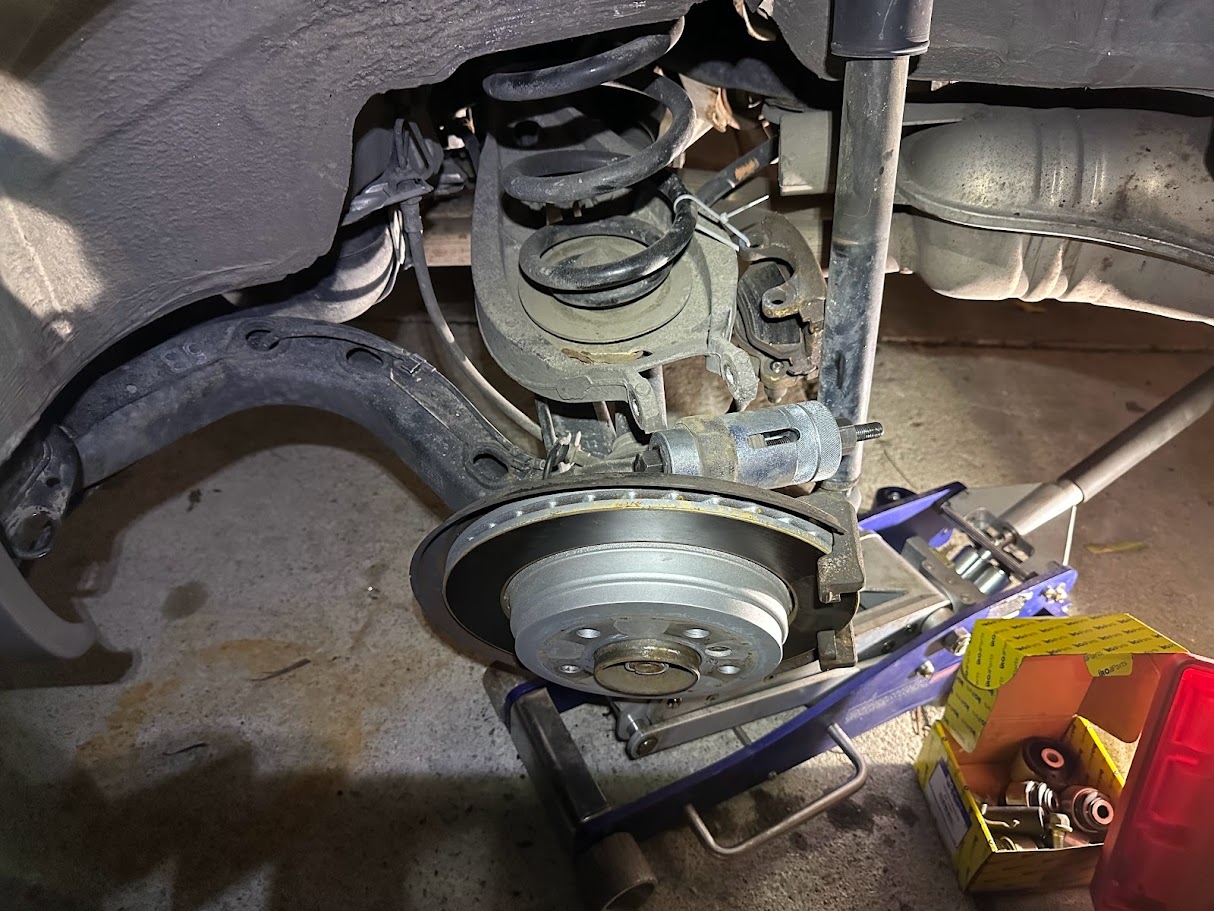
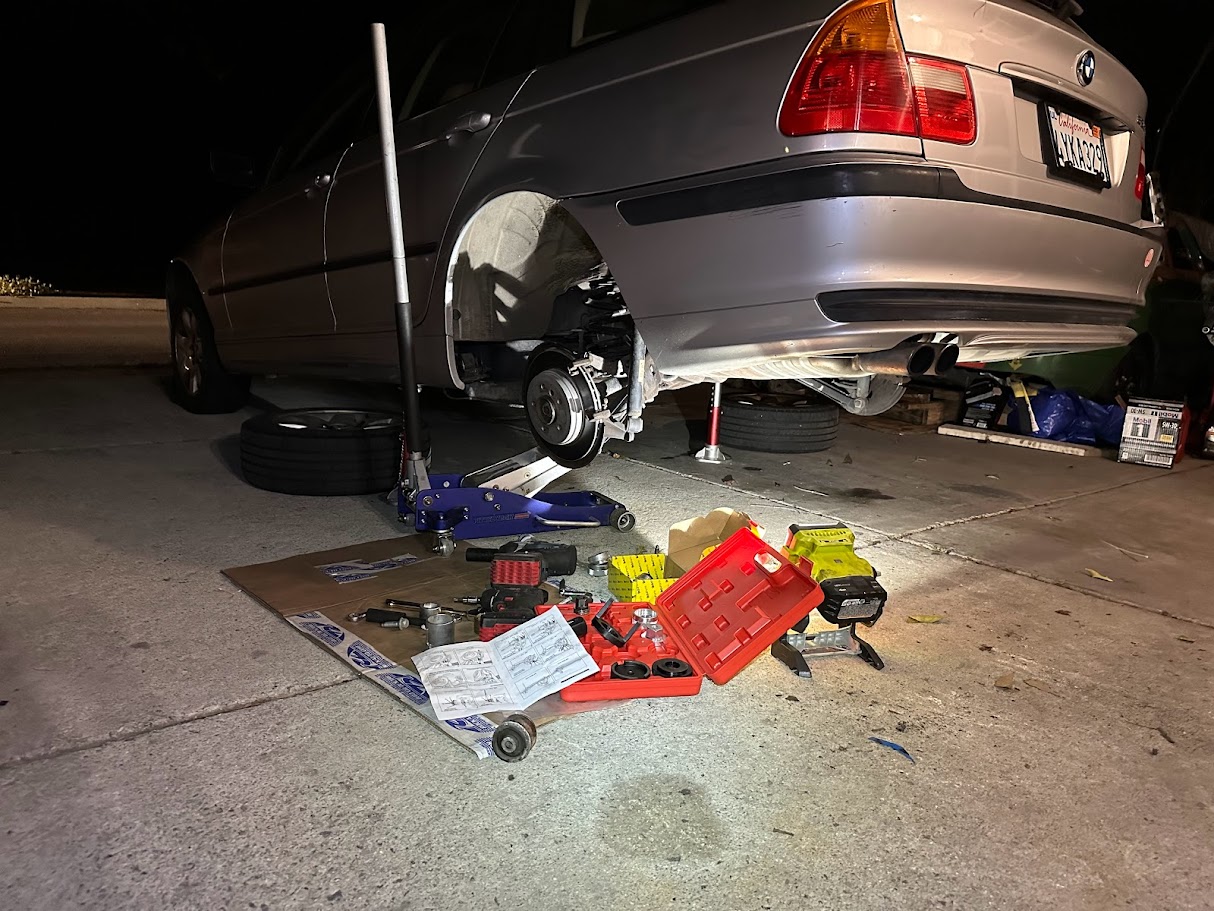
For a car that had already turned into a ski wagon, the extra rear ride height was a nice improvement both visually and practically. It helped the car sit more level, carry itself a little better, and generally look more like it was ready for mountains instead of a slow collapse of Bavarian rear suspension dignity. With the fresh bushings in place as well, it also felt like a more complete reset of the rear suspension rather than just a quick spring trick.
Skidplate
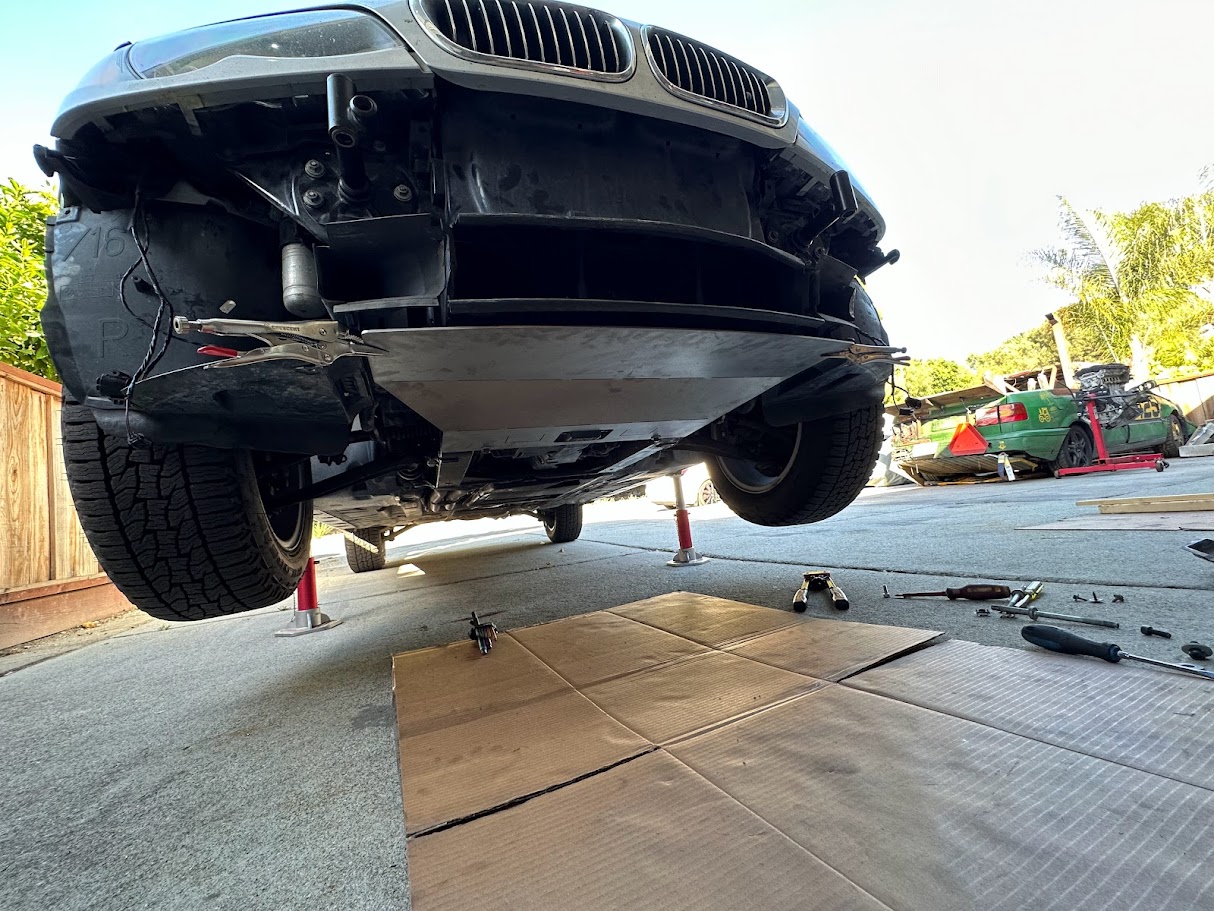
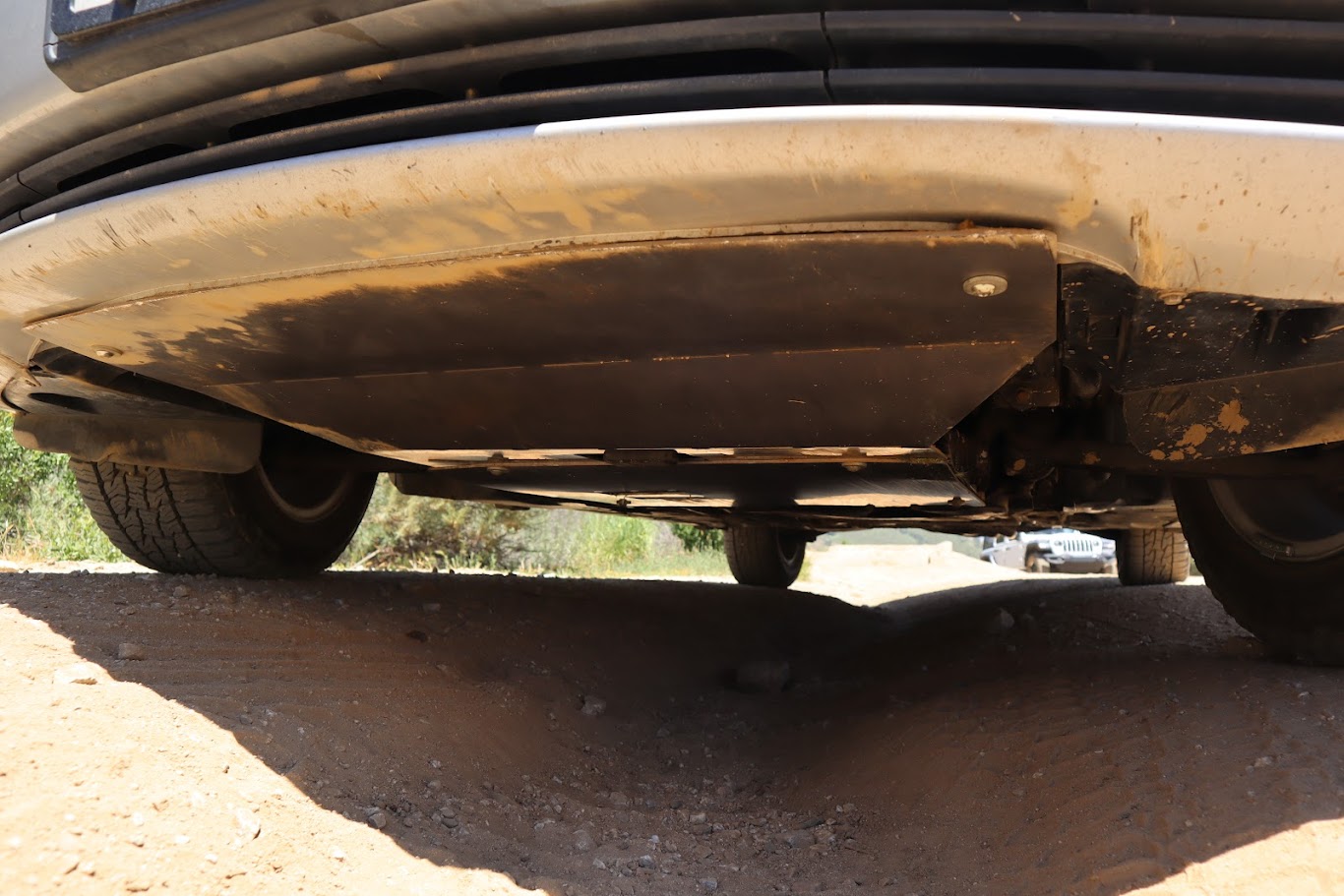
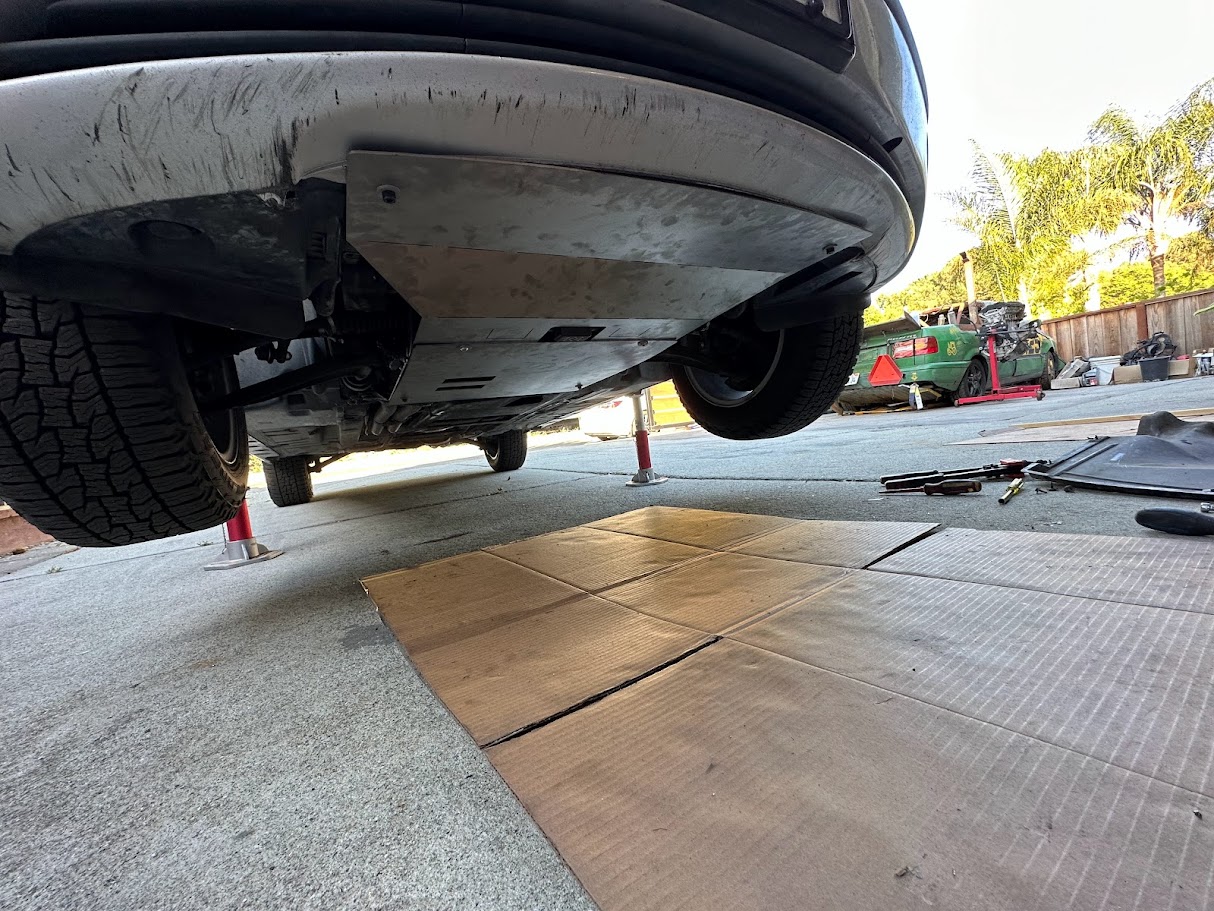
The skidplate was one of those projects that made sense the moment the car started being used more like a ski wagon and less like a precious old BMW. Rather than just bolt something flat underneath and hope for the best, I started by 3D scanning the underside of the car so I could find some actual useful pickup points and design around the shape that was already there.
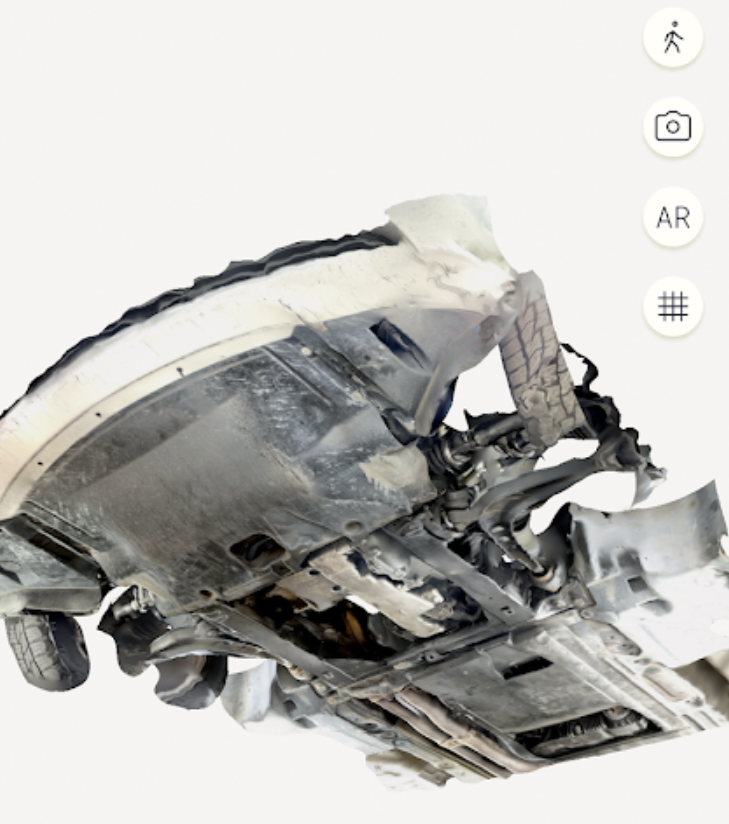
From there I designed a skidplate out of 3 mm steel, using the scan data to work out where it could mount cleanly and still protect the parts that actually mattered. The whole point was to make something that felt more deliberate than the usual improvised underbody armor and to give the car a little more confidence against snow, rough roads, and the kinds of impacts that old wagons inevitably find.
 Kenneth Wong